
- Israel prepared for potential Iranian attacks amid rising tensions following the 2025 conflict and internal unrest within Iran.
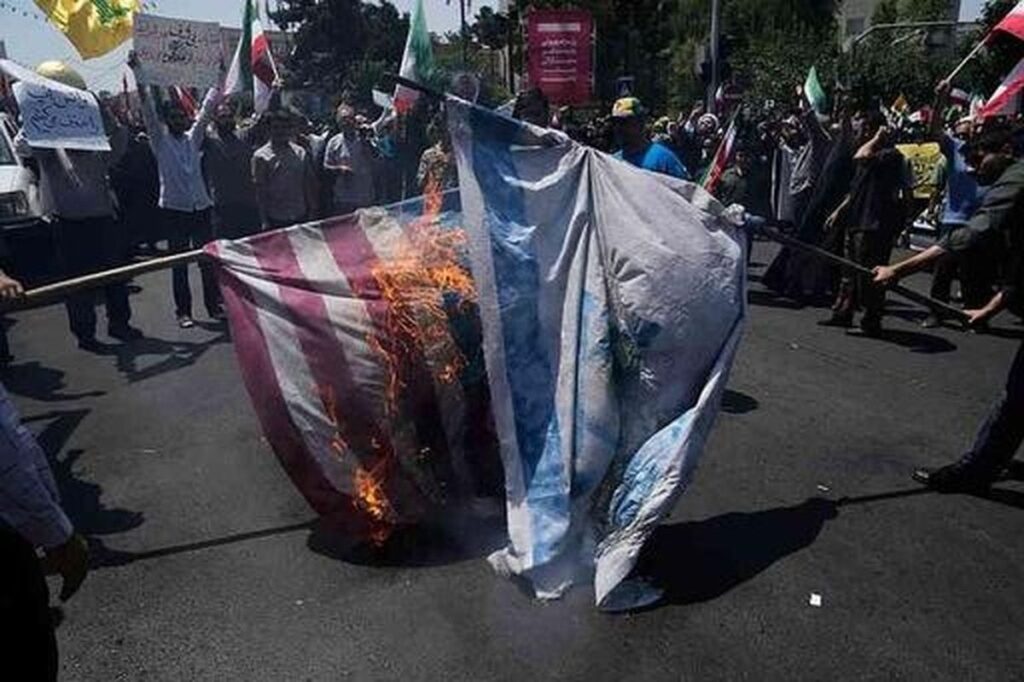
- Iranian government organized pro-government rallies to counter nationwide protests sparked by economic issues and political dissent.
- International leaders, including the UN Secretary-General, called for restraint as Iran faced violent protests and internet shutdowns.
As tensions in the Middle East reach a fever pitch, Israel and Iran find themselves on the brink of direct confrontation, with the United States hovering anxiously in the background. On January 12, 2026, Israel braced for a potential Iranian attack, a move that comes amid escalating unrest inside Iran and growing hostility between Tehran and Washington. The situation is volatile, the stakes are sky-high, and the world is watching with bated breath.
According to France 24, Israeli authorities have been preparing for the possibility of Iranian aggression, a response to both internal Iranian turmoil and mounting threats from the United States. This latest escalation follows a summer of violence: a 12-day war between Israel and Iran in 2025 that left 1,190 Iranians dead and wounded 4,475, while Iranian missile strikes killed nearly 30 Israelis and injured 1,000, as reported by the U.S.-based Human Rights Activists News Agency.
Inside Iran, the atmosphere is equally charged. On January 12, pro-government rallies swept through several cities, with state media showcasing images of throngs gathered in Tehran and elsewhere. These demonstrations were orchestrated to counter more than two weeks of nationwide protests, which erupted on December 28, 2025, over soaring prices but quickly morphed into a broader challenge to Iran’s political establishment. Al Jazeera described the turnout in Tehran as “tens of thousands,” a testament to the government’s determination to project unity amid the chaos.
Iranian Foreign Minister Abbas Araqchi, speaking to the press, didn’t mince words. He accused the United States and Israel of orchestrating a “terrorist war” within Iran’s borders. “There are many documents indicating American and Israeli interference in the terrorist movement,” Araqchi claimed, adding, “Mossad agents are accompanying the protests, and their interventions are the reason for the violence and killings that occurred.” He insisted that the situation was “under total control” following a particularly violent weekend, and he asserted that Iran was “ready for war but also for dialogue.” Araqchi’s remarks came just hours after U.S. President Donald Trump told reporters, “We’re looking at it very seriously. The military is looking at it, and we’re looking at some very strong options. We’ll make a determination.” Trump also claimed that Iran’s leadership had reached out to Washington to “negotiate.”
The human cost of the unrest has been staggering. Iran Human Rights, a Norway-based NGO, reported at least 192 fatalities since the protests began, while the U.S.-based Human Rights Activist News Agency put the figure at 544 over the past 15 days. The violence has drawn international attention and condemnation. United Nations Secretary-General Antonio Guterres voiced his concern over reports of “violence & excessive use of force” and called on Iranian authorities to “exercise maximum restraint & refrain from unnecessary or disproportionate use of force.” He also pressed for the restoration of internet access, which had been almost entirely cut off for four days, according to internet monitor NetBlocks. Araqchi pledged that internet service would be restored “in coordination with security authorities,” but connectivity remained limited and unreliable.
Amid these developments, Iran’s supreme leader, Ayatollah Ali Khamenei, issued a pointed warning to President Trump. In a social media post, Khamenei wrote, “Let that fellow who sits there with arrogance and pride, judging the whole world, also know that the tyrants and the arrogant of this world, such as Pharaoh, Nimrod, Reza Shah, Mohammad Reza Shah and the like, were overthrown when they were at the height of their pride; he too will be overthrown.” The message was clear: Iran’s leadership intends to stand firm, regardless of external pressure.
Back in Israel, Prime Minister Benjamin Netanyahu addressed the situation during his weekly Cabinet meeting on January 11, 2026. As reported by ABC News, Netanyahu praised the “tremendous heroism of the citizens of Iran” and condemned the killing of civilians. He expressed hope for a future in which Israel and Iran could rebuild relations “once the country was freed from the yoke of tyranny.” Netanyahu also held discussions with U.S. Secretary of State Marco Rubio over the weekend, focusing on Iran and the regional fallout from the ongoing protests.
Despite the heightened alert, the Israeli military has not issued new guidelines for civilians to stay near bomb shelters, a step that has been taken in the past during periods of concrete threat. The military described the protests as “an internal Iranian matter” but emphasized its readiness to “respond with power if need be.” According to Danny Citrinowicz, a former Israeli intelligence official, Israel is unlikely to initiate an attack on Iran at this juncture, even though the Iranian leadership appears distracted by domestic unrest. “Their priority, first and foremost, is to retrieve the calmness and stability in Iran,” Citrinowicz noted. He added that “neither side has an appetite” for another round of open warfare, referencing the costly 12-day conflict of the previous summer.
Experts agree that Israel’s main concern remains Iran’s ballistic missile capabilities, not regime change in Tehran. Menahem Merhavy, an Iran specialist at the Hebrew University of Jerusalem, observed, “Unless there’s something really dramatic happening with missiles, I don’t see Israel stepping into this.” He argued that any Iranian attack on Israel would be “a suicide note for the regime,” given the likelihood of a forceful Israeli response. Merhavy also suggested that while Israel might offer marginal assistance, such as enabling internet access for certain individuals, direct involvement is doubtful.
Meanwhile, Iranian parliamentary speaker Mohammad Baqer Qalibaf issued a stern warning to the United States, declaring that “in the case of an attack on Iran, the occupied territories (Israel) as well as all US bases and ships will be our legitimate target.” The threat underscores the risk of a regional conflagration should the current standoff spiral out of control.
As the world’s attention remains fixed on the region, the protests inside Iran show no sign of abating. What began as anger over soaring prices has evolved into a full-blown movement against the ruling politicians. State media has tried to counter this narrative by calling for nationwide rallies to denounce what officials describe as “terrorist actions led by the United States and Israel.” Yet, with hundreds dead and the internet blackout fueling further resentment, the government’s grip on the situation appears anything but secure.
For now, Israel is watching and waiting, the United States is weighing its options, and Iran’s streets remain a battleground—both for the future of the country and the stability of the wider Middle East. The coming days will test the resolve of all parties involved and could reshape the region’s political landscape in ways no one can yet predict.