
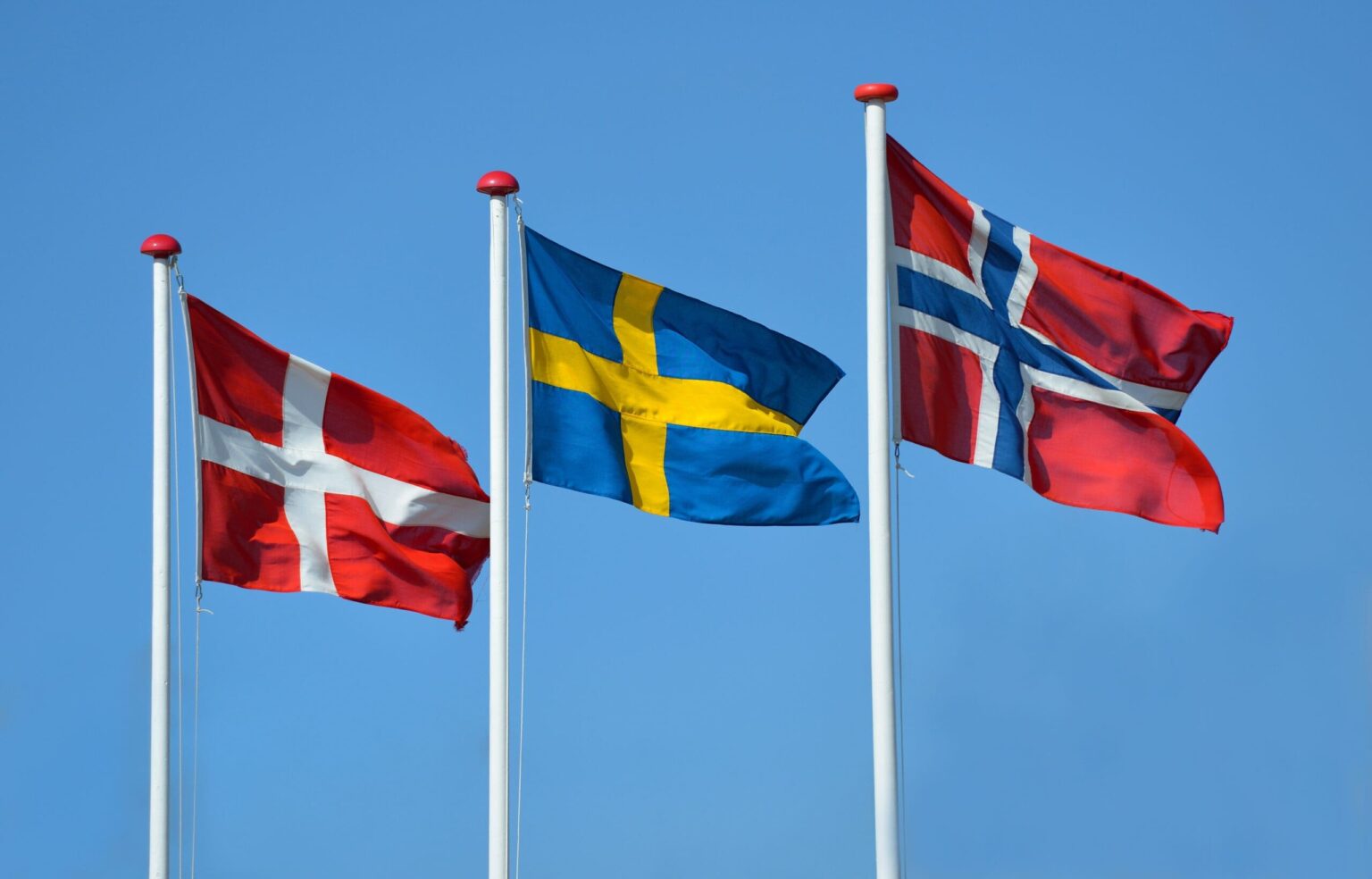
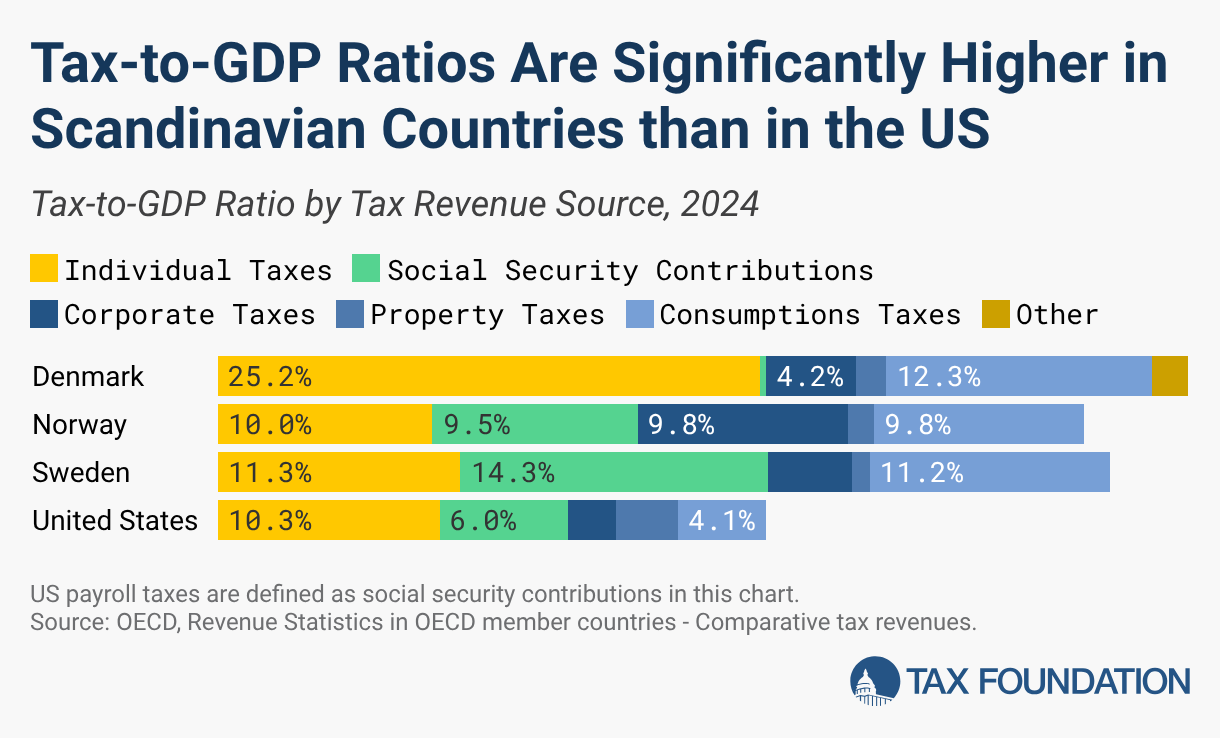
Scandinavian countries are well known for their broad social safety nets and their public funding of services such as universal health care, higher education, parental leave, and child and elderly care. High levels of government spending naturally require high levels of taxation. In 2024, Denmark’s taxA tax is a mandatory payment or charge collected by local, state, and national governments from individuals or businesses to cover the costs of general government services, goods, and activities.-to-GDP ratio was 45.2 percent, Norway’s was 40.2 percent, and Sweden’s was 41.4 percent. This compares to a ratio of 25.6 percent in the United States.
So, how do Scandinavian countries raise their tax revenues? Consumption taxes and social security contributions—both taxes with very broad bases—raise much of the revenue needed to fund their large-scale public programs.
Taxation of Labor Income
In 2024, Denmark (25.6 percent), Sweden (25.5 percent), and Norway (19.5 percent) all raised a significant amount of tax revenue as a percentage of GDP from individual taxes, almost exclusively through personal income taxes and social security contributions. This compares to 16.3 percent of GDP in the United States.
Tax WedgeBroadly speaking, a tax wedge is the difference between the pre-tax price or return and after-tax price or return. For labor income, it is the difference between the total labor costs to the employer and the corresponding net take-home pay of the employee.
One way to analyze the level of taxation on wage income is to look at the so-called “tax wedge,” which shows the difference between an employer’s cost of an employee and the employee’s net disposable income.
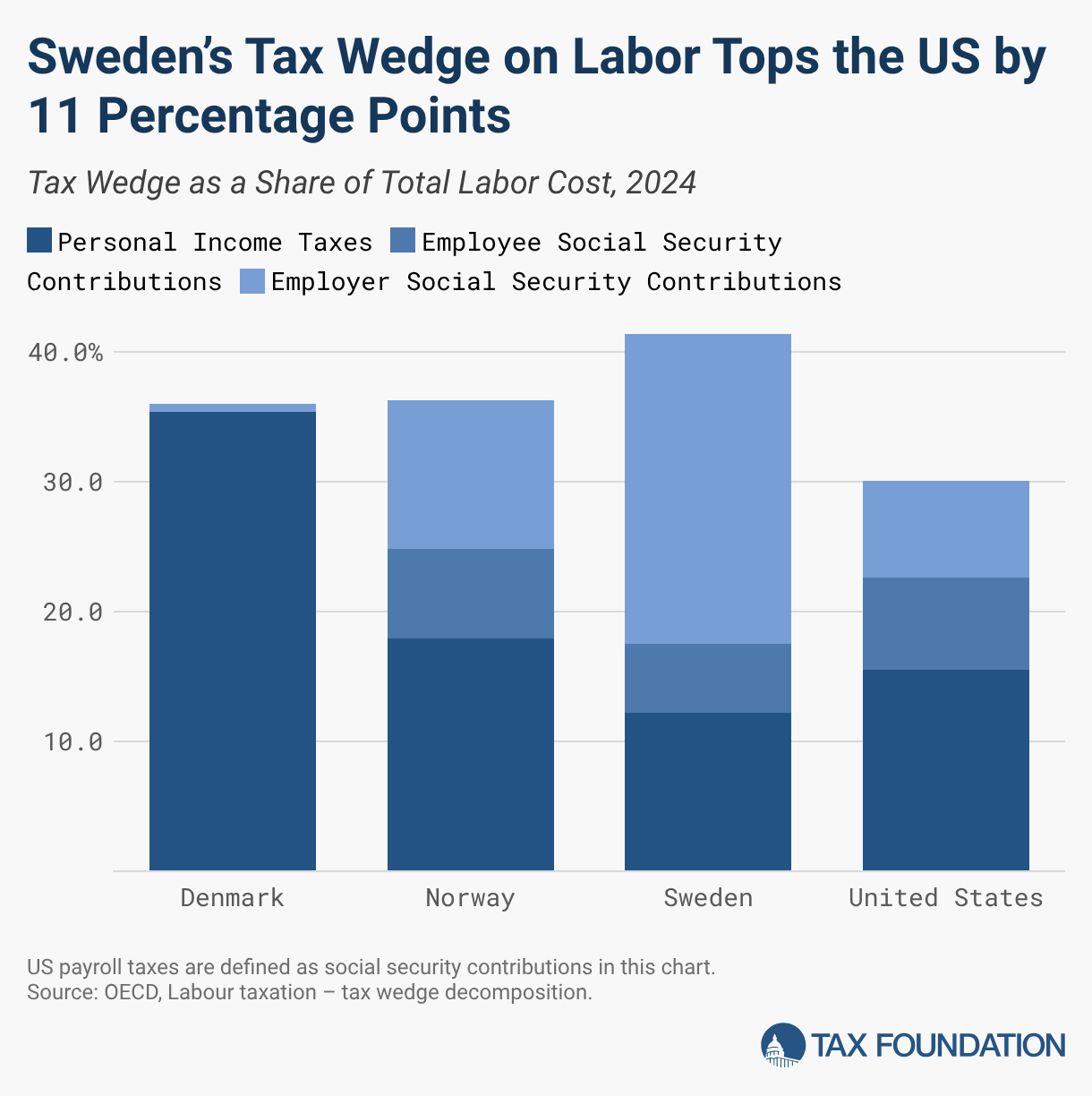
In 2024, the tax wedge for a single worker with no children earning a nation’s average wage was 36.1 percent in Denmark, 36.4 percent in Norway, and 41.5 percent in Sweden. The tax wedges of the Scandinavian countries are now higher than the US tax wedge of 30.1 percent and the Organisation for Economic Co-operation and Development (OECD) average of 34.9 percent.
Social Security Contributions
Social security contributions are levied on wages to fund specific programs and confer an entitlement to receive a (contingent) future social benefit. Social security contributions are largely flat taxes and tend to be capped.
Both Norway and Sweden levy high social security contributions, raising revenue amounting to 9.5 percent of GDP and 14.3 percent of GDP, respectively, in 2024. In the United States, social security contributions (payroll taxes) raise revenue of about 6 percent of GDP.
In Norway and Sweden, social security contributions—employer and employee side combined—account for 18.4 percent and 29.2 percent of the total labor costs of a single worker with no children earning an average wage, respectively. This compares to 14.6 percent in the US.
Only Denmark does not impose social security contributions to fund its social programs. Instead, it uses a share of its individual income taxAn individual income tax (or personal income tax) is levied on the wages, salaries, investments, or other forms of income an individual or household earns. The U.S. imposes a progressive income tax where rates increase with income. The Federal Income Tax was established in 1913 with the ratification of the 16th Amendment. Though barely 100 years old, individual income taxes are the largest source revenue for these programs.
Top Personal Income Taxes
Top personal income tax rates are rather high in Scandinavian countries, except in Norway. Denmark’s top statutory personal income tax rate is 55.9 percent, Norway’s is 39.6 percent, and Sweden’s is 52.4 percent. Denmark’s top statutory personal income tax rate is the highest, but the lack of social security contributions keeps its tax wedge for high earners below that of other Scandinavian countries.
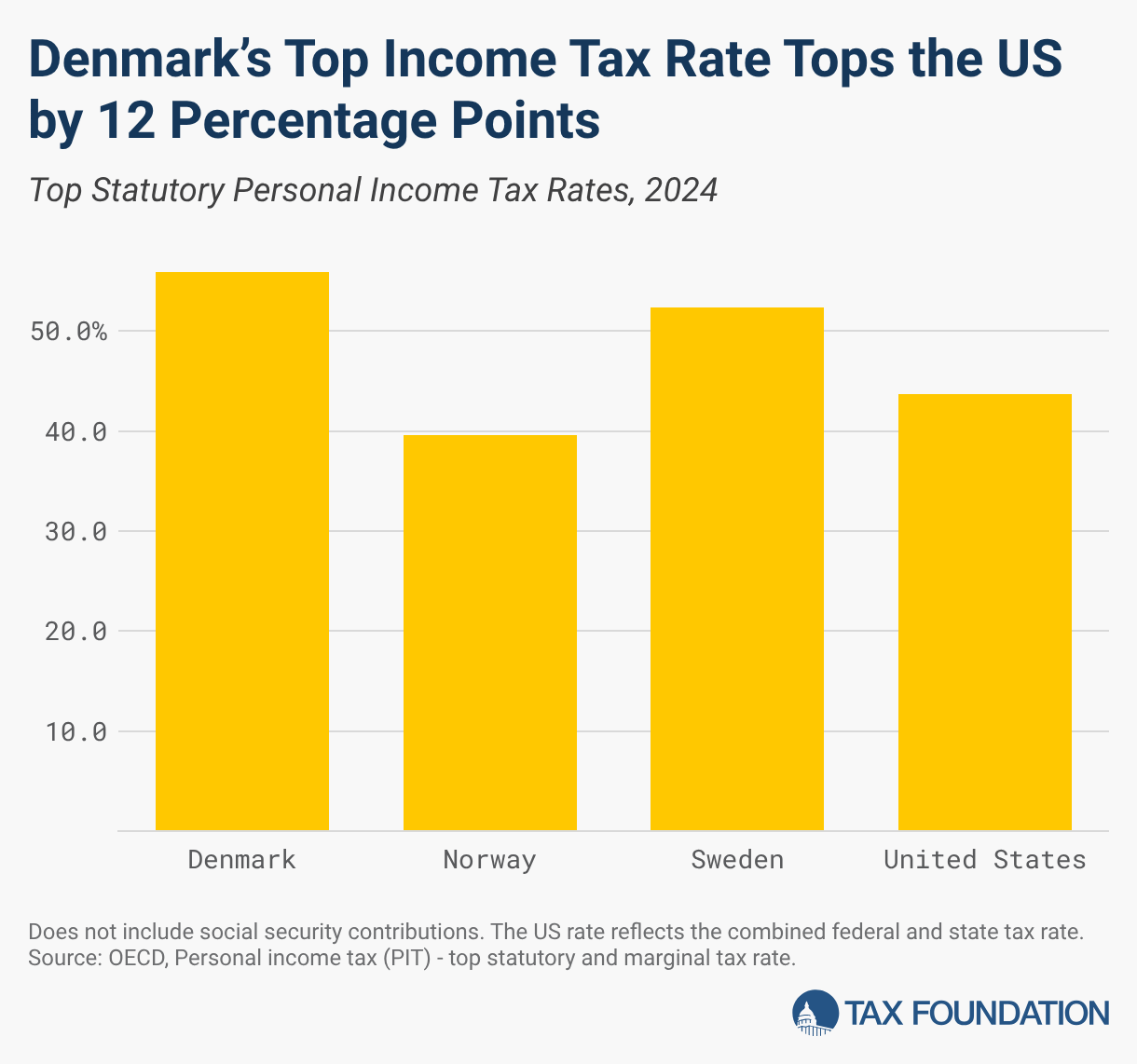
However, tax rates are not necessarily the most revealing feature of Scandinavian income tax systems. In fact, the United States’ top personal income tax rate is higher than Norway’s top rate, at 43.7 percent (federal and state combined).
Scandinavian countries tend to levy top personal income tax rates on (upper) middle-class earners, not just high-income taxpayers. For example, Denmark’s top statutory personal income tax rate of 55.9 percent applies to all income over 1.3 times the average income. From a US perspective, this means that all income over $91,800 (1.3 times the average US income of about $70,630) would be taxed at 55.9 percent.
Norway and Sweden have similarly flat income tax systems. Norway’s top personal tax rate of 39.6 percent applies to all income over 1.8 times the average Norwegian income. Sweden’s top personal tax rate of 52.4 percent applies to all income over 1.1 times the average national income.
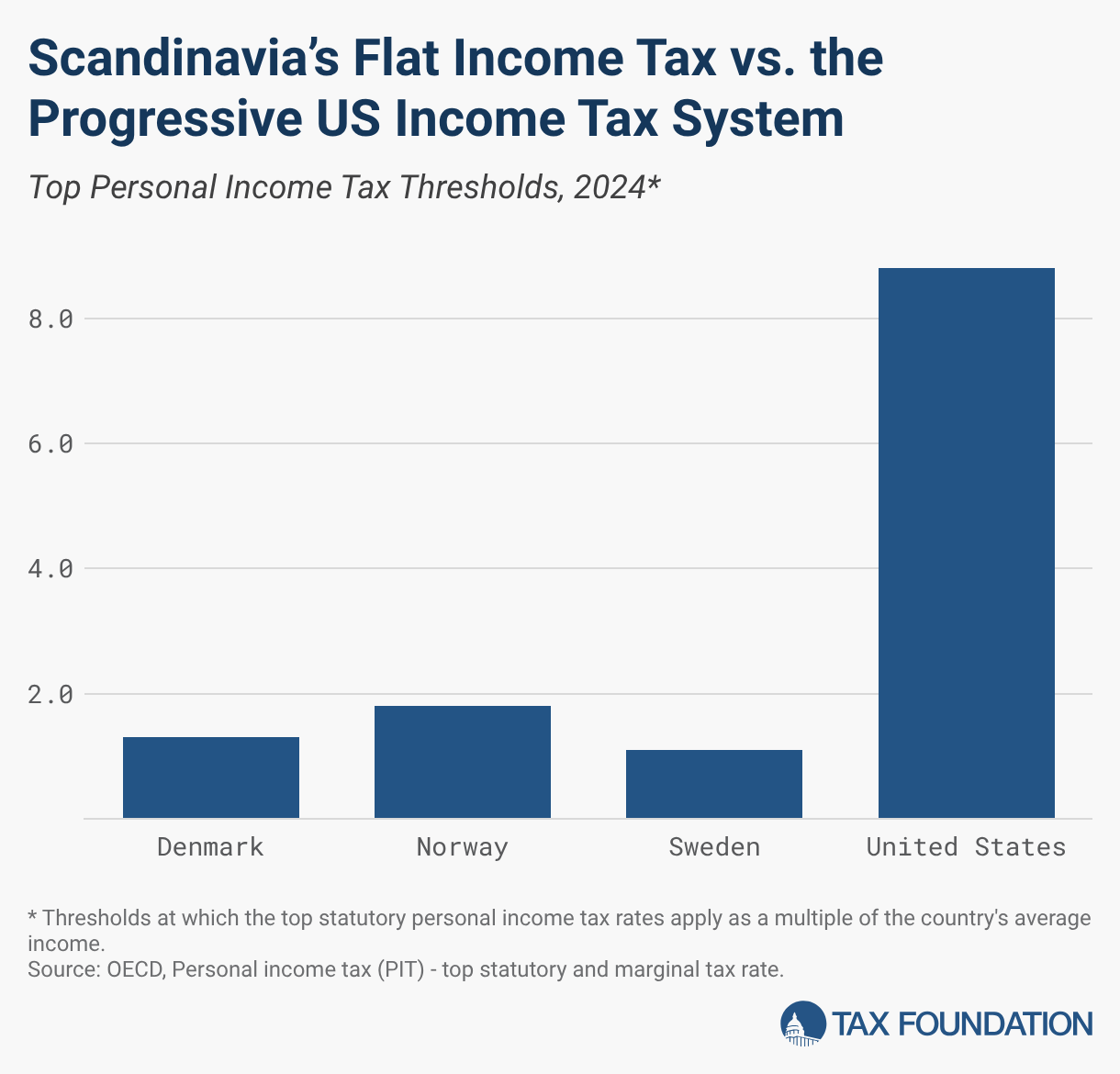
For comparison, the United States levies its top personal income tax rate of 43.7 percent (federal and state combined) at 8.8 times the average US income (at around $621,500 for single filers). Thus, a comparatively smaller share of taxpayers faces the top rate.
Importantly, the overall progressivity of an income tax depends on the structure of all tax bracketsA tax bracket is the range of incomes taxed at given rates, which typically differ depending on filing status. In a progressive individual or corporate income tax system, rates rise as income increases. There are seven federal individual income tax brackets; the federal corporate income tax system is flat., exemptions, and deductions, not only on the top rate and its threshold. In addition, the amount of tax revenue raised by a certain tax system depends on the distribution of taxable income.
Value-Added Taxes
In addition to income taxes and social security contributions, all Scandinavian countries collect a significant amount of revenue from value-added taxes (VATs). VATs are similar to sales taxes in that they aim to tax consumption. However, VATs are assessed on the value added in each production stage of a good or service rather than only on the final sales price.
As a tax on consumption, VATs are economically efficient: they can raise significant revenue with relatively little harm to the economy. However, depending on the structure, a VAT can be regressive because lower-income earners tend to consume a larger share of their incomes.
In 2024, Denmark collected about 9.1 percent of GDP through the VAT, Norway 7.5 percent, and Sweden 8.7 percent. All three countries have VAT rates of 25 percent. The United States does not have a national sales taxA sales tax is levied on retail sales of goods and services and, ideally, should apply to all final consumption with few exemptions. Many governments exempt goods like groceries; base broadening, such as including groceries, could keep rates lower. A sales tax should exempt business-to-business transactions which, when taxed, cause tax pyramiding. or VAT, opting instead for state and local sales taxes. The average sales tax rate across the country (weighted by population) is about 7.5 percent. Additionally, US sales taxes have a much narrower base: they apply to 35.9 percent of final consumption, compared with more than 56 percent covered by VAT in the Scandinavian countries. Due to the much lower rate and the narrower base, US sales taxes collect only about 2.1 percent of GDP in revenue.
Business Taxes
While Scandinavian countries raise significant amounts of tax revenue from individuals through the income tax, social security contributions, and the VAT, corporate income taxes—as in the United States—play a less important role in terms of revenue.
In 2024, the United States raised 2.2 percent of GDP from the corporate income taxA corporate income tax (CIT) is levied by federal and state governments on business profits. Many companies are not subject to the CIT because they are taxed as pass-through businesses, with income reportable under the individual income tax. (3.55 percent of GDP when adding the pass-through businesses’ income tax), below the OECD average of 3.7 percent. Denmark and Sweden raised a share similar to the OECD average, at 4.2 percent and 3.9 percent of GDP, respectively. Norway is the exception, with corporate revenue equal to 9.8 percent of GDP. Norway is situated on large reserves of oil and charges companies a corporate income tax rate of 78 percent on extractive activities.
All Scandinavian countries’ corporate income tax rates are lower than the United States’ rate. In 2024, both Denmark’s and Norway’s statutory corporate income tax rates were 22 percent, and Sweden’s corporate income tax rate was 20.6 percent. The US tax rate on corporations is slightly higher at 25.6 percent (federal and state combined).
Capital Gains and Dividend Taxes
The taxation of capital gains and dividends in Scandinavian countries is similar to the United States, except for Denmark and Norway. Denmark’s and Norway’s top tax rates on dividends and capital gains are among the highest in the OECD, at 42 percent and 37.84 percent, respectively.
Sweden’s tax rate of 30 percent on capital gains and dividends is more in line with the United States, which taxes dividends and capital gains at 28.73 percent (federal and state combined).
Conclusion
Scandinavian countries provide a broader scope of public services—such as universal health care and higher education—than the United States. However, such programs necessitate higher levels of taxation, which is reflected in Scandinavia’s relatively high tax-to-GDP ratios.
Adopting such public services in the United States would naturally require higher levels of taxation. If the US were to raise taxes in a way that mirrors Scandinavian countries, taxes—especially on the middle class—would increase through a new VAT and higher social security contributions. Business and capital taxes would not necessarily need to be increased if policymakers followed the Scandinavian model.
It should come as no surprise that taxes in Scandinavian countries are structured this way. To raise a significant amount of revenue, the tax baseThe tax base is the total amount of income, property, assets, consumption, transactions, or other economic activity subject to taxation by a tax authority. A narrow tax base is non-neutral and inefficient. A broad tax base reduces tax administration costs and allows more revenue to be raised at lower rates. needs to be broad. This means higher taxes on consumption through the VAT and higher taxes on middle-income taxpayers through higher social security contributions. Business taxes are a less reliable source of revenue (unless your country is situated on top of oil). In short, Scandinavian countries focus taxation on labor and consumption.
Subscribe to get insights from our trusted experts delivered straight to your inbox.
Share this article
Twitter
LinkedIn
Facebook
Email