
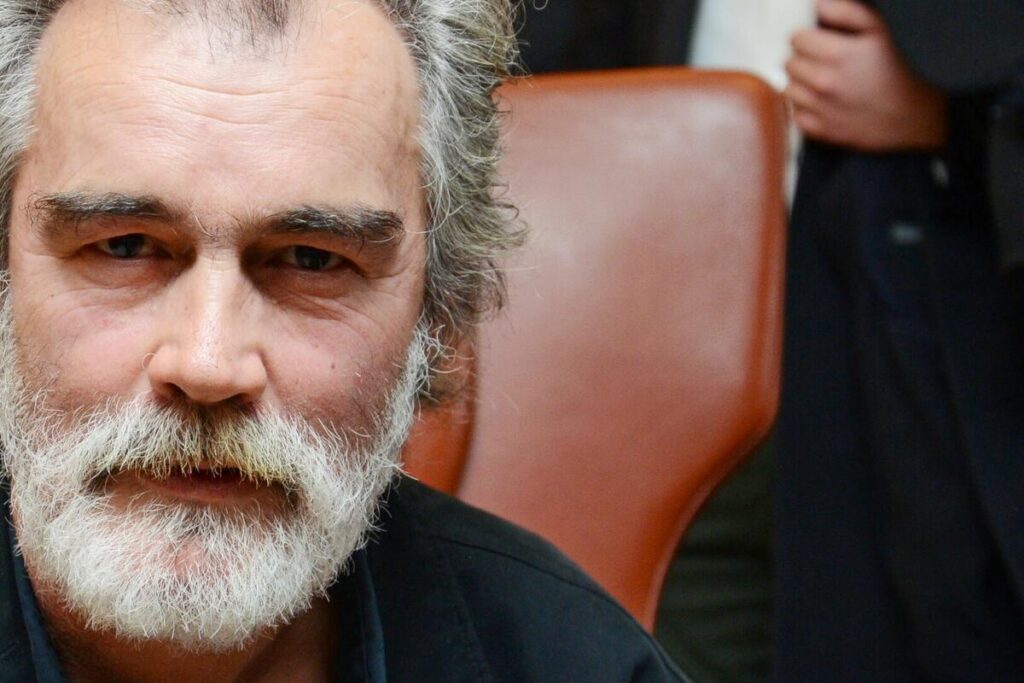
Croatian diplomacy is the fruit of pure frustration, and screwing over Montenegro is the only way for Zagreb to see itself as “the West”, because it constantly licks the feet of the real West, said a journalist from Split. Viktor Ivancic.
In an interview with “Vijesti”, he said that the current Croatian government cannot escape its character, which, as far as Montenegro is concerned, is, according to him, the character of a petty matchmaker and blackmailer, welcomed with any consistency.
“Towards the so-called West, however, official Croatia positions itself as an unquestionable poltroon, a poltroon squared, and then arrogantly expects the same kind of poltroonship from those for whom it is supposedly ‘the West’,” Ivančić stated.
The founder and editor of the once famous Split weekly “Feral Tribune” also stated that ever since he was in power in Croatia, Franjo Tudjman – “reaffirmation of the Ustasha as practically a state project”.
However, Ivančić noted that there are more people in Croatia who are disgusted by “Endehazija” and the Ustasha movement than those who glorify it, but also that this majority has been silent and passive for years, out of fear, opportunism, or something else.
He also commented on the current state of the media, saying that the development of the information industry is aimed at ensuring that the media survive, while true journalism is banished from them, or kept to a minimal extent, for decorative purposes.
“There are exceptions, of course, but the general trend is this. If it manages to survive, honest journalism will move to the media margins and create pockets of resistance there,” he said.
The normalization of Ustashaism in Croatia, a phenomenon you have been warning about for the past few years, has long been, one could say, not manifested as clearly as in 2025: Thompson’s concert in front of half a million people in Zagreb with iconography and chants from the NDH era, a rally in the Parliament at which the crimes in Jasenovac were denied, the cancellation of the Days of Serbian Culture program in Split, a protest by FK Hajduk fans due to the arrest of persons who participated in that incident… Was, as it seems from the outside, Thompson’s concert, which was attended by part of the state leadership there, in some way the fuel for the other events mentioned?
Thompson is more of a symptom than a cause. It is true that after his concert the valves were released, he sent a message that what was frowned upon until yesterday is now allowed. However, there are many more people than Thompson who are responsible for the fascism of Croatia, he is just a beneficiary of such a state of affairs, a parasite.
Ever since Tuđman, under whose rule over 3.000 Partisan monuments were demolished, and almost all street names that had anything to do with the anti-fascist struggle were removed, the reaffirmation of the Ustasha movement has been practically a state project.
Tuđman organized Croatia as a kind of disabled NDH (Independent State of Croatia), just as he himself was a disabled dictator, because he had to endure parliamentary elections and similar hassles against his will. Today, this is rounded off by the formation of a coalition government between the HDZ (Croatian Democratic Union) and the Homeland Movement, which is actually just a slightly more radical branch of the HDZ. Since being installed in the mainstream, Thompson’s role has been to spread the word that there is no longer any reason for mimicry and hiding.
How dangerous is all of the above that has been happening, where can it lead Croatia, can it be put to an end, if so – how, and if not – why?
This situation has been dangerous for Croatia for 35 years, only now there is better visibility on the horizon, some fog has been blown away, some masks have been removed, and naked violence is becoming an increasingly acceptable form of “political action.” The bottom line is that political extremism is in power, while falsely presenting itself as “center-right.” From there, the normalization of the abnormal is dictated, so, for example, the Parliament will serve as a place from which to launch “scientific evidence” that Jasenovac was some kind of spa, not a death camp.
The solution, of course, would be to remove the HDZ from power, provided that the new government radically rejects the nationalist matrix that has poisoned this society to the core. That is, to mercilessly desacralize the current fund of sacred things, such as the state, the nation, the defenders, the “Homeland War”… and not to shoot itself in the foot by offering some “more acceptable” or “civic” version of the patriotic alignment. Unfortunately, today’s Croatia does not have such an opposition.
What effect did the marches against fascism, which brought together thousands of people in four cities in Croatia, have? Can a political platform be built on that basis that will more organizedly oppose the ruling establishment, which, as you claim, is actively pursuing the Ustashaization of Croatia?
Realistically speaking, there are more people in Croatia who are disgusted by the “Endehazija” than those who glorify it. However, this majority has been silent and passive all these years, out of fear, opportunism or something else. The anti-fascist marches have shown that this silence is no longer something that can be counted on with certainty. And that gives rise to some hope. The situation is such that strict political profiling is not even necessary; in my opinion, citizens should gather on the broadest, so to speak hygienic basis – let’s not allow the blackshirts to pollute our country!
How do you explain the fact that Croatia – despite Podgorica’s actions justifying it – is blocking Montenegro in negotiations with the European Union (EU), even though your officials have said that they will not do to anyone what Slovenia did to them while negotiating with Brussels? At the same time, Zagreb is seeking to resolve “contentious” bilateral issues that it kept silent about during the former Montenegrin government, when most of these issues were open…
You didn’t expect a Croatian government like this to conduct a principled foreign policy, did you? It cannot escape its character, and that is – as far as Montenegro is concerned – the character of a petty matchmaker and blackmailer, greeted with any consistency. To the so-called West, however, official Croatia positions itself as an unquestionable poltroon, a poltroon squared, and then arrogantly expects the same kind of poltroonship from those for whom it is supposedly “the West”.
Croatian diplomacy is the fruit of pure frustration. Screwing Montenegro is the only way for Croatia to see itself as “the West”, because it constantly licks the feet of the real West. In that sense, there is no rational reason for something like the Ministry of Foreign Affairs to even exist.
This entire crowded facility could be replaced by an email address that will receive directives from Brussels and Washington. If the order comes from there to stop planting videos in Montenegro, that’s how it will be.
Relations between the two countries became most strained at the end of June 2024, when the Montenegrin parliament adopted a resolution on the genocide in Jasenovac. Regardless of the fact that the adoption of this document was clearly politically instrumentalized and that it was adopted in response to the UN General Assembly resolution on the genocide in Srebrenica, was the uproar that arose in the Croatian government, led by the HDZ, perhaps less a consequence of concerns about political abuse and “trafficking” of the victims of Jasenovac, and more because the word “genocide” was found next to the noun “Jasenovac”? Croatian Foreign Minister Gordan Grlić Radman did not answer the question in an interview with “Vijesti” in March whether Zagreb believes that the NDH regime committed genocide…
Yes, Grlić Radman and company are trying with all their might to protect the NDH from accusations that it carried out genocide, although this is an undeniable fact. But the Resolution on the Genocide in Jasenovac has a very similar political purpose, except that it is presented from a martyr’s perspective. Victims in the hands of politicians are a bare resource. This is a good example of how disgusting revisionism and victimological pornography help each other in solidarity and how there is actually no significant difference between them.
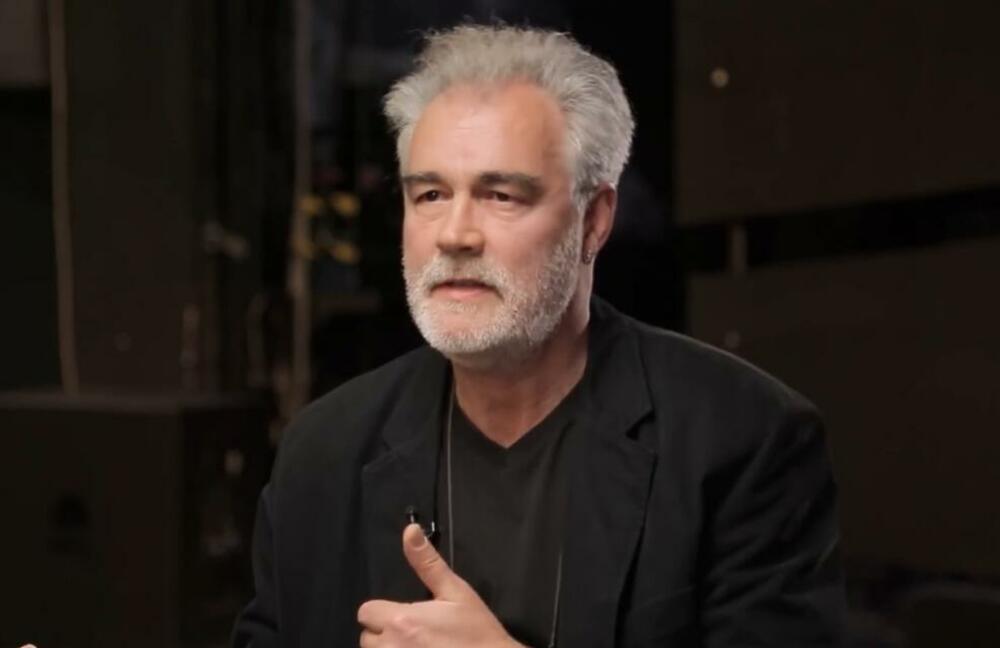
“Victims in the hands of politicians are a bare resource”: Ivančićphoto: Printscreen / Youtube
The “whitewashing” of history, both near and far, is a process that has not bypassed any former Yugoslav republic, and therefore the question arises – how do you see the results of the so-called dealing with the past?
In Split, the city where I live, a monument was erected some time ago at the entrance to the Lora military port. During the war, Lora was a mini-camp where prisoners of war and civilians of Serbian nationality were tortured and killed, including people who had lived in Split for decades, and the monument was erected to the military unit that delegated the camp guards, torturers, and murderers.
At the same time, the public was informed in great detail about what was happening in Lora through a few independent media outlets. That’s how confronting the past is, when it’s directed by the state. It’s not even about mere denial, because the message that this monument sends relies on collective cynicism – we know very well what crimes happened here, but at the community level we treat it as a heroic act.
Why are these results the way they are? Theodor Adorno said that “dealing with the past” would be successful “only if the causes of the past were removed.” Why are they so difficult to remove or, more often than not, not removed at all?
In order to “remove the causes of the past,” as Adorno recommends, it is necessary to recognize something bad in that past, but if we see in the past only what serves us to our honor, what we can be proud of, what is virginally pure, then “removing the causes” is not only pointless, but also hostile work. To achieve this, the past must be consumed in the form of a myth, and a myth that will court the present with every detail.
Today, in Croatia, Franjo Tuđman, for example, is much more popular than twenty years ago, when he was also not alive. Now he is praised even by the parliamentary left, although once he could not have conceived of him. Death is clearly pleasant to a man, the longer he is dead for Croats, the better and better he is, and we see how a concrete historical figure – undoubtedly a satrap – travels to his mythical throne as the founder of the state. The current image of the great man no longer has anything to do with the former real autocrat.
Or, for example, a quarter of a century ago, the Croatian parliament adopted a document called the Declaration on the Homeland War. Although its content is a blatant lie, and although everyone knows it, it was adopted unanimously. Today, there is a serious debate about placing the Declaration under legal protection, that is, making anyone who states something contrary to what it says – for example, that Croatia waged a war of aggression in Bosnia and Herzegovina – subject to criminal prosecution and imprisonment.
That would be an interesting ending, one that even (Joseph) Stalin – to turn the official myth, a consciously distorted interpretation of the past, into a legal obligation.
How real is the danger that the peoples of this region will “face the past” in a way that will repeat itself? Are the parallels with the 1990s appropriate or exaggerated? Please make a comparison between that time and this time.
Not only are the parallels appropriate, they are inevitable, because all the time they are about efforts to maintain and carefully nurture wartime antagonisms in peacetime circumstances. The war ended so that it would not end, that is the unspoken credo of most of the political elites in our countries.
Today, thirty years after the formal end of the war, Thompson fans cannot be said to exist in real peace, at least not enough to be related to him. They live in the permanent stress of the post-war state of war, which is at the same time pre-war, because the desire to deal with the damned enemy is too strong for a rifle not to be nearby. Once (Peter) sloterdijk described fascism laconically as “the rejection of the possibility of demobilization.” That seems convincing to me.
Are the media among those most responsible for the chronic diseases of these societies? What are they like today and why are they largely the services of the government and big business (which are one and the same)?
Most of the leading media today are practically part of the ruling apparatus, so they have the same responsibility as the brainwashing “depadanzas” can already bear. The rules of the game are arranged in such a way that the news media are completely dependent on the power of money, and money, as we know, is under political surveillance. I am afraid that this snake’s ball can no longer be untangled, and I am not even sure that it is worth trying. The ways out should be sought outside the mainstream, playing by different rules.
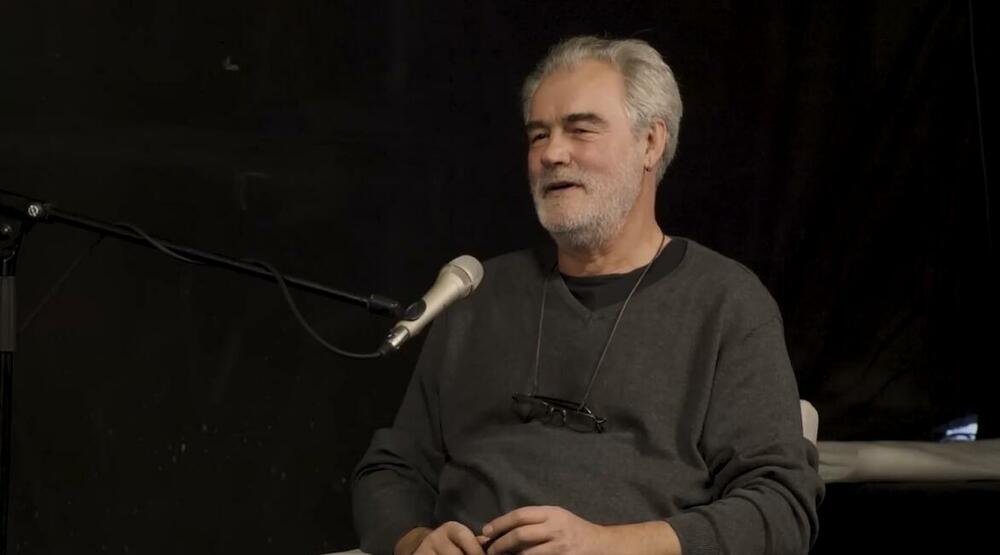
“The rules of the game are arranged in such a way that the news media are completely dependent on the power of money”: Ivančićphoto: Printscreen / Youtube
Are the media themselves largely responsible for where they are today?
They are, of course. But it seems to me that the matter is somewhat more complex. Namely, as paradoxical as it may seem, the interests of what calls itself the information industry and the interests of professional journalism are no longer coincident. On the contrary, they are increasingly and increasingly in conflict.
For mass media, journalists in the traditional sense of the word become ballast, unnecessary surplus, a suspicious item in the balance sheet, and instead they prefer the “content producer”, who is far cheaper, who churns out a much larger amount of superficial reading, who copies and forwards what is delivered to them by PR agencies without question, and who does not cause discomfort or create problems with any criticism.
The development of the news industry, therefore, is directed towards the survival of the media, while genuine journalism is banished from them, or retained to a minimal extent, for decorative purposes. There are exceptions, of course, but the general direction is this. If it manages to survive, honest journalism will move to the media margins and create pockets of resistance there.
If, as you said, the free market is the best environment for the demise of journalism, what is the best way to restore the role it had when you started doing this work, regardless of the market environment?
I wouldn’t really like to go back to those days, as far as the treatment of the profession is concerned. I started writing professionally in the eighties and immediately earned two lawsuits for “undermining the constitutional order”, each of which entailed three years in prison… But still, newspapers were, on average, better than they are now.
Today, a kind of utopian version would be to treat professional journalism as a public good, with its fate not conditioned by the will of capital and political power. In the circumstances of omnipresent capitalism, this, of course, cannot happen, which means that leading media outlets will continue to spout slogans about truth and justice, while serving the rich and powerful.
If our “liberal-democratic” societies lived up to their proclamations, an honestly informed citizen would be the basis of everything. If he is not – and he is not! – he becomes a desirable kind of social cripple who is easy to manipulate. In other words, the ideal voter.
In the essay “Why I Don’t Write or the Report of a Happy Guinea Pig”, published in 2009, you explained why you were not allowed to publish in the Rijeka-based “Novi list”, where you were employed. Why, however, do you write? Boris Dežulović wonders what the point is if you publish the same text for 40 years and nothing changes… Have you ever wondered the same thing?
I constantly wonder about the meaning of writing, literally before every text. And since I’ve gained a few years, the question itself has become meaningless, because – I don’t know how to do anything else anymore.
EU – a big budget and administration to service a big fiction
The government of Montenegro promises its citizens EU membership in 2028, and it has put all its “cards” on it. Croatia has been part of that community since 2013. What is your experience of living in the EU, and how is it different from the time when Croatia was not there?
Croatia today is no better country than it was before 2013. On the contrary, it is darker, more obscure and poorer in spirit, following the example of mother Europe. But Thompson breathes more freely. Having buried its own ideals, the European Union has been reduced to a big budget and a big administration servicing a big fiction.
You should read good books.
Is it possible to get information from the media today? If in the past, to get information, one had to, as Igor Mandić used to say, “read between the newspapers,” what should one do today?
Today, in my opinion, we should read good books.

News