
Published on
January 13, 2026
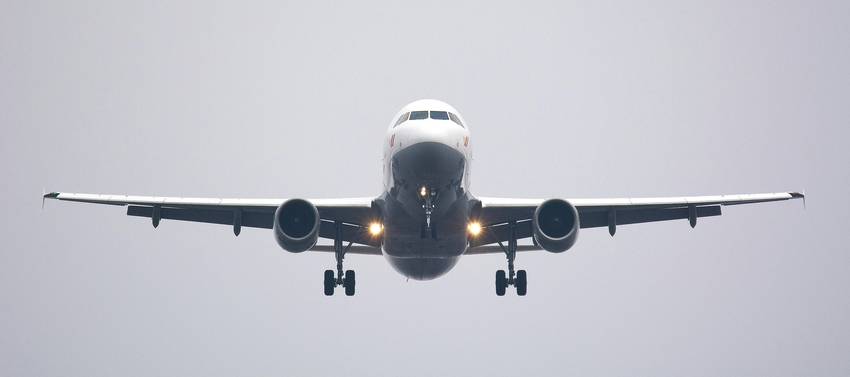
Between January 2022 and December 2025, TAP Air Portugal experienced a series of emergency landings and serious incidents involving Airbus A320‑family and A330 aircraft. These events—ranging from thrust‑reverser malfunctions to cabin‑air quality issues—prompted responses from civil‑aviation authorities, accident‑investigation bodies and the airline itself. Because emergency landings can indicate systemic issues or isolated failures, the incidents below are drawn from official accident investigation reports, safety‑network narratives and statements from TAP or Portuguese civil‑protection agencies. Each event is placed in chronological order and summarised objectively, highlighting the circumstances, crew actions, outcomes and any preliminary findings.
On 8 April 2022 a TAP Airbus A320‑200 (registration CS‑TNV) performing flight TP‑754 from Lisbon to Copenhagen encountered severe control problems during a go‑around in gusty conditions. According to Denmark’s Accident Investigation Board (HCL), when the captain initiated take‑off/go‑around thrust during the aborted landing, one thrust reverser inadvertently deployed[1]. The sudden asymmetry caused the aircraft to yaw left and lose performance. The crew saw an ECAM alert indicating the left thrust‑reverser was unlocked and maintained idle on engine 1 while engine 2 produced full power. Witnesses later reported the jet overflew airport buildings at very low altitude. The pilots regained control, climbed to 3 000 ft, declared a Mayday, and were vectored for a priority landing on runway 22 L[2]. The aircraft landed safely about twenty minutes after the initial go‑around; no injuries were reported[3]. HCL’s preliminary investigation emphasised that no ground contact occurred and the event occurred in daylight under visual meteorological conditions[4]. The serious incident led to an investigation into thrust‑reverser design and procedures, and TAP cooperated fully[5].
On 14 August 2023 a TAP Airbus A320‑200 (registration CS‑TNQ) operating flight TP‑538 from Lisbon to Berlin encountered a smell of smoke during cruise. Near Paris at FL380, the crew detected an odour emanating from the business‑class area. As a precaution they diverted to Paris Orly Airport. The aircraft landed safely about eighteen minutes after the diversion was initiated[6]. TAP later stated that the smell resulted from a technical problem and emphasised that the flight landed “in complete safety”[7]. No injuries were reported. The incident attracted attention because it followed similar reports of cabin smells on other flights, prompting maintenance checks.
A year later, on 23 October 2023, an Airbus A321‑251N (CS‑TJL) performing flight TP‑823 from Milan‑Malpensa to Lisbon was cruising at FL370 near Barcelona when an ECAM warning indicated ENG 2 SHUTDOWN. The crew initiated the engine‑failure checklist, declared an emergency and diverted to Barcelona El Prat Airport. France’s BEA summarised the preliminary notification from Portugal’s accident‑investigation authority (GPIAAF): the pilots followed engine‑failure procedures, diverted to Barcelona and the landing was uneventful[8]. There were no injuries or aircraft damage[9]. GPIAAF’s final report concluded that a latent defect in the engine‑fire push‑button retaining pin allowed the switch to disengage, causing the uncommanded shutdown. The report attributed the condition to improper handling of the panel years earlier and a repair process that failed to detect the damaged pin. It also noted that the switch design lacked redundancy, allowing a small deformation to lead to failure[10].
On 4 September 2024, a TAP Airbus A321‑200 (CS‑TJH) operating flight TP‑430 from Lisbon to Paris experienced smoke in the cabin during the initial climb. AviationSource News reports that the crew reported smoke shortly after take‑off, terminated the climb at about 7 500 ft and made a direct return to Lisbon[11]. The aircraft landed without incident approximately fifteen minutes after departure[12]. A replacement aircraft later completed the journey. TAP did not report any injuries, and the cause of the smoke was not publicly released, but the event was treated as a precautionary return.
One of the most serious events in the period occurred on 11 March 2025, when an Airbus A321‑251NX (CS‑TJQ) operating flight TP‑1356 from Lisbon to London‑Heathrow encountered fumes and odours. The Aviation Safety Network narrative, based on the GPIAAF preliminary report, states that at 16:20 UTC the cabin crew informed the cockpit that a rear‑galley crew member felt nauseous[13]. There was no smoke in the cockpit, so the pilots continued at FL360 for five minutes while monitoring the situation. Given previous odour reports on earlier flights that day, and after other cabin crew confirmed similar symptoms, the pilots decided to divert to Porto and followed the quick‑reference handbook procedures for smoke/fumes, donning oxygen masks[14]. During descent they learned that some passengers felt ill and therefore declared an emergency and requested medical assistance on arrival[15]. The aircraft landed without incident; seven crew members and two passengers were transported to hospital for evaluation[16]. Maintenance teams performed extensive inspections and decontamination of the pneumatic system but did not find a conclusive source. The investigation considered whether a spill of fish‑laden water in the cargo hold in November 2024 could have contributed to lingering odours[17].
Just five weeks later, an Airbus A320 operating flight TP‑687 (reported as Lisbon–Funchal) made an urgent landing at Porto’s Francisco Sá Carneiro Airport after crew and passengers detected fumes. TAP told Portugal’s news agency Lusa that the incident involved odours (fumes) rather than smoke and clarified that there was no fire[18]. Civil Protection initially treated the event as a smoke incident, but TAP corrected the record, noting that fumes could affect the cockpit[19]. The alert was raised at 20:58, and firefighters from multiple municipalities responded with ten vehicles and thirty‑one operatives[20]. A similar report from BOM DIA reiterated that the odours prompted the diversion and that civil‑protection teams from eleven districts were mobilised[21]. The aircraft landed safely; there were no injuries, but the incident added to growing concerns over cabin‑air‑quality events.
On 23 May 2025 an Airbus A330‑200 (CS‑TOO) operating flight TP‑204 from Newark to Lisbon suffered an engine shutdown followed by a hydraulic failure. According to the Aviation Herald, the crew declared a PAN PAN emergency during descent when the left engine was shut down and the aircraft later experienced a blue hydraulic‑system low‑pressure indication[22]. The A330 landed safely on Lisbon’s runway 02; only the outboard spoilers and the right engine’s thrust reverser deployed, and the aircraft taxied to the apron[23]. Subsequent information indicated that the left engine’s oil filter had clogged, prompting the shutdown, and that the hydraulic anomaly occurred later during descent[24]. No injuries were reported. While this incident was widely reported in aviation media, no detailed investigation report has been published publicly.
Three days later, on 26 May 2025, another odour incident occurred when flight TP‑211, an Airbus A321LR from Porto to Newark, diverted to St. John’s, Canada. TAP told The Portugal News that the aircraft diverted as a precaution due to fumes and landed at St. John’s at 22:46 (local time)[25]. A TAP spokesperson said the flight landed “in absolute safety” but did not specify when it would continue[26]. The airline issued a note explaining that cabin‑air quality events include odours, fumes or smoke and that such occurrences may be caused by ventilation‑system odours or cabin items[27]. TAP stressed that these events are continuously monitored and represent a residual percentage of all flights[28]. The Office for the Prevention and Investigation of Aircraft and Railway Accidents (GPIAAF) added that there were 1 249 reports of cabin‑air‑quality issues across Europe in 2024 and that regulators and manufacturers are paying increasing attention to this issue[29].
During the four‑year period, TAP Air Portugal experienced a mix of mechanical failures and cabin‑air‑quality incidents. The 2022 Copenhagen event exposed a rare failure mode—an inadvertently deployed thrust reverser—highlighting the importance of preventing asymmetrical thrust during go‑arounds. The 2023 engine‑shutdown incident underscored how latent component damage can manifest years later, leading to uncommanded engine shutdowns. In 2023–2025, a series of smoke and odour incidents occurred on A320‑family aircraft. Some led to diversions or precautionary returns (Paris 2023, Lisbon 2024), while others (March and April 2025) resulted in emergency declarations and medical evaluations because of crew or passenger symptoms[30]. These events drew attention to cabin‑air‑quality monitoring, prompting TAP to emphasise that such occurrences are rare and actively mitigated[28]. The May 2025 A330 incident served as a reminder that complex failures—in this case, an engine‑oil filter blockage followed by hydraulic problems—can occur on long‑haul flights and require robust emergency procedures[22].
While the sample is limited, the pattern suggests that TAP confronted two recurring challenges: engine‑system faults and cab‑air‑quality events. The latter category has spurred regulatory attention and investigation by GPIAAF and EASA, and TAP has implemented monitoring and decontamination procedures. None of the documented incidents resulted in injuries or aircraft loss, indicating that flight crews responded appropriately and emergency protocols were effective. Continued vigilance, technical upgrades and transparent reporting will be essential to maintain passenger confidence and address the underlying causes of these emergency landings.
- Havarikommissionen (Danish Accident Investigation Board) preliminary statement, summarised by the Aviation Herald – serious incident at Copenhagen, 8 April 2022[31].
- BEA (France) summary of GPIAAF notification – uncommanded engine‑shutdown and diversion of flight TP‑823 near Barcelona, 23 October 2023[32].
- Aviation Safety Network narrative based on GPIAAF preliminary report – fumes event and emergency landing of flight TP‑1356 at Porto, 11 March 2025[33].
- Portugal News and BOM DIA articles quoting TAP and Civil Protection – odour incident and emergency landing at Porto, 16 April 2025[34][21].
- Aviation Herald report on engine‑shutdown and hydraulic failure on flight TP‑204, 23 May 2025[22].
- Portugal News article citing TAP and GPIAAF/EASA – cabin‑air quality diversion of flight TP‑211 to St. John’s, 26 May 2025[35].
- AviationSource News report on precautionary return to Lisbon due to cabin smoke on flight TP‑430, 4 September 2024[11].
