
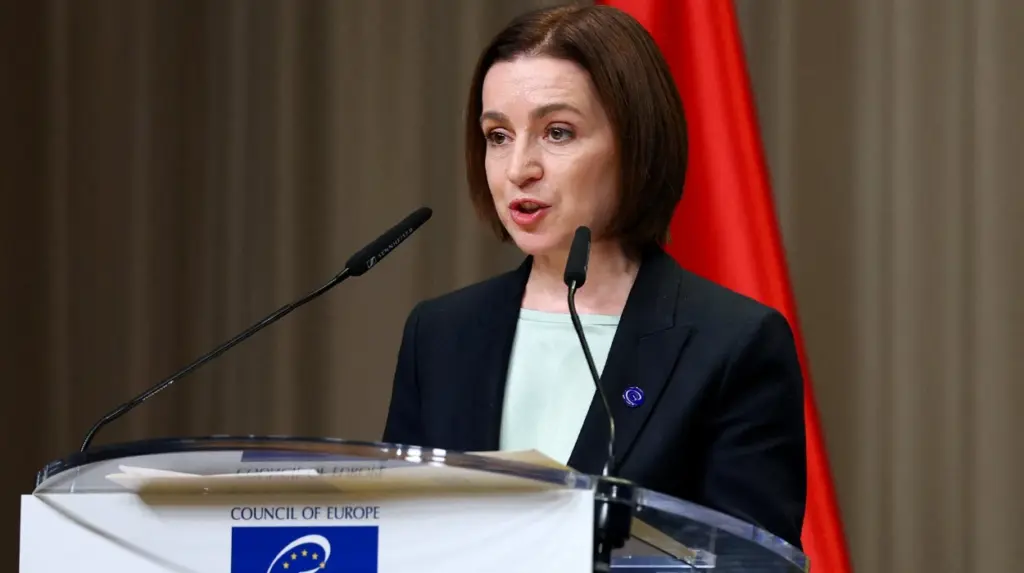
Chișinău (Brussels Morning Newspaper) January 13, 2026 – Moldovan President Maia Sandu stated she would vote for reunification with Romania if a referendum occurred. The declaration came during an interview on the British podcast The Rest is Politics. Sandu acknowledged a lack of majority public support for unification while prioritising EU accession.
Sandu explained that Moldova faces growing challenges in surviving as a small sovereign democracy resisting Russian influence. The 2.4 million population nation lies between Romania and Ukraine. She described unification as personally preferable, though EU membership represents the realistic objective.
The pro-European leader won re-election in 2024 anda parliamentary majority in the September 2025 elections. Her Party of Action and Solidarity maintains a pro-Romanian orientation. Opposition accuses Russia of interfering through disinformation and vote-buying.
Journalist Paula Erizanu noted Sandu’s longstanding position. Paula Erizanu – @paulaerizanu said in X post,
“Some have been shocked that Maia Sandu said she would vote for Moldova’s reunification with Romania in a referendum recently but she has been saying this since 2018”.
Some have been shocked that Maia Sandu said she would vote for Moldova’s reunification with Romania in a referendum recently but she has been saying this since 2018
— Paula Erizanu (@paulaerizanu) January 13, 2026
Interview Context on British Podcast The Rest is Politics
 Credit: en.wikipedia.org
Sandu appeared on the podcast hosted by Rory Stewart and Alastair Campbell with interview released Sunday. She framed unification within regional security pressures affecting small states. Moldova applied for EU membership in 2022 with accession talks beginning last year.
Sandu contrasted personal reunification preference against public opinion polls. Business news outlet confirmed her acknowledgment of majority EU accession support over unification. Current administration focuses on European integration pathway.
bne IntelliNews reported the poll disparity. bne IntelliNews – @bneintellinews said in X post,
“Maia Sandu says she personally would vote for unification, but admits public opinion in Moldova favours EU accession rather than unification.”
Maia Sandu says she personally would vote for unification, but admits public opinion in Moldova favours EU accession rather than unification. https://t.co/n9feh0gsWw #Moldova #Romania #MaiaSandu #Unification #EUAccession
— bne IntelliNews (@bneintellinews) January 13, 2026
Historical Ties Between Moldova and Romania
 Credit: rferl.org
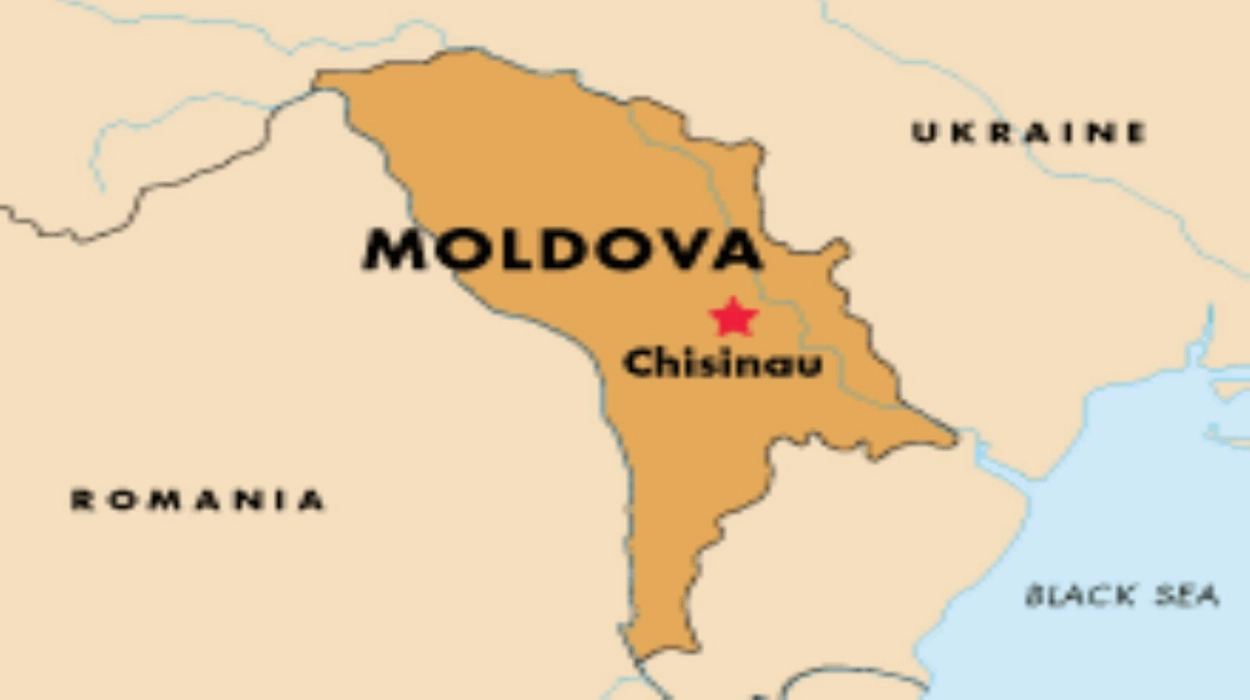
Moldova corresponds largely to Bessarabia territory under Romanian control interwar period until Soviet annexation in 1940. Romanian serves as official language with cultural continuity. Independence declared 1991 following USSR collapse.
Unionist movements active since 1990s gaining prominence during 2019 elections. Constitutional provisions permit referendum initiation by citizens. Simple majority approves unification under Moldovan law mirrored in Romanian constitution.
Over 1.5 million Moldovans acquired Romanian citizenship facilitating EU labour access. Dual nationality permitted legally.
Domestic Political Reactions to President’s Statement
Party of Socialists demanded investigation into potential high treason. Communists cited statement grounds for impeachment proceedings. Former Prime Minister Vlad Filat interpreted remarks seeking Romanian economic assistance.
Pro-Romanian factions welcomed presidential consistency. Șor Party characterises unification divisive historically. No referendum currently planned per government sources.
September 2025 parliamentary elections occurred amid Russian interference allegations. Sandu’s PAS party secured overwhelming majority maintaining pro-European course.
Geopolitical Pressures Cited by President Sandu
 Credit: fb/EPP Group in the European Parliament
Sandu highlighted Russian hybrid warfare targeting Moldova including disinformation and election manipulation. Airspace violations reported since Ukraine invasion 2022 with drones crashing on territory.
Moldova received EU candidate status 2022 advancing through technical accession phases. Romania provides main external support in trade energy and EU alignment. NATO partnership programmes engage armed forces.
Transnistria separatist region hosts Russian peacekeepers since 1992 ceasefire complicating territorial discussions. OSCE monitors frozen conflict.
Public Opinion Trends on Unification Question
Polls indicate no majority supports reunification currently. Urban youth demographics demonstrate higher favourability. Rural populations exhibit stronger independent statehood preferences.
EU accession commands broader consensus aligning government priorities. Sociological surveys track fluctuating support levels over time. Diaspora communities organise advocacy events abroad.
Constitutional and Legal Framework for Referendum
Article 142 Moldovan constitution outlines unification referendum procedures. Parliamentary ratification follows positive vote outcome. International recognition depends subsequent diplomatic processes.
Romanian citizenship laws process heritage claims efficiently. Language exemptions apply facilitating applications. Bilateral agreements cover transitional arrangements hypothetically.
Economic Interdependence Strengthening Bilateral Links
Bilateral trade volumes expanded through 2025. Romanian investments target energy infrastructure sectors. Common energy market integration progresses regionally.
Moldovan remittances constitute significant GDP contributions from Romanian employment. Free trade agreements eliminate progressive tariff barriers. Gas pipeline interconnections enable bidirectional flows.
Opposition Accusations of Economic Motivations
Former officials interpret Sandu remarks requesting Bucharest economic lifeline. Moldova experiences profound crisis per opposition narratives. Impeachment threats invoke constitutional treason provisions.
Socialist parliamentary faction seeks immediate probe initiation. Communists position statement impeachable offence grounds. Legal processes demand high evidentiary thresholds.
European Union Accession Priority Confirmed
Accession negotiations advance addressing judicial reform anti-corruption benchmarks. EU structural funds condition democratisation progress. Technical assistance builds institutional capacities continuously.
Romania coordinates support aligning Chisinau integration aspirations. Brussels maintains neutrality regarding sovereignty questions. Association agreement implementation proceeds irrespective of unification discussions.
British outlets reported extensively on interviews, framing the regional security context. International wire services highlighted domestic political contestation. Russian media portrayed statement economic desperation signal.
Romanian officials expressed solidarity consistently. United States reaffirmed democratic choice support. Moscow denies interference allegations routinely.
Cultural Linguistic Foundations Underpinning Debate
Romanian language dominates education media curricula. Shared literary heritage features canonical authors bilaterally. Cultural institutes promote joint preservation efforts.
Annual festivals commemorate unionist figures historically. Educational exchanges facilitate student mobilities annually. Diaspora maintains cross-border associative networks.
Transnistria Complication in Territorial Discussions
Separatist administration rejects unification proposals categorically. 5+2 format negotiations stalled through 2025. Confidence building measures implement incrementally across sectors.
Moldovan reintegration strategy emphasises incentives dialogue approaches. International donors fund development initiatives regionally.