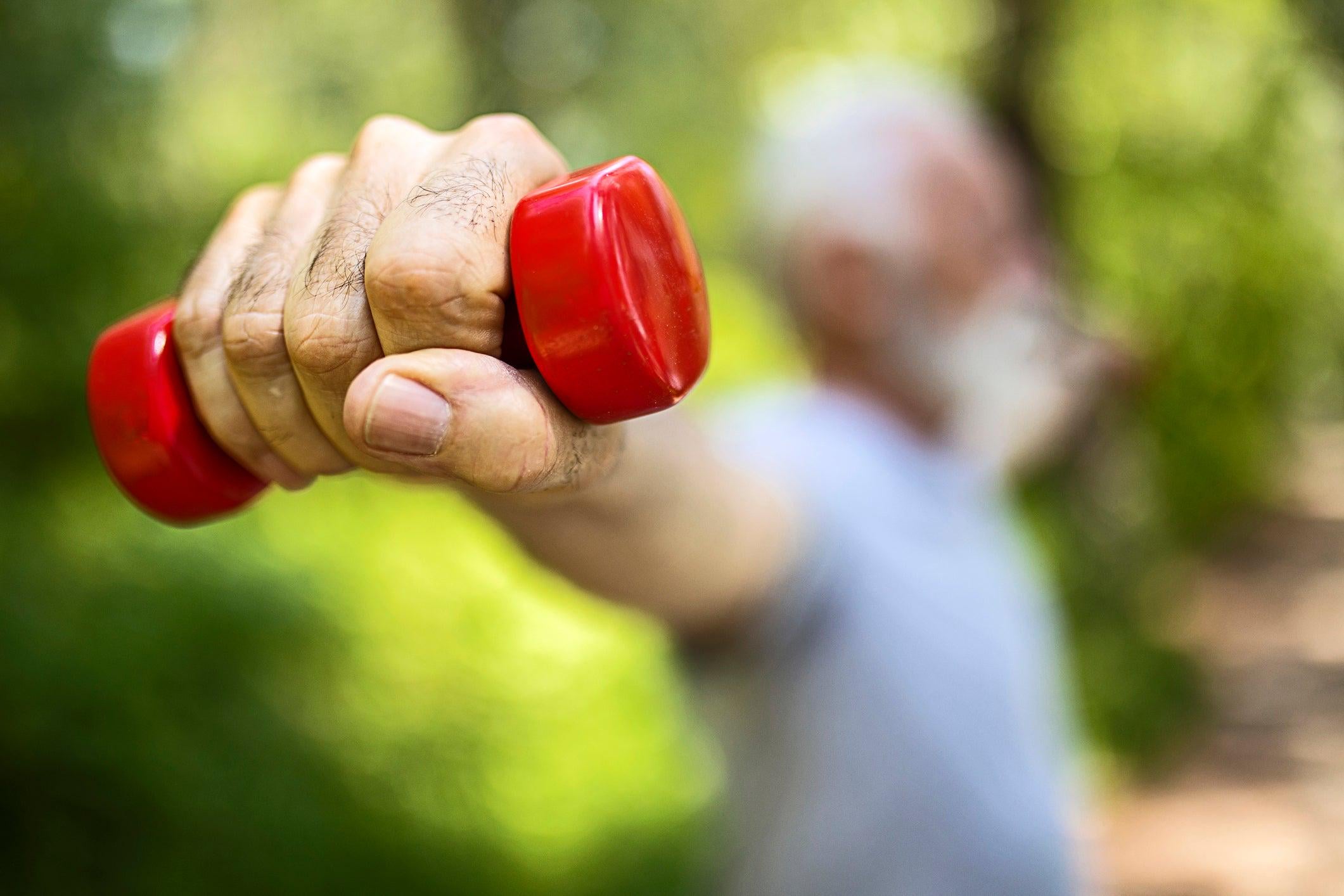
Researchers discovered that a little-known region deep in the brain -the caudate nucleus- could be crucial for preserving physical strength as we age. The findings could help detect and prevent frailty before it begins
https://news.ucr.edu/articles/2026/01/13/getting-grip-aging

3 Comments
>The researchers analyzed scans from 60 older adults who live in the Riverside area. The study group comprised half men and half women, and all completed three sessions of functional MRI while undergoing strength testing. To ensure they were isolating brain effects from other factors like body size, the data was normalized to account for differences in sex and muscle mass.
>
>The result was a statistically significant correlation between brain network patterns and grip performance. Stronger blood flow and connectivity in the caudate nucleus matched higher grip strength, independent of gender.
>
>Other regions, such as the tail of the hippocampus, which is involved in memory, and the anterior cingulate cortex, linked to emotion and attention, also showed some connection to grip performance. But the caudate’s role was most prominent, suggesting it may act as a central hub for physical capacity in aging adults.
>
>The study is among the first to examine grip strength in the context of active brain imaging during a motor task. Unlike previous work that looked at brain structure or rest-state activity, this research captured neural function in real time while participants exerted physical effort.
[Frontiers | Connectome-based predictive modeling of grip strength: a marker of physical frailty](https://www.frontiersin.org/journals/neuroscience/articles/10.3389/fnins.2025.1697908/full)
Why on earth is this described as “little known”? It’ll be in every basic neuroanatomy course.
Basically they had people do a grip strength test during a scan which is something they really didn’t do before. There’s no new region discovered just new connectivity mapped out because of the activity during the scan