
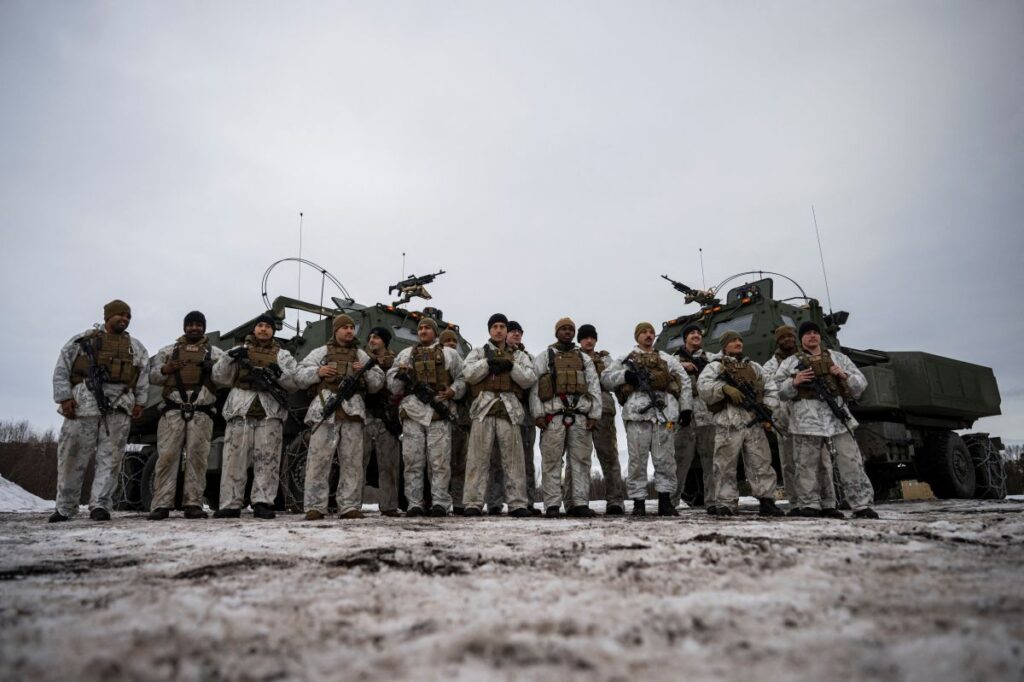
Supreme Allied Commander of Europe General Alexus Grynkewich warned that China and Russia are broadening their presence in the Arctic in an attempt to “figure out how they can counter NATO capabilities on and under the sea.”
Newsweek reached out to retired Army Lieutenant General Ben Hodges via email on Tuesday for comment.
Why It Matters
Joint Russian and Chinese military activities near Alaska and across the wider Arctic have potential strategic concerns for NATO and the United States.
The Arctic increasingly serves as a location for great power competition, possibly raising the stakes for national security and global stability. Recent statements by NATO leadership highlight the region’s growing militarization and collaborative opposition to Western interests by Russia and China.
The comments come on the heels of U.S. President Donald Trump’s expressed desire to acquire Greenland. The effort, framed as a national security priority, has drawn public criticism from sitting Republican lawmakers and prompted unified opposition from European allies.
What To Know
Grynkewich stated at Sweden’s National Security Conference that Russia and China are escalating joint patrols in the Arctic, extending their presence from the Russian northern coast to north of Alaska and near Canada.
“It’s not for peaceful purposes,” Grynkewich said in part. “They’re not studying the seals and the polar bears. They’re out there doing bathymetric surveys and trying to figure out how they can counter NATO capabilities on and under the sea. So that’s something that could grow very quickly, and we need to be mindful of it and ready for it,” Fox News reported.
These bathymetric surveys, which map the ocean floor, have military applications ranging from submarine navigation to route planning for undersea infrastructure. According to Grynkewich, while Russian and Chinese vessels are increasing joint patrols in Arctic waters, he does not consider an immediate threat to NATO territory likely, due in part to Russia’s military preoccupation with Ukraine.
“In the Arctic and the high north, we see a similar trend,” Grynkewich said. “Russian and Chinese vessels are conducting more and more joint patrols. Chinese icebreakers and research vessels are in Arctic waters, and their research is not for peaceful purposes. It’s to gain a military advantage.”
What People Are Saying
NATO, on X Tuesday: “Russia, China, North Korea and Iran are challenging us. But we are miles ahead. We can build on decades of friendship between our nations on both sides of the Atlantic —@SecGenNATO| #GlobalEuropeForum“
Nicholas Burns, Harvard professor and former U.S. Ambassador to China, on X earlier this month: “We can keep Russia and China out of Greenland if we work through NATO. 7 of the 8 Arctic nations are NATO members. The U.S. is always stronger working with our allies, like Denmark.”
What Happens Next
The evolving Arctic dynamic could likely shape U.S. and NATO defense policies and alliance coordination in coming years as competition for strategic control intensifies across the region.