
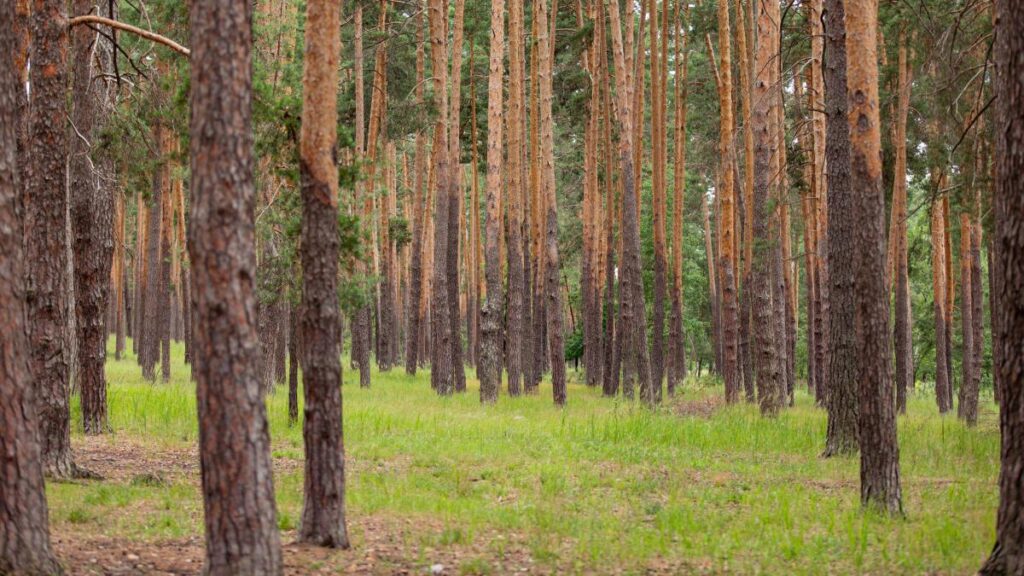
There are more trees in Russia than stars in the Milky Way — comfortably more than 100 billion. And that is despite centuries of aggressive deforestation, from Peter the Great with his mania for shipbuilding to the rampant logging of the 19th and 20th centuries and the calamitous wildfires and illegal extractions of recent years.
The boggling number of Russian trees, though, is not the focus of this thoughtful and sophisticated book. It is the depth of Russia’s attachment to them. Russia, you might say, has a wooded soul.
West of the Urals, in European Russia, the oak is seen as representing the Russian spirit — a fact that might surprise them in the English shires. Pagan Slavs worshipped oaks, and the goblin-like leshii, or “forest master”, is as central to folklore as Baba Yaga (she of the chicken-legged hut). A gnarled old man, he can be recognised by his overlong arms.
The birch, of course, was also significant. Stefan, the first bishop of Perm in the 14th century, is often shown in icons with an axe in hand. He is celebrated for cutting down the birch trees sacred to the indigenous Komi.
East of the mountains, in Siberia, it is the larch that dominates. The great deciduous conifer of the taiga, or snow forest, the larch can live 1,000 years — comfortably enough, as Pinkham points out, for some to have been saplings long before the region was colonised by Russia.
Pinkham’s first book, Black Square, was a work of gritty, emotive first-person reportage from Ukraine, written in the wake of Russia’s annexation of Crimea. This is a more formally historical book, an alternative telling of Russian history from the perspective of the forests and the people in them.
The vantage point is strikingly original. By focusing on indigenous peoples, foresters, political exiles and prisoners, as well as a lot of writers, it gets around the Russia problem — the queasiness that can attend almost any cultural engagement with Russia in these times. A recurring theme is resistance to the Russian state, or flight into the forests to escape its reach. It is still going on today, as Russians flee conscription into Putin’s war.
• The best books of 2025 — chosen by our critics
The Old Believers are a fascinating example of forest-based resistance. They were — are — Russian Orthodox Christians who rejected liturgical reforms in the 17th century. Some sought a purer life, quitting corrupting civilisation for an eremitical existence in the remote forest. Others were refugees from persecution.
In 1978, astonishingly, a geologist in southern Siberia came across an Old Believer family deep in the taiga. The Lykovs had quit civilisation 44 years before and had lived in isolation and near-starvation ever since. Stalin and the war had passed them by. They wore birch-bark shoes, their skin was ghastly white (from carotene deficiency) and their precious Bible so blackened by smoke that it was no longer legible. They became the reality stars of their day, for having preserved “the essence of Russian culture through a great flood of catastrophe and modernisation”.
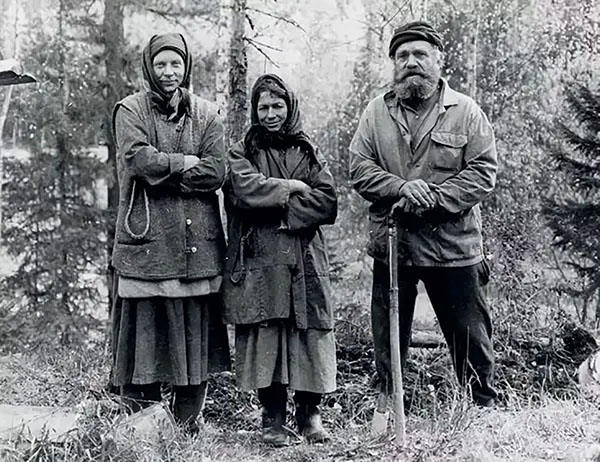
The Lykovs, pictured in 1982, quit civilisation and lived in the woods
They were likened to a living ark — and an ark, as Pinkham points out, is made of wood. The idea that the forest is a repository of Russian memory and a source of Russian purity has deep roots. Pinkham traces this line of thought carefully from the great naturalist writer Vladimir Arsenyev, who wrote a bestselling “frontier fantasy” of his expeditions into the Russian Far East with his indigenous tracker. That guide, Dersu Uzala, became a Russian legend — and turns out to have been something of a fiction.
She also resurrects the postwar socialist realist writer Leonid Leonov. Now almost forgotten in the West, his novel The Russian Forest sold a million copies. He argued that, from the forest’s perspective, western and Soviet-style modernity were equally hostile.
• The Sunday Times top 50 bestselling books of 2025
Leonov’s ideas helped to shape those of present-day conservative eco-nationalists. Many now actively promote the idea of a “Russian ark”. They bring out the disturbing best in Pinkham’s writing. There is Mikhail Tarkovksy, a virulently anti-liberal hunter, writer and nephew of the great film director. He campaigns for the protection of the Siberian taiga as fiercely as he speaks for Russia’s imperial destiny. Then there is Zakhar Prilepin, a prominently political writer who started as an eco-anarchist before shifting to Putinism. He has boasted about how many Ukrainians he has killed. He too sees the forest as integral to Russia’s soul, describing a “true Russian” as “a seedling of the Russian forest”.
The core of the book, though, and its best part, focuses on the great Russian writers. Her story of the anarchist prince Peter Kropotkin, and his political-ecological awakening amid the abused and exploited forests of the Far East is wonderful. So is her account of Tolstoy’s lifelong relationship with trees.
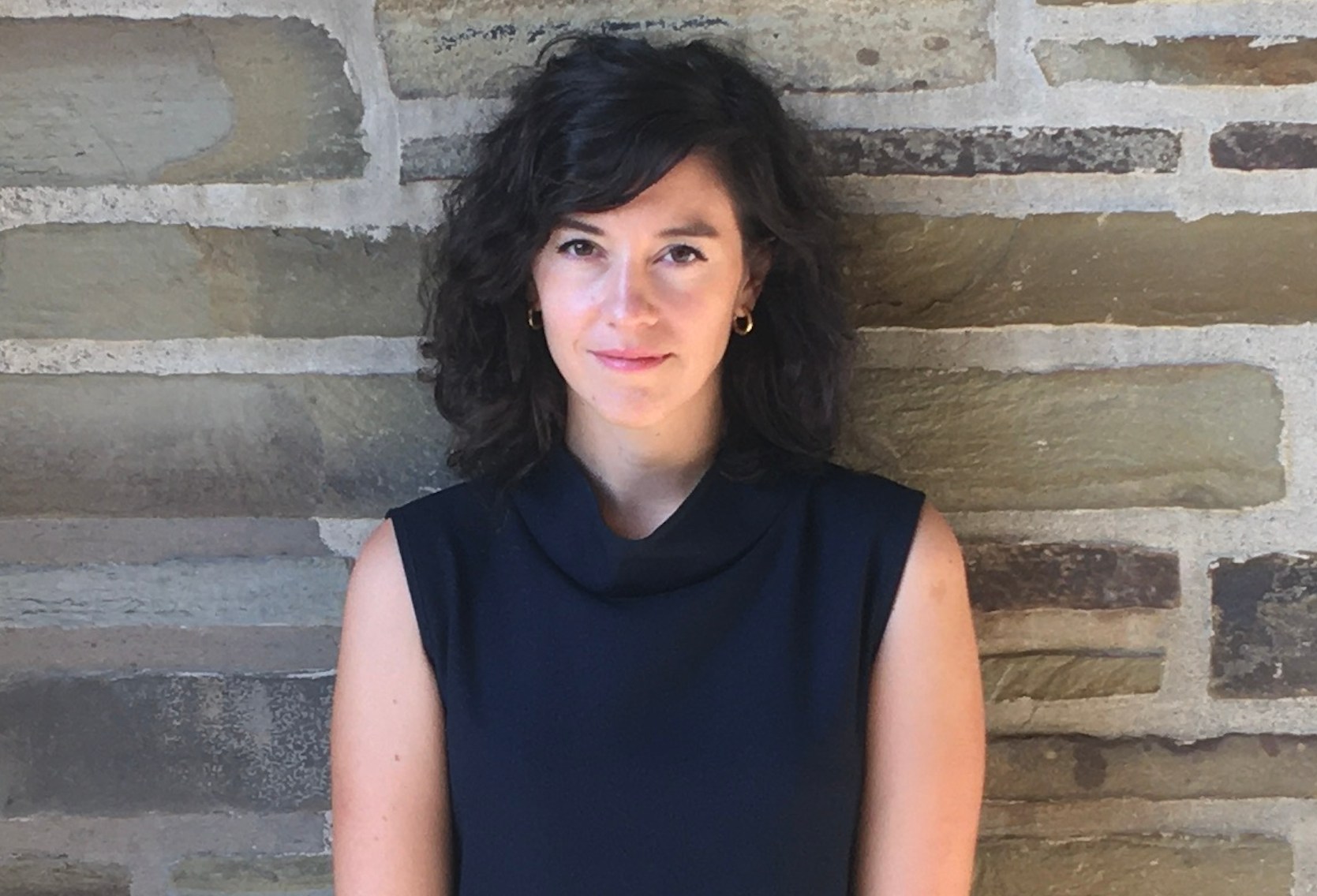
The author Sophie Pinkham
It was a deep one. Ashamed of having sold off the family estate’s forest to pay his debts as a young man, he later used the royalties from War and Peace to buy 50,000 beech and fir seedlings — turning books into trees, rather than the more usual process. He came to believe that humans and trees were part of a single organism. Movingly, he was buried in a forest clearing on his family estate, under a grassy mound.
The relentless industrial consumption of the forest makes for grittier material. The Siberian railway, for instance, did not just drive its way through the woods, it devoured them — as timber in sleepers, ties and bridges, and as fuelwood, by the millions of cubic metres. “Hyper-exploitation” reached its peak with Stalin, who brought in the bulldozers in the 1930s. At the same time he launched a grandiose project to plant eight forests in the southern steppe, to defend against sand blowing in from Asia. The forest would have covered an area almost the size of western Europe. Shaped by the “charlatan” Soviet biologist Trofim Lysenko, the project was a disaster and abandoned after Stalin’s death.
• Read more book reviews and interviews — and see what’s top of the Sunday Times Bestsellers List
Oddly, in its conjuring of the forest itself, the book is patchier. There are delightful moments, especially in Karelia, between Russia and Finland — where “tiny shards of ice in the crusted surface cluster around sparse bog plants, distilling the sun and making it look as if the meagre, twisted flora has seeded the snow with light”. I wanted more of that immersive, subjective writing. In fact, I wanted fewer people — the cast of characters here is vast — and more trees. This is a clever way to retell Russian history from a new and revealing perspective, but it is still human-centred history. The forest feels more like scenery than protagonist.
The Oak and the Larch: A Forest History of Russia and Its Empires by Sophie Pinkham (William Collins £25 pp304). To order a copy go to timesbookshop.co.uk. Free UK standard P&P on orders over £25. Special discount available for Times+ members