
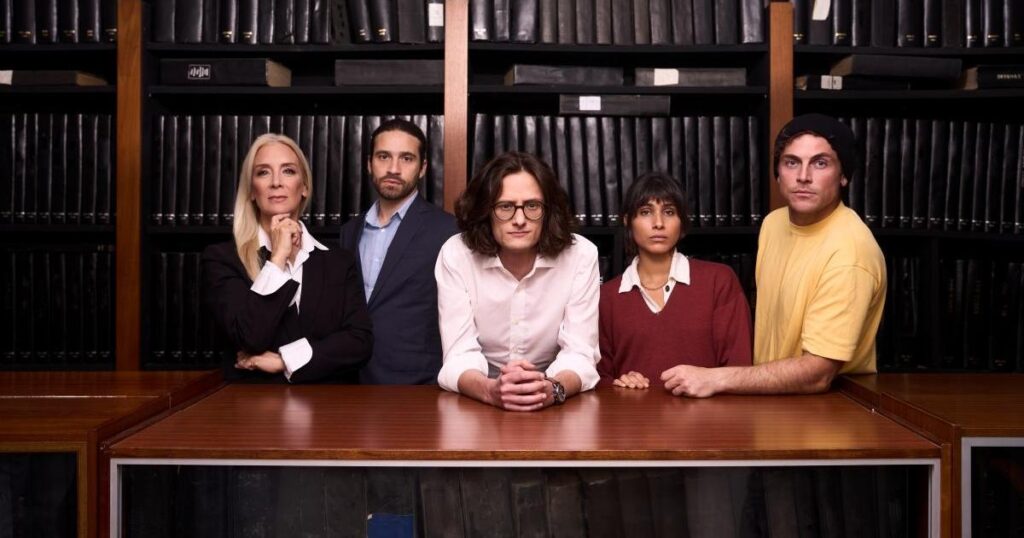
A new Maltese theatre production will premiere next month, offering audiences a rare behind-the-scenes look at the media’s uneasy pace in a world flooded with spin, soundbites and social media outrage.
Inspired by ‘live journalism’, which explores journalistic reporting through stage productions, Press Mute dramatises the real-life processes behind real news stories and the media’s often-fraught relationship with artificial intelligence (AI), algorithms and podcasters.
The one-act play features some of Malta’s most recognisable actors, including Michela Farrugia, Davide Tucci and Philip Leone Ganado, as well as well-known journalist Mark Laurence Zammit and media personality Trudy Kerr.
The play was commissioned by arts production company Udjenza and written and directed by Times of Malta editor-in-chief Herman Grech. It will be staged at Spazju Kreattiv.
Mainly set in a struggling newsroom, the play, inspired by the real-life daily experiences of journalists worldwide, invites audiences to think differently about news stories – and participate in their telling.
The play is billed as combining “live action, multimedia and audience interaction to ask: when outrage becomes entertainment, who controls the narrative?”
Misinformation and media fatigue collide in this urgent satire, where no one is immune – not even the truth.
Clickbait, AI and Big Tech
Grech said the play was aimed at exposing the dangers of clickbait [online content, often sensationalist, designed to attract internet traffic] and AI, through satire and dark humour.
“Journalism ties in fantastically with theatre,” he said, emphasising that theatre had the “power to tell stories beyond the news headlines”, said Grech, whose prior theatre productions include political plays, including The Lockerbie Bomber (2013), Lampedusa (2015), De-Terminated (2018), and They Blew Her Up (2021).
“I feel extremely strongly about the way Big Tech uses its unfair leverage to manipulate the truth, make money and leave viewers wondering what is true and false in an increasingly chaotic media landscape,” said Grech.
“This is the main reason I wrote Press Mute. I want people to leave the theatre asking how their own behaviour can dictate whether facts will continue dying a slow death.”
The production takes place against a backdrop of global media instability as AI content, YouTube channels, influencers and podcasters take up increasing space in the media landscape.
In the US, Donald Trump returned to office on a wave of support from online personalities, with Fortune magazine reporting in January last year that more than 7,400 influencers had applied for press credentials after his administration invited “new media voices” to play a role in White House reporting.
And closer to home, podcasters and social media personalities play an increasingly active role in the daily news cycle.
Meanwhile, trust in the mainstream media continues to wane across the globe, with right-wing and populist political parties capitalising on shifting attitudes and distrust.
‘The unglamorous part of the job’
Times of Malta journalist Mark Laurence Zammit, who plays a news editor in the production, said that while on one hand he was “doing something I do every day as a journalist, I’m doing something I never do: acting”.
Asked if he thought the play might attract people to journalism, Zammit said he felt that “in general, it will put them off”.
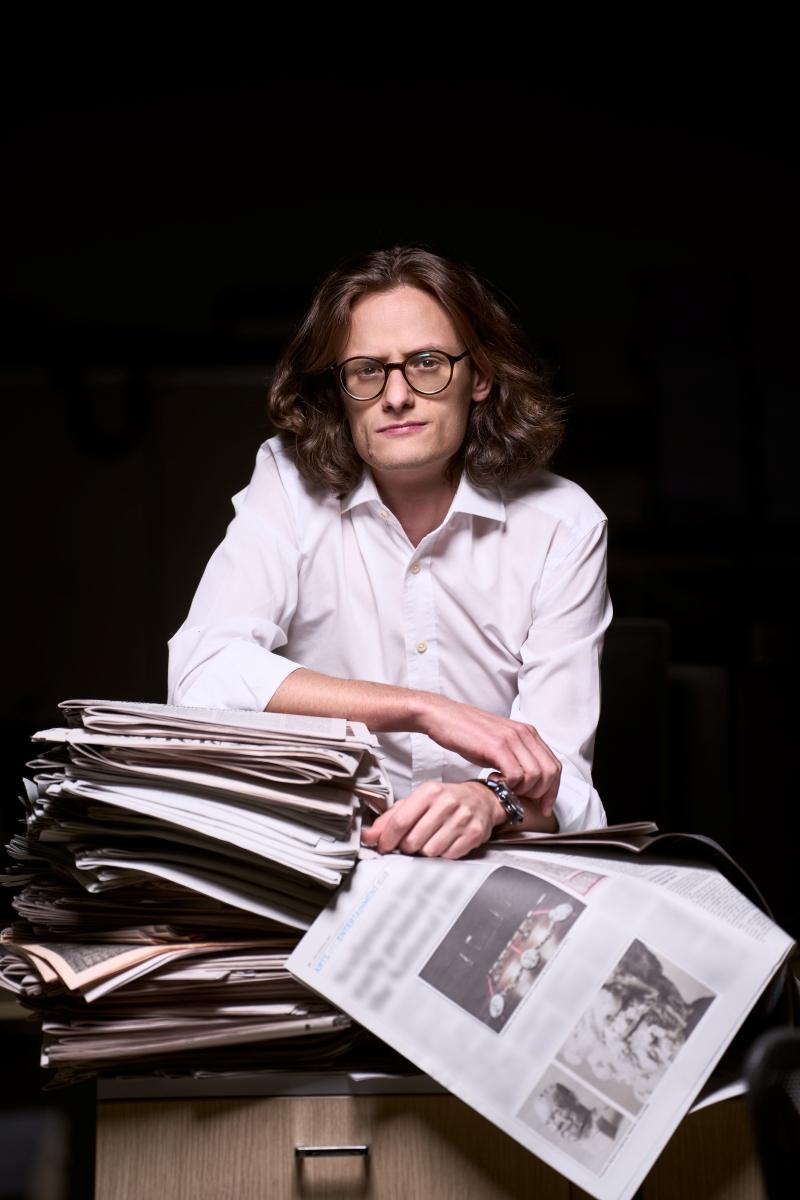 Journalist Mark Laurence Zammit said the show would help people understand the profession. Photo: Edward Degabriele.
“It really shows you the unglamorous part of the job; the frustrations of working for months to uncover a story, but then also the excitement of the job,” he said.
“But I think it will help people empathise with journalists more and see what they go through.”
Pre-release controversy
While the play touches on controversial themes, even before its premiere, it has already generated controversy; on Sunday, Valletta Cultural Agency chairman Jason Micallef alleged that Times of Malta had received €30,000 in state funding so “Grech could stage a production on corruption in a government building”.
Asked about the claims, Attard said Udjenza, not Times of Malta, had been the beneficiary of the funds, with the theme of the play decided upon in line with the company’s desire to tackle modern themes.
For its fifth season, the company wanted its programme to be as diverse as possible, he said, pointing to explore themes such as homelessness, HIV and trans issues. “People want to connect with real stories,” he said.
“I was very much impacted and affected by [Donald] Trump’s re-election and international attitudes to the media,” he said, describing Grech as the “best choice to look at this”.
Attard noted that live journalism was becoming increasingly popular abroad, especially in countries such as Denmark, and that he had researched the medium extensively before commissioning the play.
Addressing Micallef’s post directly, he said the post was “spot on regarding what the play is all about – stifling the press and changing the narrative”.
“Even more scary is the assumption that any publicly funded artistic work cannot attack the government,” he added.
Micallef, who also serves as Ta’ Qali National Park director, also used his post to attack the media’s reporting of the controversial laying of gravel at the park’s picnic area through a €311,000 direct order.
The production is part of Udjenza’s five-year anniversary and is produced in collaboration with Spazju Kreattiv with the support of Arts Council Malta.
‘Press Mute’ opens February 20, with six performances until the closing night on March 1. To find out more, visit spazjukreattiv.org/series/press-mute/