
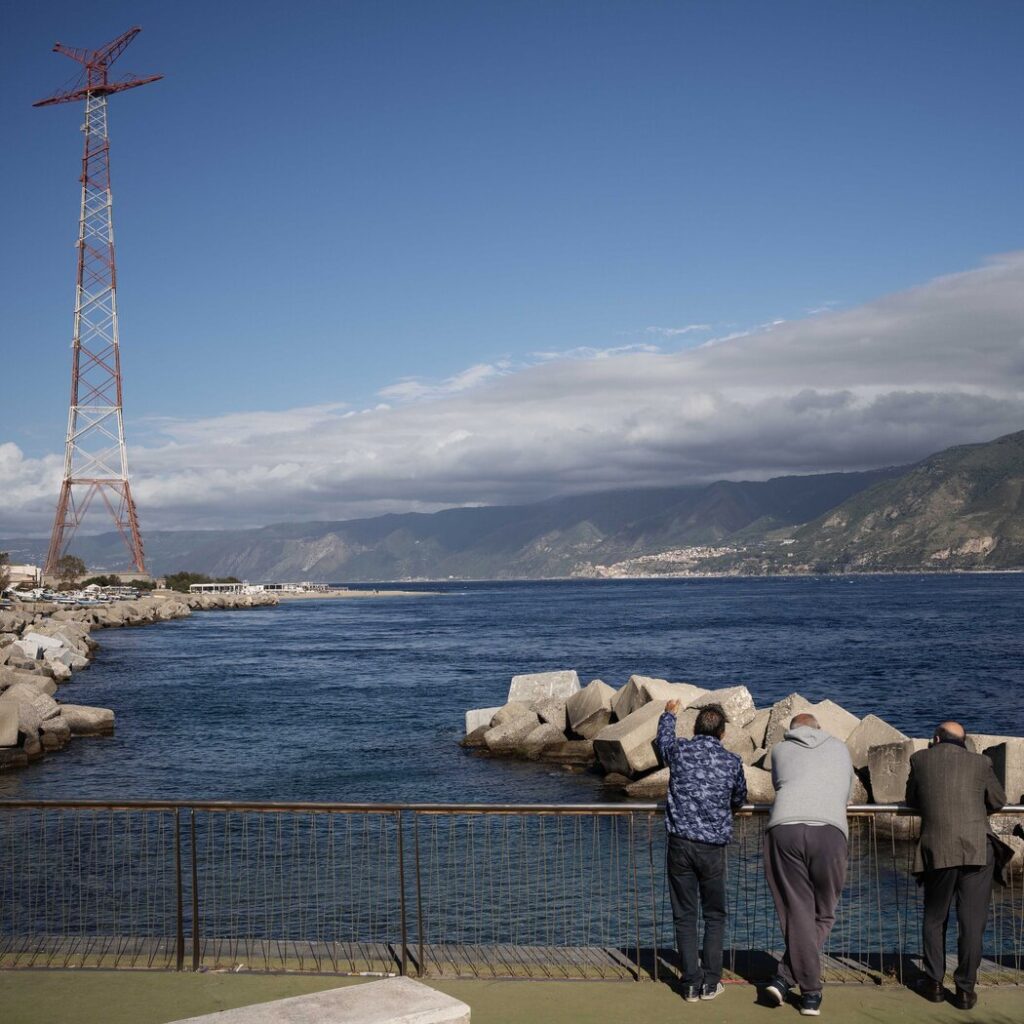
What’s the news?
- Italian Deputy Prime Minister Matteo Salvini is pushing ahead with a €13.5 billion plan to build the world’s longest single-span suspension bridge between Sicily and mainland Italy, although the project faces legal objections and community resistance.
- Judges, watchdogs, and legal experts warn that the initiative rests on shaky legal ground, outdated contracts, and weak safeguards against environmental damage and mafia infiltration.
Why does it matter?
- The Messina bridge has become far more than just an infrastructure project. Critics say it functions as a vehicle for concentrating political power, and channelling vast sums of public money to private interests.
- By bypassing updated tenders and relying on old plans, the government has been accused of undermining EU procurement rules, environmental protections and anti-corruption measures.
- Even if never built, the project has already frozen local development and threatens hundreds of homes through long-running expropriation plans, activists and officials say.
How was this investigated?
- We analysed court rulings, government decrees, EU funding decisions, and procurement documents linked to the project.
- Interviews were conducted with local residents, legal experts and officials.
Read more
Fold in
For Italian far-right leader Matteo Salvini, 2025 was meant to be the year he finally broke ground on the world’s longest single-span suspension bridge – a 3.3-km link between Sicily and the mainland that backers say will boost Italy’s poorer southern regions.
But Salvini, thwarted by court rulings late last year that plunged the €13.5-billion project into renewed uncertainty, had to make do with a cardboard model presented to him by his daughter for Christmas.
“Dad, while I wait for you to build the real one, I made you my bridge to take to the office,” she wrote in a note shared on social media by Salvini, who is deputy PM and infrastructure minister in Giorgia Meloni’s right-wing coalition government.
The gesture marked the end of a roller-coaster year for the flagship project being spearheaded by Salvini.
The legal setback revived long-standing criticism that the bridge over the Strait of Messina would harm fragile coastal habitats and local residents affected by expropriation orders, and be susceptible to risks from earthquakes to mafia infiltration.
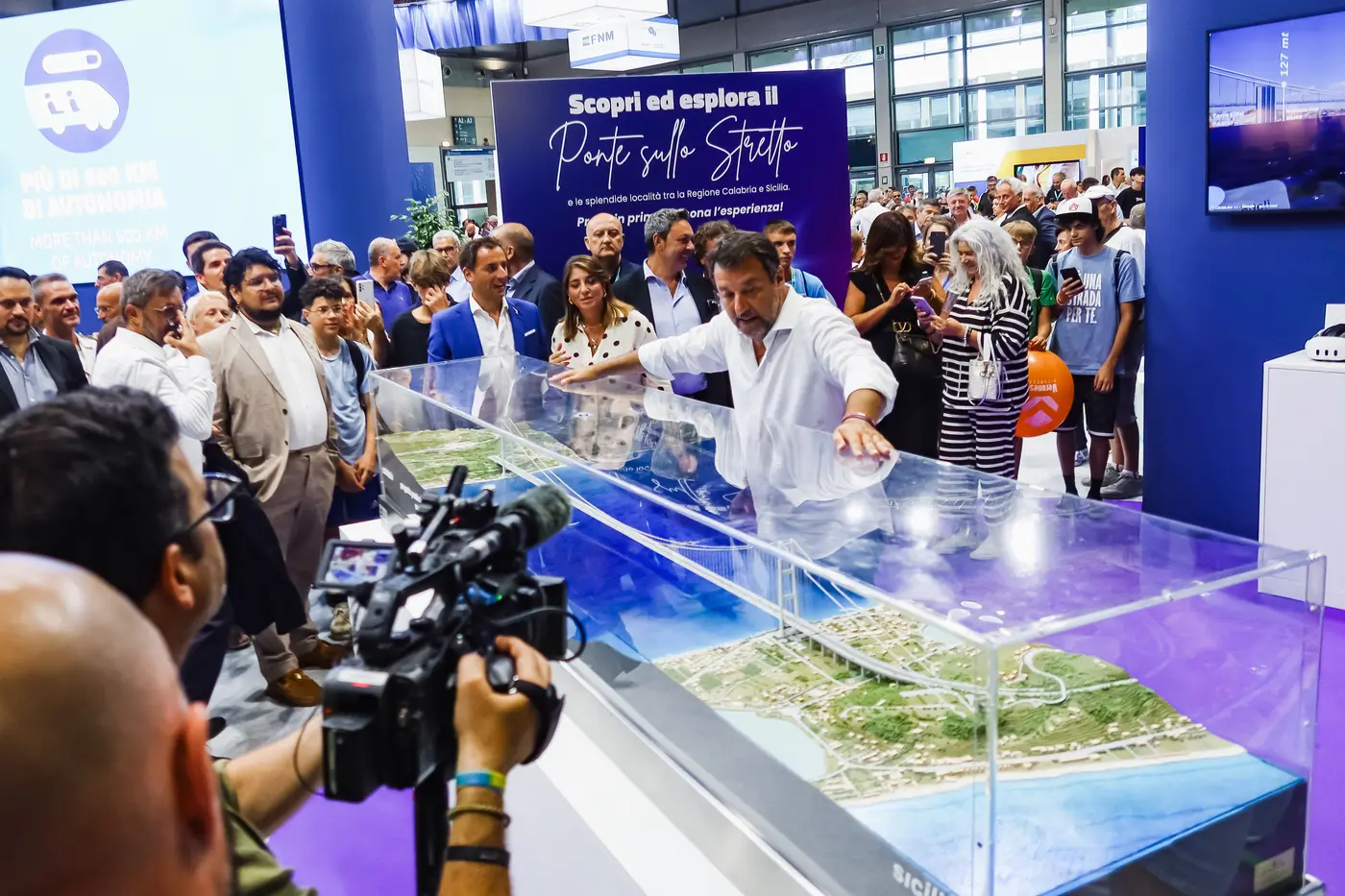
Italian Infrastructure Minister Matteo Salvini presents a model of the planned bridge over the Strait of Messina in Rimini, August 6, 2025.
© ANP
Although the government frames the bridge as a strategic asset for national and NATO security, several experts and campaigners told Follow the Money that it’s legally fragile, environmentally risky, and socially disruptive.
Those concerns are echoed by warnings from oversight bodies, which say procedural shortcuts, outdated technical plans, and minimal anti-corruption measures leave the project vulnerable to mismanagement.
The bridge will be firmly in the spotlight in the coming months as the government navigates the legal rulings and seeks to move ahead with its plans to open construction sites as soon as possible.
Yet critics argue that regardless of when the bridge is built, or how it is ultimately managed, the project already functions as a mechanism of concentrated political and economic power – reshaping the Strait and imposing lasting costs on local communities.
Court deals blow to flagship project
From the start, the project has been beset by setbacks.
Over the decades, it has lurched through a series of approvals and cancellations since the government first solicited proposals in 1969.
Still, many Italian leaders kept on trying to revive the project.
In March 2023, the government reinstated Stretto di Messina S.p.A. – the state-owned company tasked with overseeing the project. The contract was originally awarded to the Eurolink consortium in 2006 and still remains in place nearly two decades later.
A new emergency legislative measure in June 2024 – the so-called “piecemeal decree” – enabled the project to be divided into phases, allowing construction sites to open even without a fully approved executive plan in place.
The move sparked a backlash from campaigners, lawyers and technical experts, who said it altered the project’s legal and procedural safeguards (see box below).
Our journalism is only possible thanks to the trust of our paying members. Not a member yet? Sign up now
Then, in August last year, the government’s CIPESS interministerial planning committee gave its approval – leading Salvini to declare: “Our job is done.”
But a few months later, his hopes of an imminent start to construction work were dashed when Italy’s Court of Auditors refused to authorise the plan on the grounds that it would breach EU rules on the environment and public procurement.
“The bridge has shifted from a powerful object of the national imagination into a colossal public spending operation”
The court’s rulings effectively halted the administrative process, but did not amount to a veto on the bridge.
The Italian government can override the court by formally declaring the infrastructure project to be of “superior public interest” or strategically essential.
While this has raised questions about the government’s management, it has done little to allay the concerns of critics and local residents in areas slated for expropriation, who fear Salvini will make good on his vow to forge ahead with the bridge and start construction this year.
Once a project of this scale is set in motion, “stopping becomes almost impossible, even if costs spiral or it proves unworkable,” said environmental sociologist Aurelio Angelini. He was the head of the Sicilian region’s environmental assessment body between 2019 and 2022.
“The bridge has shifted from a powerful object of the national imagination into a colossal public spending operation imposed on one of the Mediterranean’s most vulnerable territories,” Angelini added.
This is particularly striking considering that, beyond Italy, EU support has been minimal.
Brussels allocated just €25 million – about 0.2% of the total cost – for railway studies under the 2023 Connecting Europe Facility (CEF) and has ruled the project out of funding under the programme in its next budget for 2028-2034.
In response to questions from FTM, Stretto di Messina said it was fully committed to addressing the issues raised by the Court of Auditors, while focusing on the construction of the bridge in accordance with the procedures laid down in the emergency decree from 2024.
Shaky foundations
Oversight bodies and legal experts warn that the revival of the project rests on a fragile premise.
That is, a framework conceived more than fifteen years ago and anchored to a contract signed in 2006 – one that sits uneasily within today’s legal, financial, and technological landscape.
Giuseppe Busia, president of Italy’s National Anti-Corruption Authority (ANAC), outlined the procedural risks.
“The decision not to launch a new tender binds the state to an outdated project, even though technology, materials, and safety standards have changed profoundly,” he told FTM.
Busia warned that the issue is not just technical but legal.
With the project in private hands and the government decree from March 2023 overriding unresolved litigation, he said it had effectively been “turned into a gift to a private actor, strengthening its position at the expense of the state”.
Antonio Saitta, a professor of constitutional law at the University of Messina, offered a similar take to Busia.
The decree revived a “contractual relationship that had already definitively lapsed”, effectively producing “a direct award by legislative means”, said Saitta, who is one of the main lawyers representing the affected Messina residents.
The project now approved, Saitta explained, is “only a distant relative” of the original plan.
The financing model has changed, construction phases have been revised, and the entire structure should be recalculated to meet Italy’s 2018 law on building and structural standards – especially for seismic risk, he said.
“If costs increase beyond the 50% threshold set by European law, it is no longer legally sustainable to speak of the same contract,” he added. “The tender should have been reopened.”
Asked about the legal validity of the contracts originally awarded to the Eurolink consortium in 2006 – which expired in 2012 – a spokesperson for Stretto di Messina told FTM that under the 2023 regulatory framework for the project, parties may agree to reinstate them.
That is subject to approval by the government’s interministerial planning committee (CIPESS), cleared by the Court of Auditors, and if outstanding legal disputes – particularly with Eurolink and the project management consultant – are dropped, the spokesperson said.
Read more
Fold in
So why do governments keep pushing to build the bridge?
Supporters of the plan – which was originally conceived by ex-Prime Minister Silvio Berlusconi and revived by Meloni after a decade on ice – say it will slash travel times, boost the economy of poorer southern regions, and create thousands of jobs.
Foreign Minister Antonio Tajani recently said that the bridge would “guarantee security in the event of an attack from NATO’s southern flank”, by allowing the military alliance to swiftly deploy forces to the central Mediterranean.
Yet some critics have disputed that claim.
Antonio Mazzeo, an Italian journalist and military policy analyst, said the government had likely used the NATO argument in a bid to inflate its military spending.
“There is no national or NATO evaluation assigning the bridge any real strategic or military function,” he said.
“Assessments questioning the military value of a suspension bridge over the Strait have instead emerged in U.S. strategic and diplomatic discussions, which have repeatedly highlighted its vulnerability and the high costs required to protect it.”
-
 Crime & Corruption
The latest on corruption, fraud, money laundering, and shady dealings across Europe.
According to Mazzeo, the NATO argument serves a political and financial purpose.
The bridge project has no legal or institutional connection to NATO. From a legal standpoint, it therefore remains a purely civilian infrastructure project.
Politically, however, government officials have repeatedly described the bridge as having a security or military dimension.
“It artificially inflates the share of military spending presented in Brussels,” Mazzeo said.
The U.S. ambassador to NATO told Bloomberg last September that the bridge’s costs “cannot be counted as NATO military expenditure”.
Italy’s transport and infrastructure ministry later confirmed that the bridge is fully financed by the state – with no defence spending involved – and said that no NATO funds are earmarked for the project.
Opponents of the project say that far from boosting security, the bridge would bring new risks.
As well as being one of Italy’s most earthquake-prone regions, Calabria and Sicily are also home to the two biggest mafia syndicates – the Sicilian “Cosa Nostra” and the ‘Ndrangheta crime group based in Calabria, the southern region on the other side of the Strait of Messina.
For those who oppose the project, the striking fact is that the project is advancing despite this context, and despite repeated warnings that infrastructure of this scale is especially susceptible to criminal infiltration.
‘High risks of mafia infiltration’
The project became engulfed in fresh controversy last April after a meeting at a restaurant in Rome between Michele Prestipino, a deputy prosecutor at Italy’s National Anti-Mafia Directorate and two senior figures in the bridge project.
Those individuals were Gianni De Gennaro, president of the Eurolink consortium that was awarded the tender, and Francesco Gratteri, a security consultant for Webuild, one of Italy’s largest multinational construction companies and the lead firm in the consortium.
Weeks after that meeting, Sicilian prosecutors opened an investigation into Prestipino on suspicion that he disclosed official secrets to De Gennaro and Gratteri.
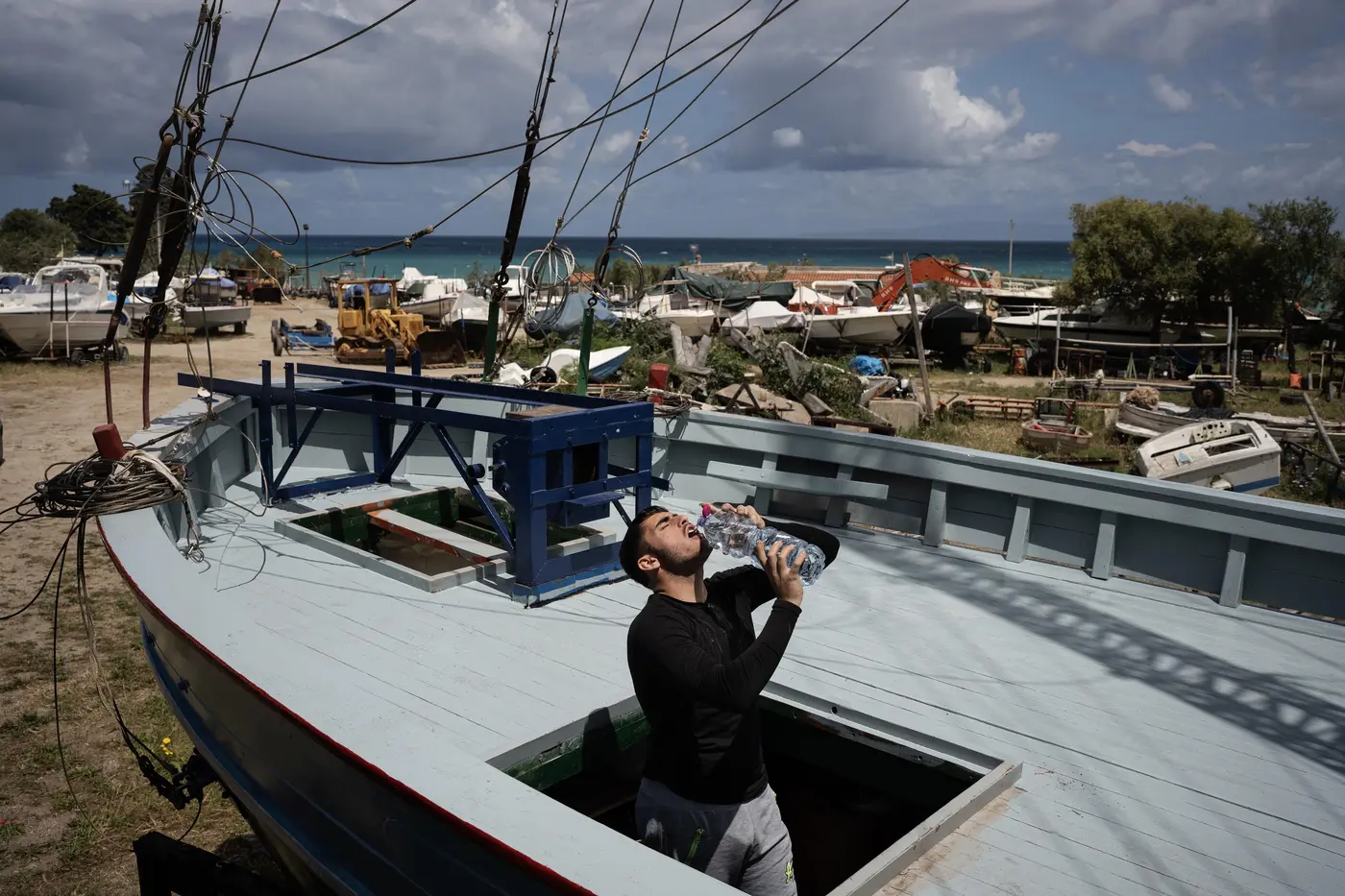
Fishermen prepare their boat in the Strait of Messina, May 4, 2024. The coastal landscape and communities here lie along the route of the planned bridge linking Sicily to mainland Italy.
© ANP
According to the authorities, during that lunch the deputy prosecutor is suspected of having shared confidential information “on the status of investigations into Calabrian clans and organised crime infiltration” relating to the bridge project.
The deputy prosecutor, Prestipino, who announced his retirement days later, has denied wrongdoing.
De Gennaro and Gratteri, who both used to serve in senior national law enforcement roles, did not respond to requests for comment.
In August 2024, in what are believed to be his only public remarks on the project, De Gennaro said there was no risk of mafia infiltration in the construction of the bridge.

“All regulations will be strictly adhered to, and there will be constant collaboration with the relevant institutions,” he told an event in Catanzaro that was organised by Webuild together with the Calabria regional government.
He said he felt confident that the project could proceed “transparently and legally”.
Gratteri has not publicly commented on the project.
Although still at an early stage, the case highlights wider concerns about informal ties between former senior law enforcement officials and individuals under investigation, raising questions about structural gaps in accountability and inconsistent enforcement of the law.
Italy’s National Anti-Corruption Authority (ANAC) has raised repeated warnings that large-scale infrastructure projects such as the bridge are at risk from criminal infiltration, saying stronger oversight and monitoring were needed.
ANAC President Giuseppe Busia told Follow the Money that projects of this magnitude carry “extremely high risks of corruption and mafia infiltration” and would require reinforced safeguards, strict limits on subcontracting, and advanced monitoring tools.
“None of this is present” in the regulatory framework accompanying the revival of the bridge project, Busia said.
Reflecting those concerns, in a letter to the justice minister in September, centre-right Forza Italia lawmaker Tommaso Calderone called for additional resources for the Messina prosecutor’s office, saying the bridge’s construction would “inevitably expose the territory to the risk of mafia infiltration”.
Asked about this threat, the spokesperson for Stretto di Messina told FTM that the company’s goal was to stop any potential infiltration and influence from organised crime.
“The key has always been to keep a close eye on what’s going on at the construction sites and make sure that administrative issues and money flows are totally transparent and clear,” they said.
All financial flows related to the construction of the project will be fully traceable through a dedicated information-sharing system between Stretto di Messina, Eurolink, the contractors and subcontractors, and the Anti-Mafia Investigation Directorate (DIA), the spokesperson said.
The Italian government did not respond to FTM’s requests for comment, which were sent to the ministries of justice, infrastructure and transport, and the interior.
Consortium jobs for former top cops
Critics of the project have also voiced concern about the hiring of the former senior law enforcement officials De Gennaro and Gratteri to key posts in the bridge consortium.
They say this reflects how the project has become increasingly securitised and militarised, with power ever more tightly concentrated around it.
“The debate over protecting construction sites points to a strong process of securitisation even before work has begun,” said Mazzeo, the military policy analyst.
He added that the return of figures “who once sat at the heart of the military-industrial apparatus and state security structures” was troubling, arguing that “the bridge is not just an infrastructure project, but a control device”.
In July 2023, Webuild announced De Gennaro’s appointment to lead the consortium, citing his “institutional and corporate experience” as a guarantee of “legality and security”.
Calabria-born De Gennaro has previously served as director general of public security, head of Italy’s Intelligence Coordination Department (DIS), and undersecretary to the prime minister with responsibility for intelligence services.
After leaving public office, he had senior roles in industry and finance, from chairing Leonardo, Italy’s top defence company, to leading cooperative bank Popolare di Bari.
Meanwhile, Gratteri, Webuild’s security consultant for the bridge project, was director of the Central Operational Service – a key unit in organised crime investigations – head of the Central Anti-Crime Directorate and also served as police chief in the city of Bari.
“The bridge is not just an infrastructure project, but a control device”
He was convicted by Italy’s Supreme Court of aggravated falsehood over the production of false reports aimed at legitimising a night-time raid in which police kicked, punched and hit dozens of protesters during the G8 summit in Genoa in 2001.
Gratteri did not respond to a request for comment on his past conviction. Webuild also didn’t respond to a list of questions, including one about the conviction.
Italy’s top court in 2011 threw out a conviction against De Gennaro – head of Italy’s national police at the time – for incitement to false testimony that was also related to the raid.
Angelini, the sociologist, argued that De Gennaro and Gratteri were not brought into the project for their technical know-how – which is delegated to engineers and contractors – but their ability to navigate regulatory systems, security structures and political institutions.
“The bridge over the Strait of Messina is not simply an infrastructure project,” Angelini said. “It is one of the largest transfers of public money to private interests ever attempted in Italy.”
“In ventures of this scale,” he concluded, “technical expertise matters less than the ability to manage economic, regulatory and communicative flows.”
Next battle in bridge fight
On the northern edge of the Strait of Messina, at the headquarters of campaign group No Ponte Capo Peloro, tables were covered with maps, plans for the project and protest leaflets.
Nearly 450 homes would be expropriated on the Sicilian side and another roughly 200 properties on the Calabria side to make way for the road and rail bridge, which would stretch between towers nearly 400-metres high and be flanked by more than 40 km of supporting infrastructure between Sicily and Calabria.
Yet at a project of this scale, the very notion of expropriation changes, according to Daniele Ialacqua, founder of No Ponte Capo Peloro and a former councillor for the environment in Messina.
“It doesn’t concern only those who receive a formal decree,” he said. “With worksites of this size, all of Messina becomes subject to expropriation.”
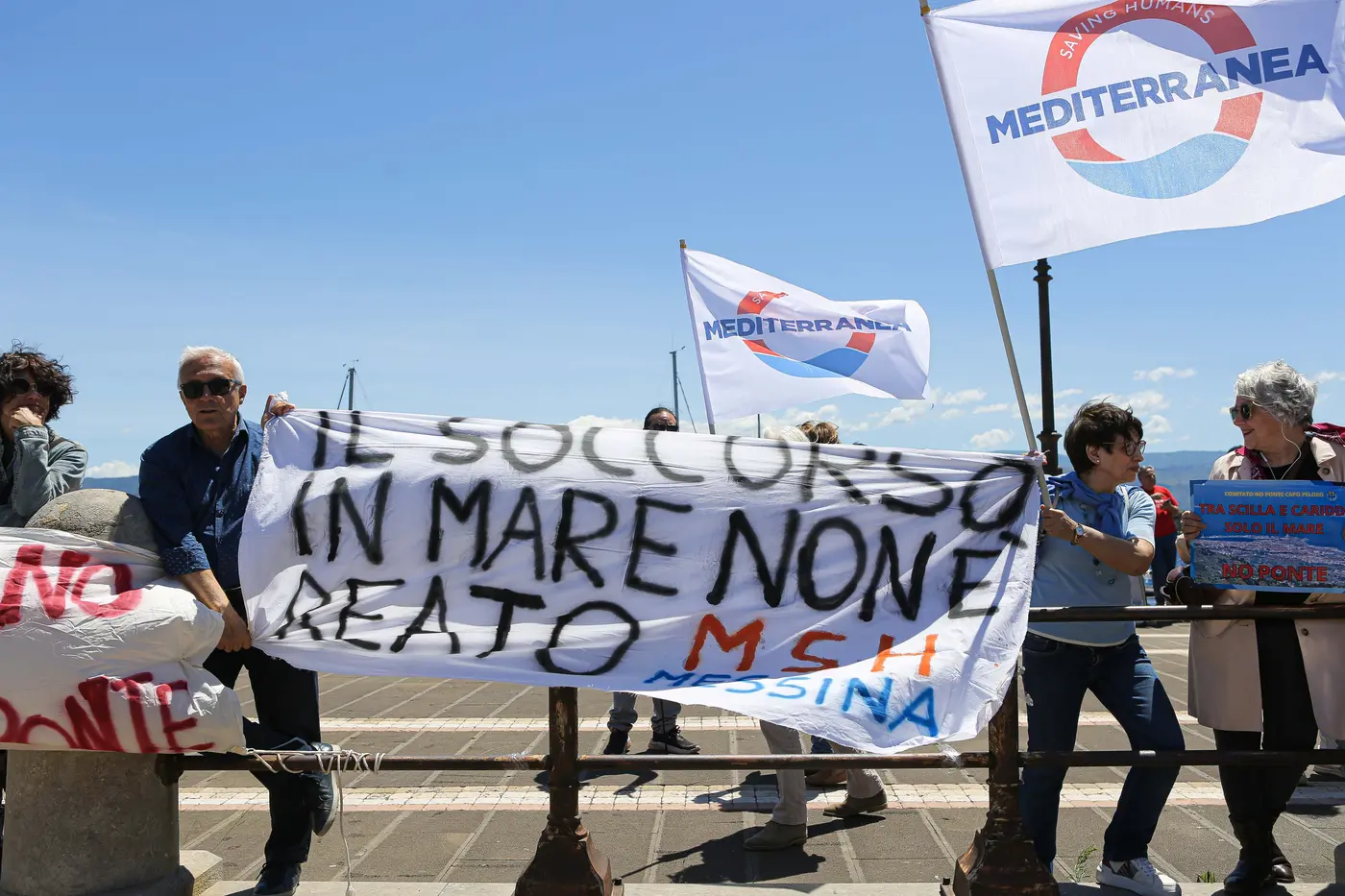
Protesters of the “No Ponte” movement ahead of a visit by Infrastructure Minister Matteo Salvini in Messina, May 30, 2025.
© ANP
The long-running threat of expropriation orders under the project – stretching back two decades – has had a profound impact on the local economy and property owners, according to Giusy Caminiti, mayor of the municipality of Villa San Giovanni.
“Every 10 years the project comes back and freezes urban development,” she said.
“Our municipal structural plan is blocked, the coastal plan is stalled, and above all an expropriation constraint is renewed decade after decade … Anyone who owns a house or land under such a constraint cannot sell, renovate, or invest.”
The municipality has appealed against the project’s environmental approval by the VIA–VAS Commission, and Caminiti accused the government of violating EU law by reclassifying the bridge as part of the national security infrastructure.
The Italian government did not respond to questions from FTM, including one on this issue.
At the headquarters of No Ponte Capo Peloro, campaigners and residents saw October’s court ruling as a vindication of warnings they had been voicing for years.
Yet there is little sense that legal scrutiny alone will be sufficient to halt the project, as they fear the government’s political will and public commitment will continue unabated.
“We’ve lived under the threat of expropriation for decades,” said Eros Giardina, 70, a retired seafarer living in the Granatari neighbourhood of Messina, where the bridge’s main tower is set to be erected.
“Even if the bridge is never built, the damage to our lives has already been done.”