
This article is from the third edition (October-December 2025) of 38 North’s quarterly product, North Korea Briefing, that monitors key internal developments in North Korea. For the full series, click here.
The final quarter of 2025 found that North Korean political culture was preparing for a major transition via the Ninth Party Congress during early 2026 or muddling through a significant upheaval in elite cohesion.
Mr. Ri’s Return
Following an 11-month public absence, Workers’ Party of Korea (WPK) Secretary Ri Il Hwan returned to the core leadership ranks at the WPK Central Committee’s 13th plenary session in December. Ri’s questionable status was affirmed when he did not attend a rarely publicized meeting of the Central Committee Secretariat in January 2025, despite being a member.
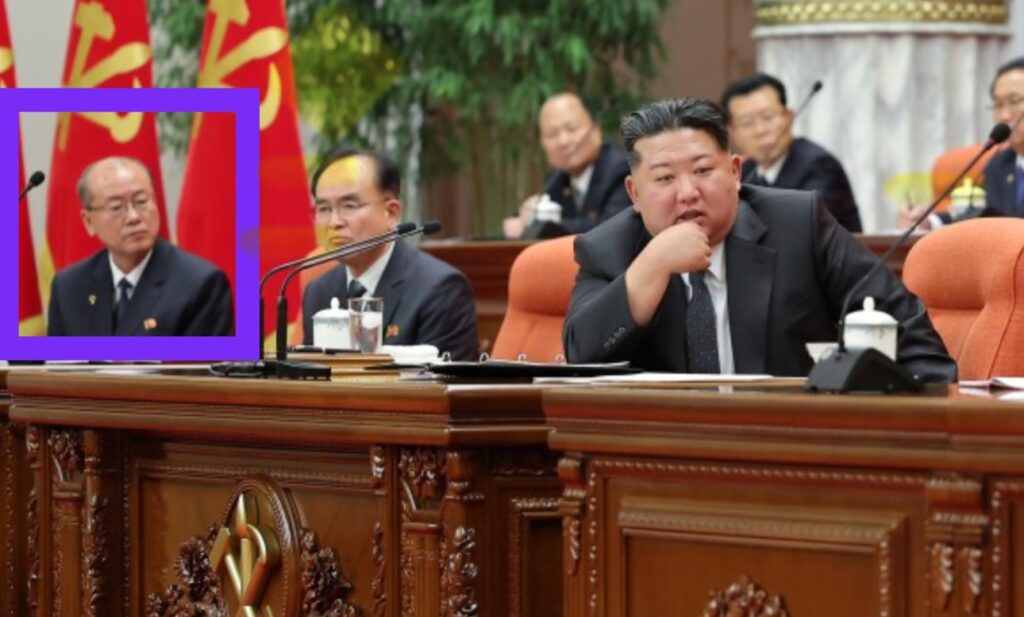 Figure 1. WPK Secretary Ri Il Hwan (annotated) attends the second day of the 13th plenary session of the Eighth WPK Central Committee on December 10, 2025. (Source: Korean Central News Agency)
Ri’s public absence was somewhat unprecedented for the Kim Jong Un era. In contrast to some other core elites, Ri was not replaced, nor did he migrate to another position and continue to attend public events. Despite not being replaced on the Secretariat, Ri Il Hwan’s status as a regime elite remained questionable when his name did not appear on former Supreme People’s Assembly (SPA) Presidium President Kim Yong Nam’s November funeral committee.
Context and Implications
Ri Il Hwan’s return to leadership and public life following a nearly year-long absence was tied to job performance and/or personal disciplinary issues. His prolonged absence, lack of personnel movement, and exclusion from a state funeral committee rule out any innocuous explanations. Had Kim Jong Un assigned him a special project precluding public activity, the duration would have been shorter. If on medical leave and deemed in good standing, the regime would have moved him to another post while he recuperated. Had he been merely unwell, Ri would have been listed on Kim Yong Nam’s funeral committee—such funeral committees in the past included retired elites and even terminally ill active officials like Jo Myong Rok and Kang Sok Ju.
This raises questions about Ri Il Hwan’s absence and return. It is likely linked to his job performance or patronage ties. The January Secretariat meeting which Ri missed dealt with two lower-level elites accused of abusing their power and excessive partying—groups possibly connected to Ri, making him accountable. On the other hand, Ri may have been deemed simply ineffective, and his return to office involves intensive scrutiny and heightened supervision. As a Party secretary, Ri’s primary role is advising Kim Jong Un and submitting policies, but he neither formulates nor implements them.[1] However, Ri may have been held responsible for problems in media and culture, including insufficient enforcement of North Korea’s language expression and culture laws or dysfunction within the WPK Propaganda and Agitation Department (PAD).[2]
Ri Il Hwan’s return, taken with other recent events (see below), suggests a major change affecting the wider core leadership.
Internal Security Photo Ops
On November 18, Kim Jong Un visited the headquarters (HQ) of the Ministry of State Security (MSS; State Security Department), the Ministry of Public Security (MPS), and the Central Public Prosecutors Office and the Supreme Court. Visiting the bulk of Democratic People’s Republic of Korea (DPRK) internal security, law enforcement, and judicial organizations in sequence was extraordinary—almost unprecedented—for North Korean political culture.
Applying some events analysis to this sequence, we will consider the venues, the participants, and the stated reason and circumstances for these events.
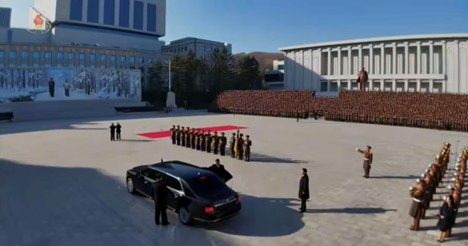 Figure 2. Kim Jong Un arrives at the Ministry of State Security headquarters on November 18, 2025. (Source: Korean Central Television)
Context and Implications
Historical precedent suggests that “#1 Events,” those involving the supreme leader, at internal security institutions occur before or after major decisions or activity.
These were HQ events involving the organizations’ leadership and HQ staff. The venues and participants establish them as discrete photo ops conveying individual ideological themes: political security (MSS), public security (MPS), the legal process (prosecutors), and adjudication (the Supreme Court). Taken as a sequence, they convey an overall theme: regime security and stability. This contrasts with sectoral national meetings and conferences, which are more anonymized and collectivized, drawing larger populations of lower- and working-level officials focused on broad ideological themes. This sequence involving organizational managers and senior personnel suggests other business—a major policy change or power struggle—is at work.
Except for MPS, these events marked the organizations’ 80th anniversaries.[3] At the MSS photo op, Kim Jong Un said MSS was stood up in November 1945, alluding to when Kim Il Sung consolidated Party control over vigilante groups and village elders.[4] Yet, MSS was formally established in 1973 after splitting the Ministry of Interior Affairs. The prosecutor-court system’s historical record begins with the DPRK’s 1948 establishment.[5] By consolidating these foundation anniversaries, Kim Jong Un and his public relations advisers have taken creative license aligning them with the Party’s founding anniversary and emphasizing the Party’s (and the Suryong’s) control over how these institutions relate to citizens.
This raises the question of why now: why revise these anniversaries in 2025, not during the Party’s 70th (2015) or 75th (2020) founding anniversary? Previous engagements occurred at significant historical moments: Kim Jong Un’s 2012-2013 visits to MPS and MSS during his transition; his second 2013 MSS visit before Jang Song Thaek’s ouster; Kim Jong Il’s 2009 MPS visit before the December 2009 currency swap; his 2010 Supreme Court visit after that policy’s implementation; and his November 2010 photo op with the MPS-affiliated Internal Security Forces days before the shelling of Yeonpyeong-do. This precedent, combined with the revised anniversaries, gives these events a deeper subtext than photo ops suggest. It is highly probable that a fundamental change to the function of the Party’s central leadership, the role of Party organs, or a major initiative in the macro-policy space is in the offing for the Ninth Party Congress. The photo-op events with internal security and law enforcement foreshadow such a change.
Download North Korea Briefing (October-December 2025) here.