
Talk of the US acquiring, or perhaps even seizing, the world’s largest island with its vast mineral wealth has been causing concern not only among Greenlanders.
Image: Spiegel TV
Denmark is outraged, as Greenland — a former colony — is still a semi-autonomous territory of the Danish Realm. But for how long? Many Greenlanders want to take control of their own future.
Nukannguaq Zeeb was born on the island and feels deeply connected to the island’s cultural traditions of hunting and fishing. He also coaches Greenland’s national soccer team, a sport introduced by Danish colonialists. He’s critical of Denmark’s ongoing influence. “To be honest, we are currently under Danish rule and not an independent country,” he says. Trump’s neocolonial ambitions came as a shock to him.
Image: Spiegel TV
Greenland did not gain any autonomy until 1953, when it became a Danish district. To this day, it remains closely associated with Denmark, both politically and economically. Many Greenlanders are pinning their hopes on the rich natural resources still hidden beneath the ice. As global warming accelerates, they could soon become accessible — drawing attention not only from the US administration.
Image: Spiegel TV
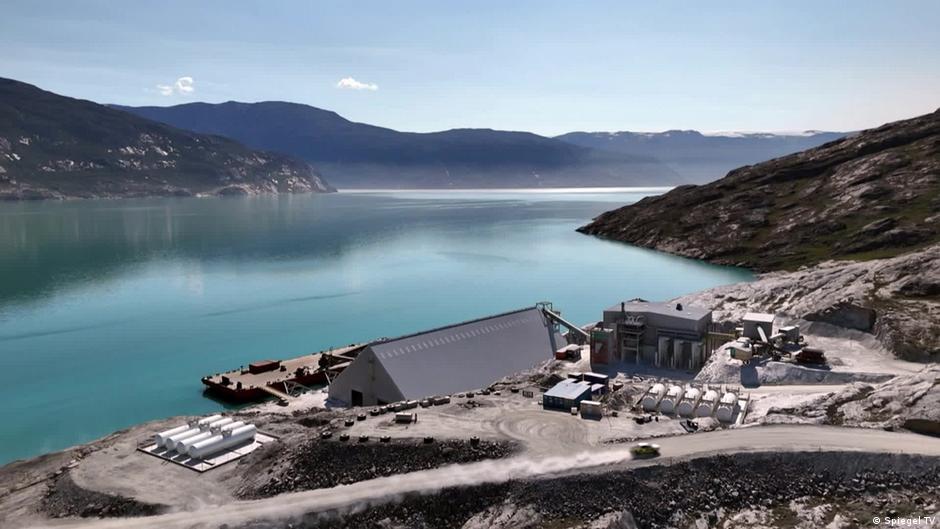
The White Mountain mine lies north of the capital Nuuk and can only be reached by boat or helicopter. International investors are extracting anorthosite, a mineral used to produce insulation material and glass fiber, among other things.
Image: Spiegel TV
Niels Ole is one of the few Greenlandic foremen in the mine — many skilled workers here come from abroad. Greenland’s weak education system means that many young people drop out before graduating. Social worker Ane Pipaluk looks after them. They live in shared housing and often come from families struggling with unemployment and alcoholism.
Negotiating a path between old and new dependencies poses a major challenge for Greenland. Niels Ole dreams of more autonomy for his homeland. He says, “It’s the dream of many Greenlanders.”
Broadcasting Hours:
DW English
MON 19.01.2026 – 18:30 UTC
MON 19.01.2026 – 23:30 UTC
TUE 20.01.2026 – 03:30 UTC
TUE 20.01.2026 – 09:15 UTC
TUE 20.01.2026 – 12:15 UTC
TUE 20.01.2026 – 16:15 UTC
TUE 20.01.2026 – 21:15 UTC
WED 21.01.2026 – 07:30 UTC
WED 21.01.2026 – 10:30 UTC
WED 21.01.2026 – 17:30 UTC
Lagos UTC +1 | Cape Town UTC +2 | Nairobi UTC +3
Delhi UTC +5,5 | Bangkok UTC +7 | Hong Kong UTC +8
London UTC +/-0 | Berlin UTC +1 | Moscow UTC +3
San Francisco UTC -8 | Edmonton UTC -7 | New York UTC -5