
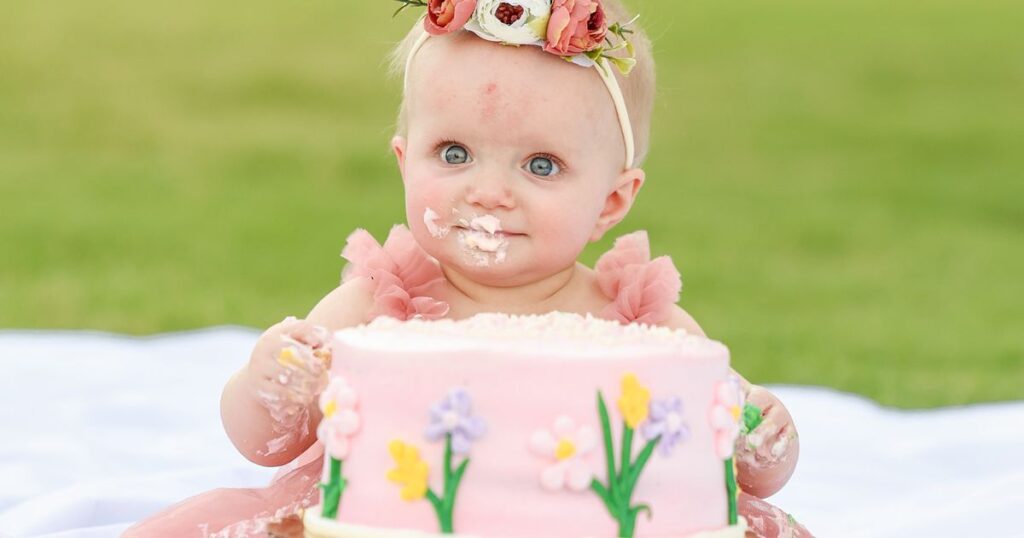
What began as a desperate plea of hope has become a story of healing, progress and overwhelming gratitude for a Wake County family.
Charlotte Akers was only a week old when she was diagnosed with severe combined immunodeficiency (SCID). The rare genetic disorder keeps the body from building an immune system and leaves babies like Charlotte vulnerable to severe infections.
Without immune‑restoring treatment like a bone marrow transplant, SCID is usually fatal before age 2.
Last year, the Akers family let WRAL health reporter Grace Hayba inside their isolation bubble – a world of masks, gloves and constant sanitization all required to keep Charlotte alive. Every visitor to the home wore PPE, every dropped pacifier was immediately cleaned and any cough or sniffle brought a wave of fresh fear.
“When your story launched and within NDMP as well, we sent it to all of our friends. We sent it to our friends overseas — everything,” Alex Akers said about how far they reached in their donor search.
The National Marrow Donor Program (NDMP), formerly Be The Match, is a nonprofit organization that operates the world’s largest registry of volunteer marrow and blood stem cell donors.
The WRAL community responded as well, sharing the Akers’ story on social media thousands of times.
A life‑saving match
Six months after the Akers’ public push to encourage people to join the NMDP registry, they got the call they had dreamed about: a 9-out-of-10 match was found.
The donor was a complete stranger, with no ties to the Akers, and lived in Poland.
“The one gene he didn’t match on was insignificant,” Charlotte’s mother, Lindsey Akers, said. “He’s family at this point. I’m just forever grateful. It was a selfless donation. I’d like to think it’s because of getting her story out there.”
“Thank you,” Alex Akers said to the anonymous donor. “This random stranger who didn’t know us, and just knew this 1-year-old girl in America needed a donation – and he said yes. I hope we get to meet him. He’s forever in our lives.”
On August 14, 2025, Charlotte received her bone marrow transplant.
The procedure replaced Charlotte’s non‑functioning immune system with healthy blood cells from her donor — the only known cure for SCID. A bone marrow or blood stem cell transplant is the only treatment that can build a working immune system for children with SCID.
Why matching is so crucial — and so rare
Most donors are people who signed up through the NMDP registry. Getting into that registry begins with an easy cheek swab kit that’s ordered online and returned by mail. If you are matched with a patient, the NMDP coordinates further testing and donation.
The registry focuses on donors generally between 18 and 35 because younger donors’ cells give patients their best chance for successful transplant outcomes.
“Your bone marrow ages with you,” Lindsey Akers explained.
Once on the registry, donors remain listed until age 61 unless they ask to be removed.
The hardest days — and the people who made it bearable
For Charlotte, the life‑saving transplant meant months of treatment: hospital time, medications and even chemotherapy to prepare her body to accept the new cells.
“For 44 days she had either Mom or Dad at all times,” Lindsey Akers said.
There were countless late nights in the hospital.
“There were nights we’d have to sit there and hold her. It was rough,” Alex Akers said.
Throughout that journey, the family developed deep bonds with Charlotte’s nurses and medical team.
“I joked to some of her nurses that she’ll be a really good flower girl once she starts walking,” Lindsey Akers said. “They are a really big part of our lives.”
When discharge day came on September 11, 2025, hospital staff who had helped care for Charlotte since her diagnosis lined the hallways with pom‑poms, bubbles and cheers of well wishes.
“They cared about her and it affected them,” Lindsey Akers said. “They celebrated this as much as we celebrated it.”
She continued, “This was the worst thing we’ll ever go through, and they were there. They held my hand, and they let me cry.”
Alex Akers added, “We really do owe them everything.”
Life after transplant
Coming home brought new challenges.
“When she came home from the hospital she came home with an IV,” Lindsey Akers said. “I had to learn how to administer her IV medication every night, for 10 hours.”
Now, the nightly medications are down to about one hour, and Charlotte is growing, developing and starting to act more like a typical toddler.
Sitting together on their living room couch, passing Charlotte from lap to lap when she grew restless, the family described this new reality as surreal.
“It’s night and day,” her father, Alex Akers said.
“I spent the first year of her life not thinking past transplant,” Lindsey Akers said. “Everything was getting to transplant, and trying to get donors, and to get more people to sign up. I never anticipated life after transplant.”
The family is even planning their first family trip in April.
“That’s crazy to me!” Lindsey Akers shared excitedly.
A new normal
Big brother Joey Akers has waited alongside Charlotte’s journey, and he has a heartfelt wish for their next chapter.
For more than a year, Joey wore a mask inside the house so Charlotte could stay safe. Now, there’s a light at the end of the tunnel.
“I’m excited to go out to actual places — like going to a restaurant,” Joey said. “Or going to Disney… then she can actually see my face.”
His mother said Charlotte now takes “Joey naps” on the weekends, where she will curl up on her brother’s lap and sleep as their sibling bond strengthens.
Cautious optimism
The family says they are focusing on the positives, while also recognizing “there is still a possibility for things to go badly.”
Charlotte’s parents describe their mindset as “cautiously optimistic.”
“You plan for the worst and hope for the best,” Alex Akers said.
Lindsey Akers said they’re celebrating the small victories — like finishing a clinic visit and driving back home instead of being readmitted to the hospital.
“We celebrate the wins, we’re happy, we’re optimistic, but we’re not at the point where we can let that hesitation go,” Lindsey Akers said. “We’re breathing easier as we go, but we’re not at ‘take a deep breath’ just yet.”
As long as Charlotte’s blood cell counts continue to improve, Lindsey Akers said they are anticipating being able to pop their isolation bubble this spring.
The domino effect
The Akers’ say it was the community’s response that helped bring them to this point of celebration.
Charlotte received a unique QR code which allowed the NMDP to track who joined the registry because of her story. After WRAL’s story aired, Lindsey shared that 640 kits were requested, and about half were returned.
“The chances of them being a match for Charlotte were always low, and we knew that, but the hopes were to create a domino effect,” Lindsey Akers said.
And that domino effect has already begun: at least one family friend has been contacted as a match and has gone through the process to donate to someone else.
“It was all because of Charlotte,” Lindsey Akers said. “That moves me to no end. … not only was my friend moved, but she passed it to her three kids who were college‑aged.”
What being a donor means — and how you can help
Joining the NMDP registry is simple and free, and it could save someone’s life. Interested donors can sign up online or request a free cheek swab kit then use it to collect cells that help doctors determine tissue type for matching.
Once you join, your tissue type is added to a global database of potential donors — meaning you could one day be matched with someone who will only survive if you say yes.
Most donors donate through a non‑surgical blood stem cell process (PBSC), which is similar to donating blood. A smaller percentage are asked for bone marrow donation, a procedure in a hospital under anesthesia. In both cases, most donors return to normal activities within a few days.
For anyone considering donating, Alex Akers shared these words of encouragement, “Be someone else’s hero.”
Lindsey Akers added, “Change the ending to someone else’s story. Help people when you can. This world is cold sometimes, and we all just need to look out for each other.”