
The Local’s Deputy Editor Becky Waterton rounds up the biggest stories of the week in our Inside Sweden newsletter.
I applied for Swedish citizenship over a year ago, and I’m still waiting for a response. That’s not exactly an unusual situation, and there are many people who have been waiting in the queue a lot longer than I have.
Earlier this week I checked the average processing times for citizenship at the Migration Agency to try and get an idea of how much longer I can expect to wait (and whether there’s any chance I’ll be able to vote in the next election).
Since I applied at the end of 2024, the waiting time has risen from 29 months to 37 – that’s over three years. More specifically, that’s the average time in which 75 percent of recently-concluded cases were processed, so at least a quarter of those cases are likely to have waited a lot longer.
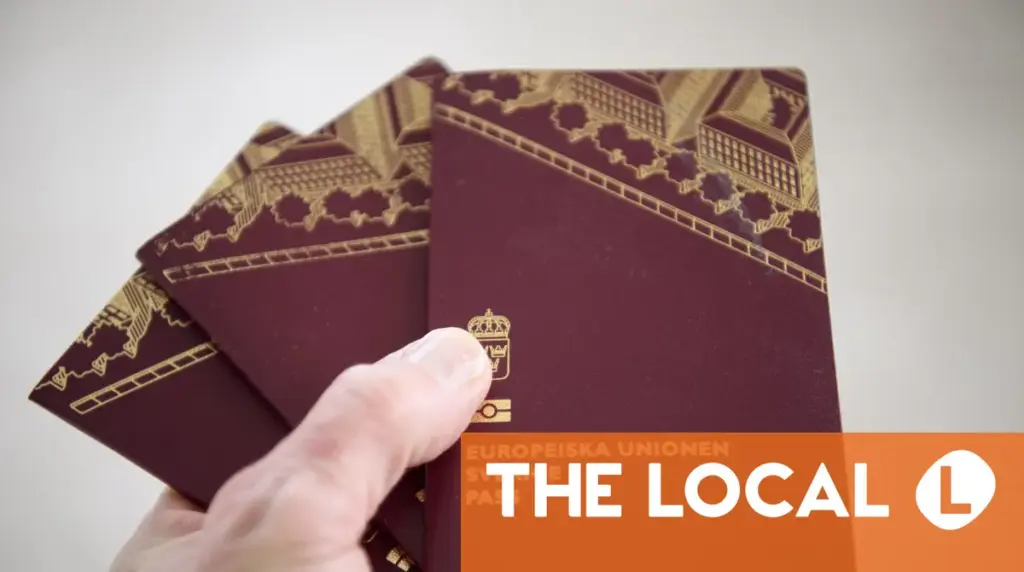
One often-overlooked issue for Swedish citizenship applicants is the fact that, as part of the application process, the agency asks you to send in your passport and permanent residency card, if applicable, via post to its offices in either Gothenburg or Norrköping. If you get lucky, like I did, it will send your passport back but keep your card, with the logic that if your citizenship application is granted then you won’t need your card anymore. If you’re unlucky, the agency will keep your passport too.
In theory, this makes sense – Swedish citizenship applications are meant to be concluded within just six months. In practice, however, this leaves applicants in limbo for months, if not years, unable to travel without first asking the agency to return their documents, a process which can take up to 15 working days.
This causes a number of issues. Firstly, it delays your case, as the agency cannot process your case if it doesn’t have your documents. It’s also expensive and risky, as documents need to be sent through the post. I’ve had to ask the agency to send my permanent residency card back to me three times since I first sent it to the agency in April last year, each time sending it back to them once I return from my trip as a tracked letter at a cost of more than 100 kronor. That’s 300 kronor on postage in one year. If I have to wait another two years for citizenship and continue travelling at this rate then we’re potentially looking at a total additional cost of 900 kronor.
Advertisement
At best, it’s annoying – I woke up in the middle of the night at one point this week remembering that I need to ask the Migration Agency for my documents back before a trip abroad in February, and I can imagine it being a nightmare for people who have to travel more often than I do for business.
At worst, the three-week wait means you’re stuck in Sweden if an emergency happens back home. What if your child is injured on a school trip, or you’re told that it’s time to say your last goodbyes to an elderly relative?
This is also a situation that could easily be avoided without much effort. All applicants currently need to attend in-person appointments at the agency to prove their identity. Why, then, does the agency also need to hang on to our documents?
If this has also affected you, I’d be interested to hear your story.
Advertisement
In other news
Sweden’s government has said it intends to push forward with a long-delayed plan to bring in better residency permit rules for foreign researchers and PhD students, with a bill scheduled to be published in March.
Swedes are famously not fans of small talk, but if you find yourself forced into small talk with a Swede then the weather is always a safe choice of topic. It’s no surprise then that there are so many words in Swedish to talk about the cold.
Staying on the topic of food, we looked into all the strange Swedish foods which have qualified for protected EU status, as well as launching a survey to find out about the weird Swedish habits you’ve adopted as your own.
The window for applying for grundskola, or primary school, has opened in many Swedish cities, meaning that if your child is set to turn six this year it’s time to start thinking about which school you want them to attend.
We also looked closer into Migration Minister Johan Forssell’s claim that deported track changers can return to Sweden after just 19 days. In reality, the situation is more complicated.
The number of people awarded Swedish citizenship fell by more than 40 percent in 2025 after the Migration Agency brought in a new system of security checks, according to annual statistics.
Advertisement
The decision to bring in stricter citizenship rules is by far the chief factor pushing readers who answered our survey to leave Sweden, followed by problems integrating and socialising, slow permit processing times, and the high cost of living.
On Monday, the Migration Agency adopted a new pledge to process visas for family members of Swedes abroad wishing to return home in 90 days or less.
Ericsson announced layoffs of as much as ten percent of its Swedish workforce, a total of 1,600 employees, as it seeks to bolster its competitiveness.
Finally, we published an interview with Sweden’s EU minister Jessica Rosencrantz. She said that Sweden views US claims to Greenland as ‘very problematic’, while adding that Nato’s newest member still sees the United States as a vital partner for European defence and security.
Thanks for reading,
Becky Waterton
Deputy Editor, The Local Sweden
Inside Sweden is our weekly newsletter for members which gives you news, analysis and, sometimes, takes you behind the scenes at The Local. It’s published each Saturday and with Membership+ you can also receive it directly to your inbox.