
Across Eastern Europe, ‘energy sovereignty’ has become a political slogan—but not one with a shared meaning. For Poland, it means freedom from Russian pipelines and a push toward renewables. For Hungary, it means choosing partners without interference from Brussels, even if that partner is Russia. Consequently, one slogan now defines two contrasting visions for the region’s future.
Since Russia invaded Ukraine in 2022, energy has become both a strategic weapon and a test of political allegiance. States that previously relied on Moscow for stability are redefining their sovereignty through their response to the energy crisis. Poland, for example, has anchored its transition in diversification, EU cooperation, and expansion of renewables. Hungary, by contrast, has strengthened its nuclear partnership with Russia’s Rosatom, defying the EU’s oversight in a further statement of independence. More than a simple difference in strategy, this divide reveals two competing views of autonomy within the European Union. For decades, coal was the backbone of Poland’s economy. In 2024, it employed hundreds of thousands of people in Silesia and produced 57 per cent of the country’s electricity. Production is quickly collapsing, however, with only 19 mines remaining and output projected to fall to 23 million tonnes by 2030. The government now faces the challenge of dismantling an industry with a legacy of social disruption dating back to the 1990s, when post-Communist closures devastated Silesian towns.
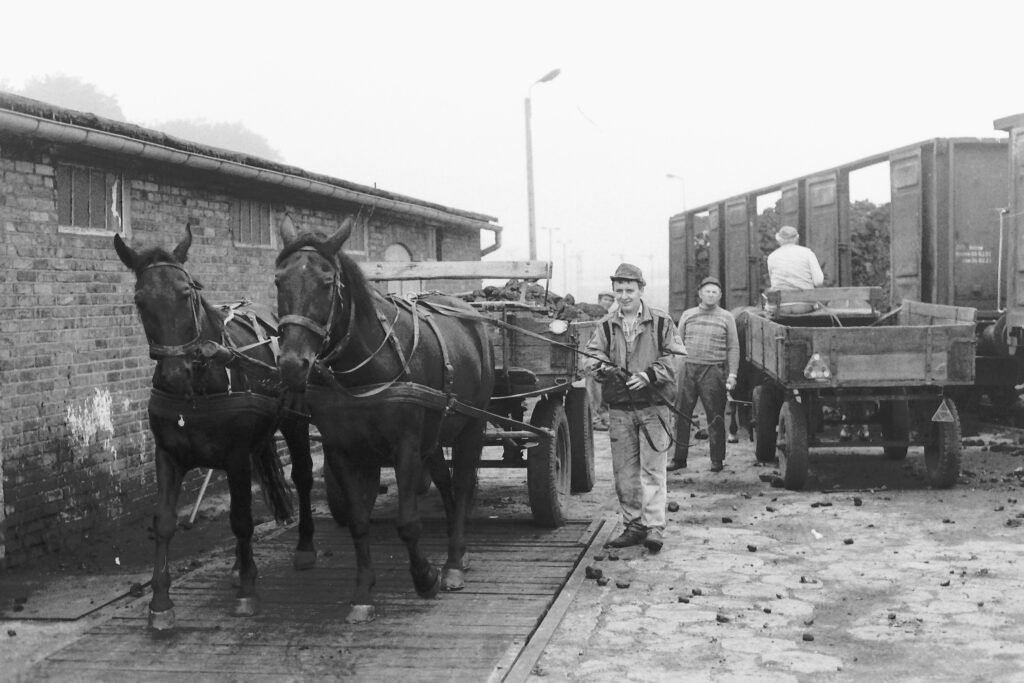 Poland’s coal industry, once a backbone of the Polish economy, is now being phased out. “Coal being unloaded from train wagons, Poland 1995” by Dupont66 is licensed under CC 4.0.
The state-owned energy firm Polska Grupa Energetyczna (PGE) has pledged to achieve carbon neutrality by 2040 and to phase out coal by 2030, aligning with EU climate goals and investor pressure for cleaner portfolios. Still, populist Polish politicians invoke coal as a symbol of sovereignty, demonstrating that the country’s energy transition is influenced by political factors, not just environmental ones.
Following Russia’s invasion of Ukraine, Poland’s quest for energy sovereignty intensified. Compared to 2015—when Moscow supplied over half of its energy—it achieved complete independence from Russian gas and coal in 2024. Today, Poland’s primary sources of imports are the United States (17 per cent), Norway (18 per cent), and Saudi Arabia (29 per cent). Barter, a leading Polish distributor of liquified petroleum gas (LPG), acquired Novatek Green Energy, marking the first sanctioned sale of Russian assets in the EU. By upgrading inefficient facilities to state ownership, the buyout made energy systems such as pipelines, terminals, and trade routes more under Poland’s control, shifting energy from a position of reliance to one of national independence.
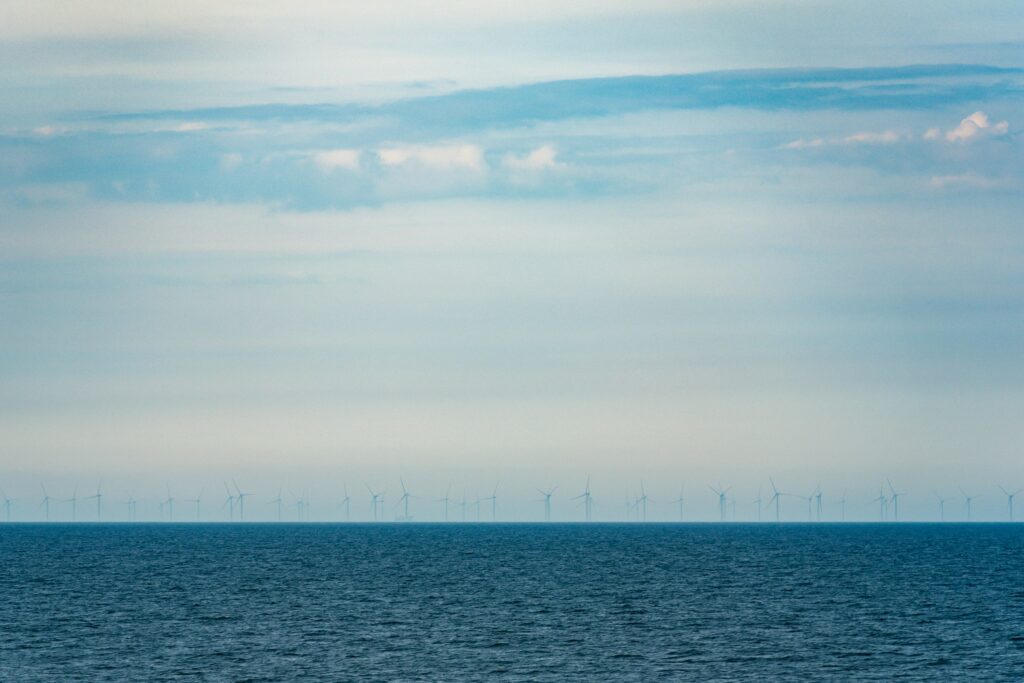
In 2024, the share of wind and solar in Poland’s energy mix had nearly doubled to 29 per cent—a result of sustained public investment and declining technology costs. Poland’s power systems, however, face limitations associated with growth. Operators are often forced to reduce renewable output during peak hours due to storage constraints and inflexible transmission systems. Warsaw, in particular, aims to secure a zero-carbon baseload electricity by expanding offshore wind capacity in the Baltic Sea and developing a Westinghouse AP1000 nuclear plant to stabilize the system.
Warsaw’s energy sovereignty does not entail a separation from Europe—rather, it suggests Poland’s leadership within it. The nation is working alongside Brussels’ REPowerEU strategy to help transform its energy system, focusing on eliminating Russian fossil fuels and boosting green investments, rather than viewing the EU’s rules as a limitation. The Climate Minister, Paulina Henning-Kloska, has stressed the importance of “learning from Russia’s conflict in Ukraine to promote long-term energy independence in Europe’s energy systems.” This dual commitment demonstrates a reinterpretation of sovereignty: not just as a withdrawal from supranational cooperation, but as the capacity to act decisively within it, all while pursuing autonomy from Russia and fortifying their energy market.
Hungary, on the other hand, has pursued an alternative approach to energy sovereignty. For Budapest, the freedom to select partners without restriction is the essence of such independence—even when that freedom reinforces dependence on Moscow through the Paks II nuclear project.
This project, a €12 billion expansion that was signed with Rosatom in 2014 without a public tender, has long been a symbol of Prime Minister Viktor Orbán’s rejection of Brussels. The European Court of Justice agreed with Austria and Greenpeace that the deal broke EU rules in 2025, stating the European Commission wrongly approved Hungarian state aid and calling it a “huge mistake.” The verdict, delivered amid mounting pressure on Orbán to diversify, has intensified tensions between Budapest and the EU by exposing how a project financed by a Russian loan has blurred the line between energy security and foreign dependence. Greenpeace praised the decision as proof that EU institutions can still rein in illiberal state aid, while Orbán intensified his nationalist rhetoric and insisted Hungary was being punished for “choosing its path.”
Budapest maintains that construction will continue, asserting that the judgment applies to procedure rather than legitimacy, despite the verdict. Recent reports indicate that Rosatom has reaffirmed its intention to construct two 1.2 GW reactors in the south of Budapest, with Hungarian officials characterizing the project as crucial for the development of “safe and affordable” energy. The government’s narrative casts the EU as an obstacle to innovation, while Russia is depicted as a pragmatic partner. As Marton Dunai of the Financial Times observes, Orbán continues to present reliance on Moscow not as weakness but as an expression of pragmatic sovereignty.
Extending its strategic manoeuvring beyond Europe, Hungary welcomes the United States’ June 2025 decision to lift sanctions on the Paks II project. Hungary’s Foreign Minister Péter Szijjártó expressed his gratitude by describing the action as a guarantee of “long-term safe energy supply.” Hungary’s energy diplomacy is contingent on exploiting geopolitical rifts between Western allies and Russia—divisions that have once again reopened financing channels for Rosatom’s work.
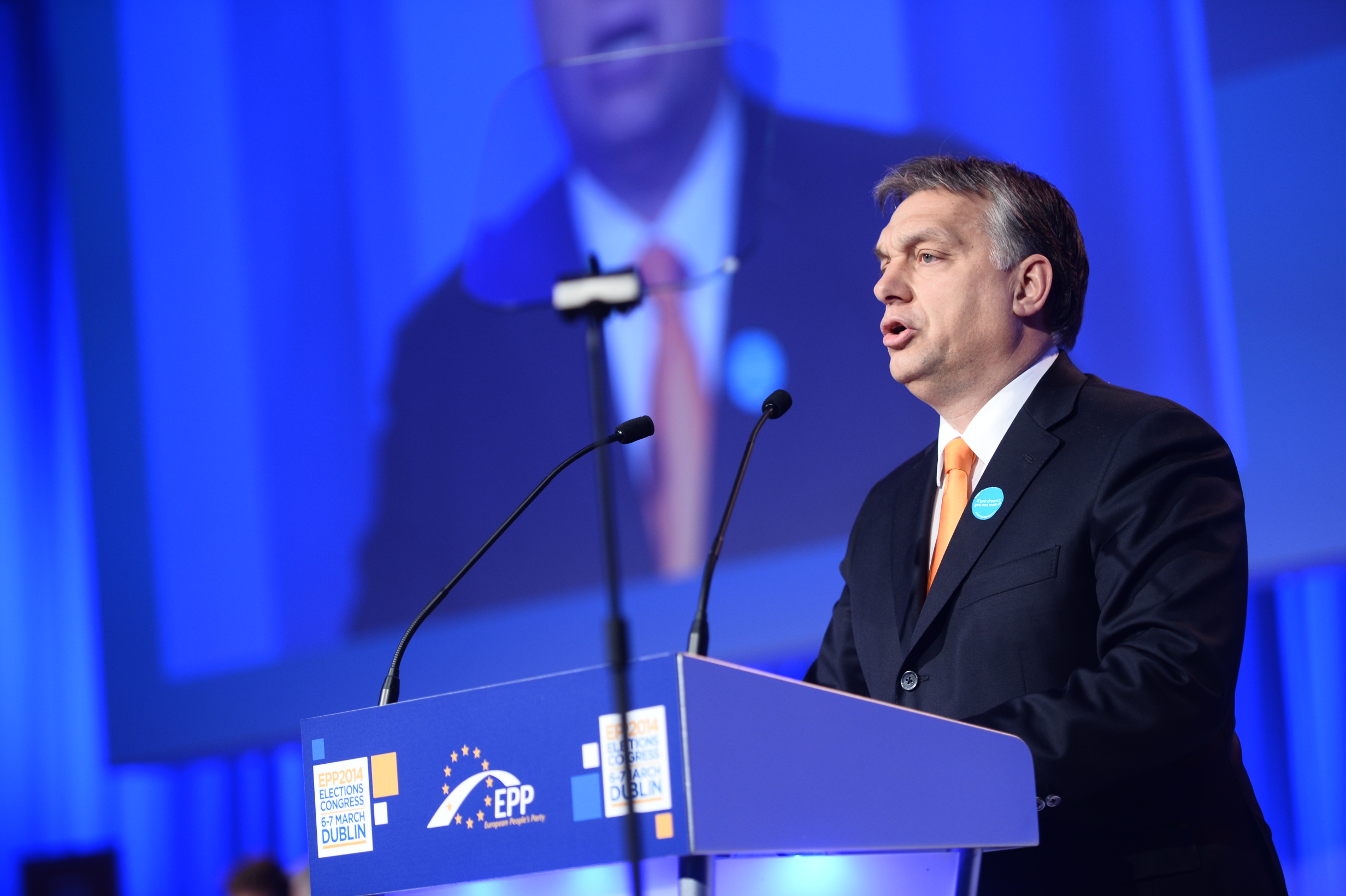 Viktor Orbán has cast Hungary’s Russian-backed Paks II nuclear project as an assertion of energy sovereignty, despite deepening dependence on Moscow. “Viktor Orbán” by EPP is licensed under CC BY 2.0.
The Biden administration’s exemption of sanctions on Rosatom highlighted gaps in the Western sanctions regime and significant policy differences between the EU and the US. The move was described as an attempt to avoid NATO conflict, with Washington concerned that harsh measures could push Budapest closer to Moscow or Beijing. Nonetheless, this pragmatism effectively legitimized Hungary’s hybrid diplomacy, which tolerated a Russian-financed nuclear project supported by the West. With 80 per cent of the Paks II backed by a Russian state loan and Rosatom tightly linked to the Kremlin’s defence-industrial complex, the waiver turned reliance into a strategic asset, demonstrating how Orbán uses “energy sovereignty” to gain influence over conflicting power blocs.
In Hungary, energy sovereignty is not about severing ties. Rather, it is about maintaining the autonomy to make decisions, even if that means aligning with Moscow. Where Poland embeds autonomy through integration, Hungary asserts it through seclusion. Nuclear energy thus functions as a political symbol: it implies control and continuity domestically while establishing dependence internationally.
The divide between Warsaw and Budapest ultimately demonstrates that energy sovereignty in Eastern Europe is not a single destination. Instead, it manifests as a political one that reveals how nations perceive power either as a form of partnership or resistance.
Edited by Chloe Nairne
Featured Image: Photo of Baltic wind farms by Philipp Deus is licensed under the Unsplash License.