
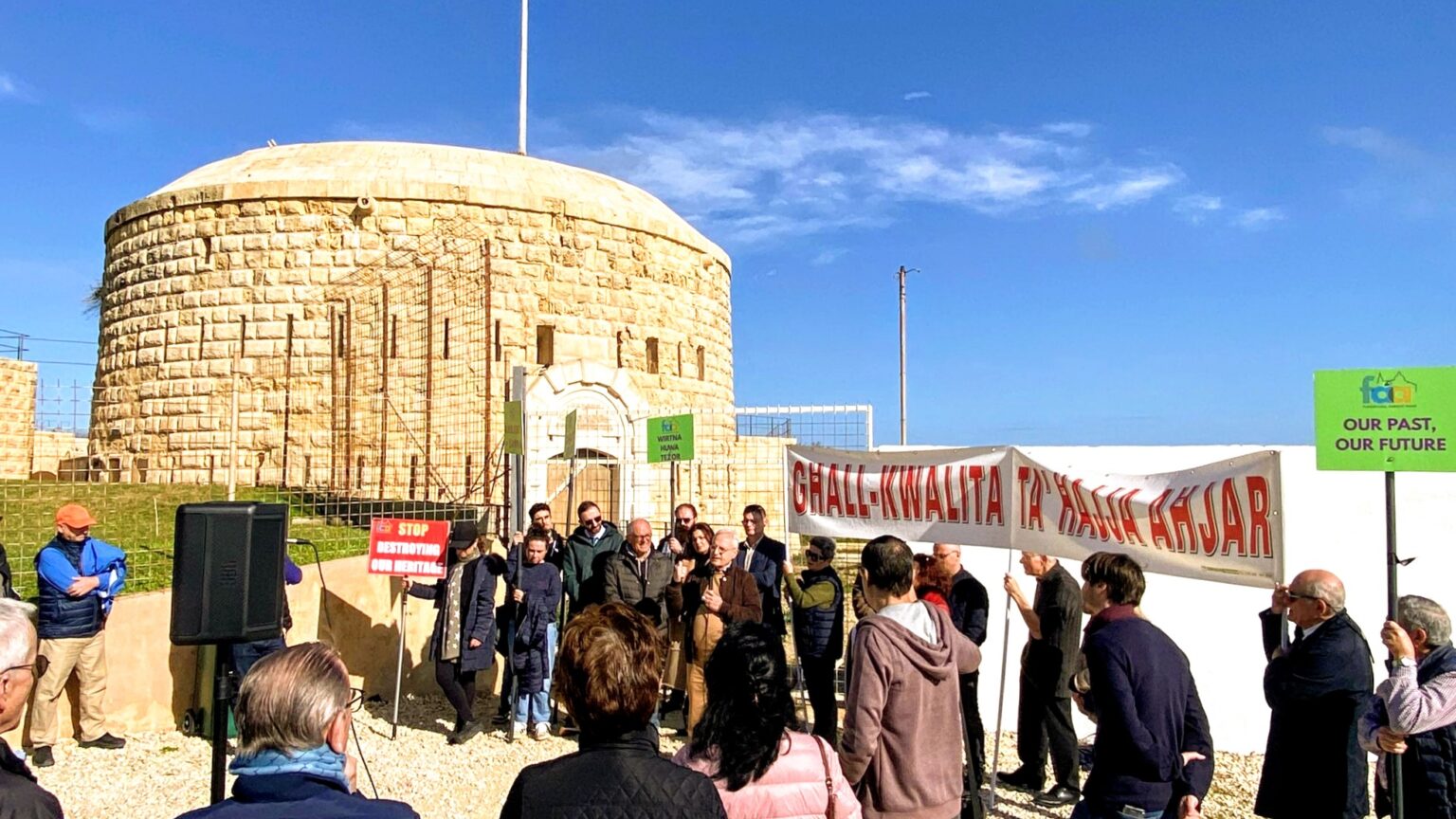
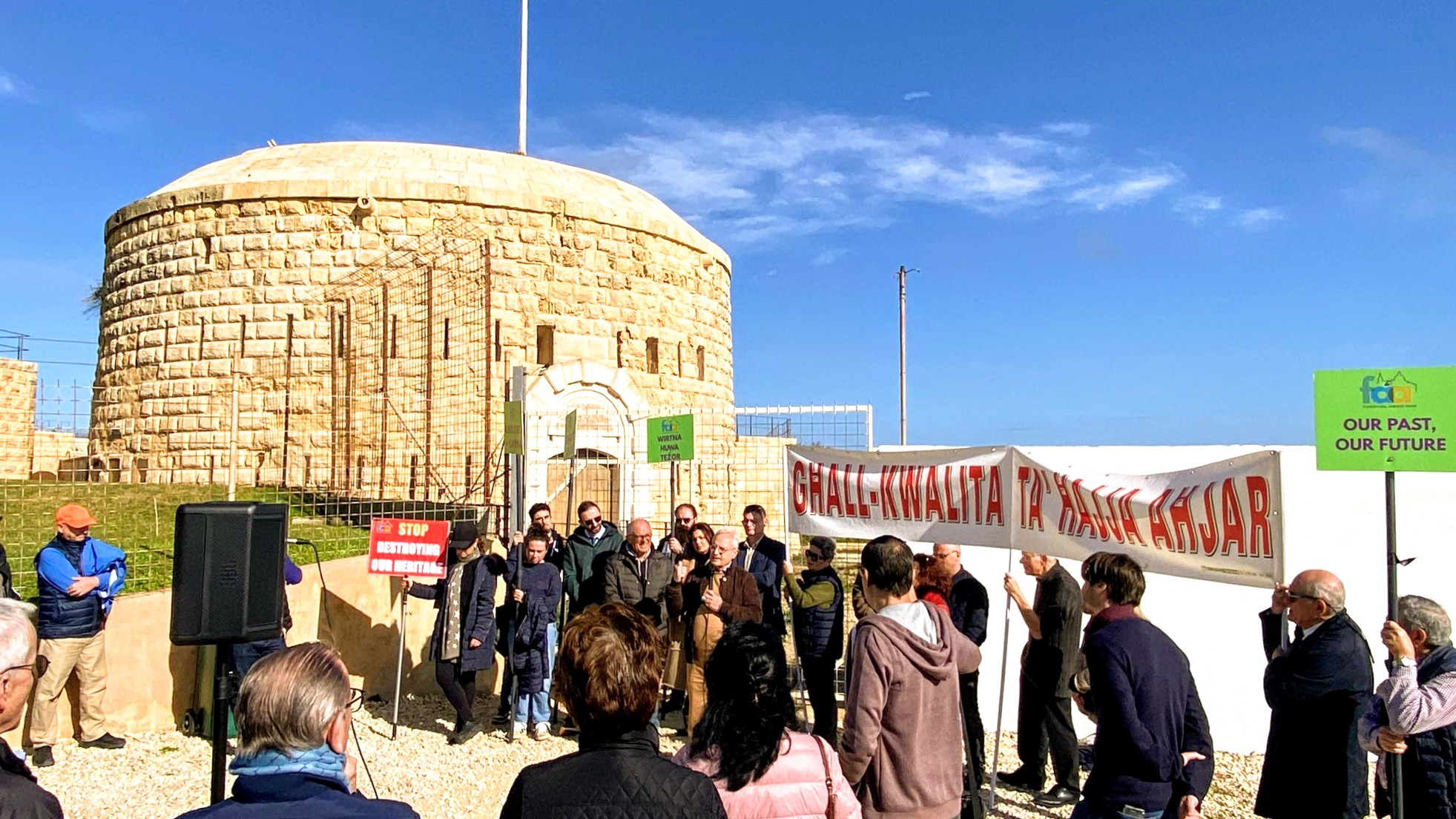
 Photo: Flimkien għal Ambjent Aħjar
Tista’ taqra bil-
Malti.
Transforming Fort Tigné into a hotel would be in breach of Malta’s constitution, according to Flimkien għal Ambjent Aħjar, given that it requires the state to safeguard the country’s “historical and artistic patrimony.”
The NGO joined the Sliema Residents Association and Tigné Residents in a march around Fort Tigné, which was built between 1793 and 1795 by the Knights: the last major defensive work built by the order.
FAA coordinator Astrid Vella emphasised that the fort was one of Malta’s most significant, despite its relatively unassuming appearance, as its innovative design reflects the transition from older star-shaped forts, like Valletta’s Fort St Elmo, towards the later polygonal design that can be seen in various forts built during the British rule in Malta.
The area historically known as Dragut Point – it is the site where the renowned Ottoman naval commander and noble lost his life during the Siege of Malta – is now primarily known as Tigné Point as a result of the concession granted to MIDI and its subsequent development of the area.
As MIDI scrambles to raise funds to redeem a bond that matures next year, it caused widespread outrage with a company announcement late last year in which it declared that it had agreed to transfer the lease on the fort to Gozitan developer Joseph Portelli for €2.5 million, with Portelli planning to transform the fortification into a hotel.
Such a plan should be considered unworkable, Vella insisted, citing the constitution and the fort’s Grade 1 scheduling, which ostensibly mandates that it should be preserved in its entirety and that demolitions or alterations changing its external or internal appearance will not be allowed.
FAA believes that the property should be retained in public ownership, preferably through a proper constituted heritage trust.
A similar proposal has been made by Din l-Art Ħelwa, which has matched Portelli’s €2.5m offer for the site: the NGO is already entrusted with the care of several historic properties, including a number of Knights-era military buildings.
Speaking on behalf of the Sliema Residents’ Association, Matthew Aquilina stressed the need to open the public walkway from the belvedere and around the Tigné headland which has been blocked for decades, for the benefit of residents and tourists alike. He observed that it was the only spot where one could get a view of Valletta from an elevated point.
Tigné Residents member Joe Muscat, meanwhile, insisted that the developers’ promise to convert the fort into a hotel with minimal destruction was worthless, citing numerous examples of Valletta palazzos which were gutted for touristic purposes.
Muscat urged the government to ensure that all commitments in the lease agreement are honoured, and to ensure that MIDI hands over the area’s three heritage sites – Fort Tigné, the Gun Battery and the Anglican Church – to the public without any commitments to third parties.
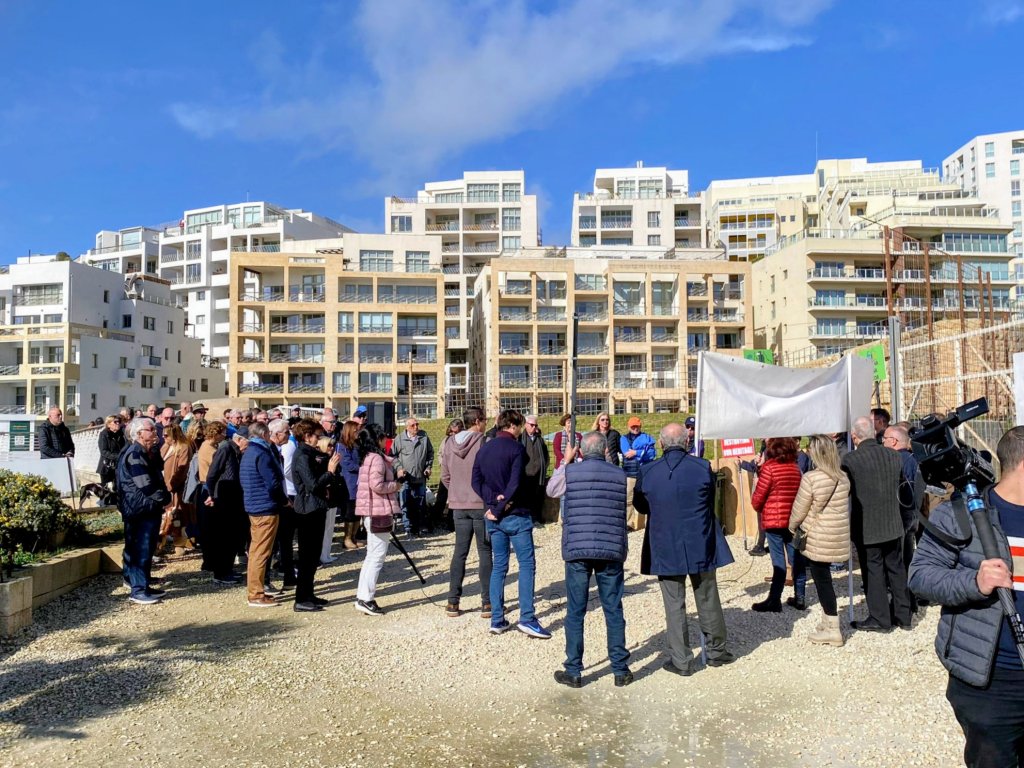 Photo: Flimkien għal Ambjent Aħjar

