
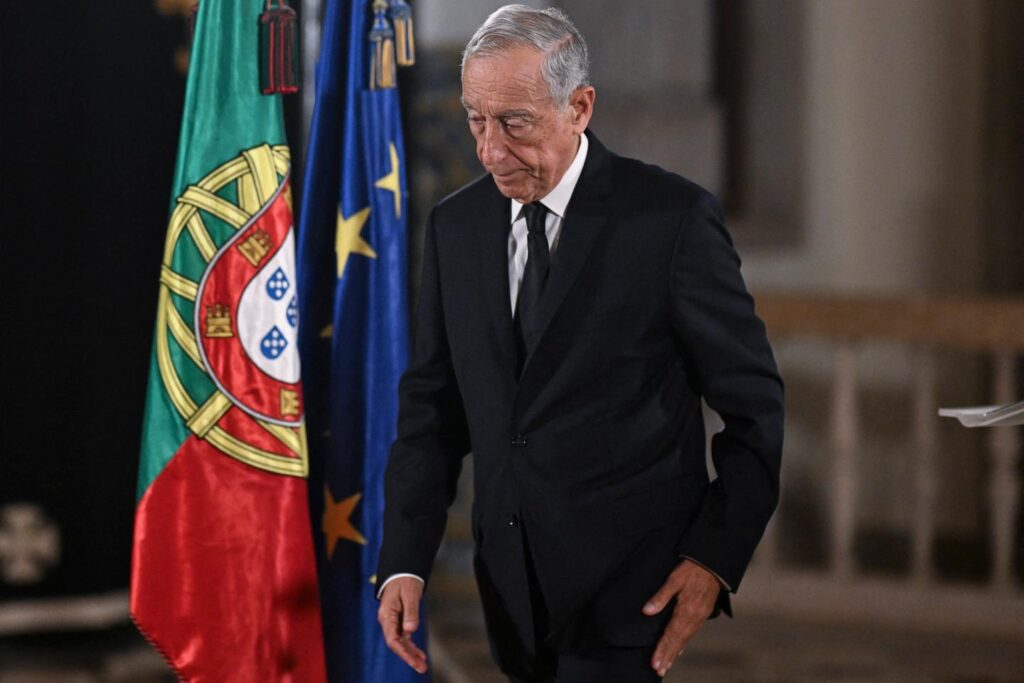
 Portuguese President Marcelo Rebelo de Sousa at the Belem Palace in Lisbon, Portugal, March 13, 2025. PATRICIA DE MELO MOREIRA/AFP
In a country where presidents are usually elected without much fanfare in the first round of voting, Portugal’s upcoming presidential ballot promises to be full of unknowns. First, because the four leading candidates have long been neck and neck in the polls, making it impossible to predict a winner or to say with much certainty who will reach the second round. Second, because of the unique profiles of these contenders: one, on the far right, has an anti-establishment stance, while another, a political newcomer, presents himself as an outsider. As a result, for the first time since 1986, and for only the second time since the advent of democracy in 1976, the country is set for a two-round presidential election on Sunday, January 18, and Sunday, February 1.
The uncertainties surrounding the situation have raised anxiety around an election that is, in fact, less crucial than presidential elections are in France. The Portuguese head of state, who is chosen under a semi-presidential system, neither presides over government ministers nor sits on the European Council. This time, however, the tension surrounding the campaign has matched the upheavals that had shaken the country’s political landscape over the past five years.
You have 82.13% of this article left to read. The rest is for subscribers only.