
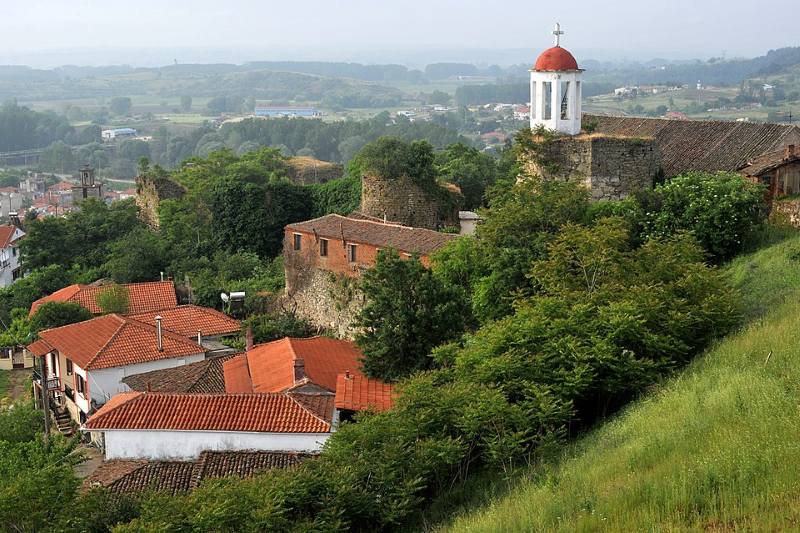
Those who plan to permanently move to Didymoteicho, Evros, are entitled to a 10,000-euro subsidy. Credit: wikimedia commons / Ggia CC BY 3.0
Greece has announced a new financial incentive program aimed at encouraging citizens to permanently relocate to specific areas of the Evros region along the border of Turkey.
This initiative, spearheaded by the Minister of Social Cohesion and Family, Domna Michaelidou, seeks to support marginalized regions and combat depopulation in areas bordering Turkey.
Greece offers up to €10,000 for relocation to Evros
Under this program, individuals or families who choose to establish permanent residency in one of the two designated municipalities in Evros—Didymoteicho, Orestiada, and the city of Komotini in the neighboring region of Rhodopi—will receive €10,000 (about $11,500) in financial assistance. This aid is part of a broader package designed to facilitate a smooth transition for new residents.
Minister Michaelidou emphasized the government’s goal to “motivate those who go near our borders.” In addition to direct financial support, participating municipalities will provide supplementary benefits, such as school meals, to assist new residents further.
It has been clarified that this bonus is exclusively for those seeking permanent relocation rather than for seasonal or temporary workers.
This program is a key component of the government’s larger strategy to revitalize the border and, in the future, other regions by attracting new residents, bolstering local economies and strengthening the social fabric of these communities.
Rural Greece is affected by an aging demographic
Greece has experienced a steady decline in its rural population for decades. Data shows consistent annual declines in rural population figures.
Rural areas are disproportionately affected by an aging demographic. While the overall Greek population is aging, the growth of the elderly population is most rapid in predominantly rural regions. This means fewer young people are entering the workforce and more people are in retirement.
The population decline has led to the closure of essential services such as schools, pharmacies, and traditional cafés, which were once the social and economic hubs of these communities. This further accelerates the abandonment of villages as they become less livable.
The low fertility rate (currently around 1.41 children per woman, well below the replacement rate of 2.1) means that fewer new births are occurring across the country, leading to an overall population decline. This is even more pronounced in rural areas, which also experience out-migration of younger, reproductive-aged individuals.
A consistently low birth rate means there are fewer young people to replace the aging population, perpetuating the cycle of depopulation. This makes it difficult for rural communities to sustain themselves demographically in the long run.
An aging population with fewer young individuals puts a strain on public services designed for families and children, such as schools, while simultaneously increasing demand for healthcare and elder care services.
Related: The Village That Defies the Demographic Crisis in Greece