
Wall Street heads into the new week with a familiar knot in its stomach: just when markets were getting comfortable again, President Donald Trump has thrown geopolitics — and tariffs — back into the spotlight.
US markets are closed on Monday for the Martin Luther King Jr Day holiday, but futures are already flashing warning signs. Asian stocks slid overnight, European futures are pointing lower, and investors are piling into traditional havens. Gold and silver have surged to record highs, the dollar is broadly weaker, and there’s a noticeable “risk-off” feel as traders brace for what could be a volatile few days.
At the centre of it all is Greenland. Over the weekend, Trump announced fresh tariffs on key European and UK allies — 10% starting in February, rising to 25% in June — unless the US “purchases” Greenland. The problem, as Kathleen Brooks, research director at XTB, notes, is simple: “Greenland is not for sale.”
“Tariffs are now the weapon of choice used by President Trump to meet his geopolitical ambitions, and this has sent a shiver through financial markets at the start of this week,” Brooks said.
Markets have mostly shrugged off political noise so far this year, leaning instead on solid earnings and a relatively calm economic backdrop. But this episode feels different. Greenland sits at the heart of a transatlantic security alliance that dates back to World War Two, and investors are starting to ask whether this is finally a step too far.
Three risks investors are watching closely
According to Brooks, there are three big risks markets are grappling with. First is the chance of a deeper breakdown in US–Europe relations, with economic and political consequences. Second is the NATO question: if Trump were to seriously threaten the alliance, Europe’s ability to contain Russia would be weakened, hitting confidence and investment. And third is the trade angle, specifically the idea that tariffs could now be deployed more randomly as a negotiating weapon.
“That would be a dangerous development for the global economy,” she said.
Europe is not standing still. The EU is preparing up to $93 billion in retaliatory tariffs and is weighing the use of its Anti-Coercion Instrument — a powerful tool that has never been used before and could restrict US companies, including big tech firms, from operating freely in the bloc. Even the threat of that has rattled markets, with tech-heavy Nasdaq futures under more pressure than the Dow.
Davos looms large
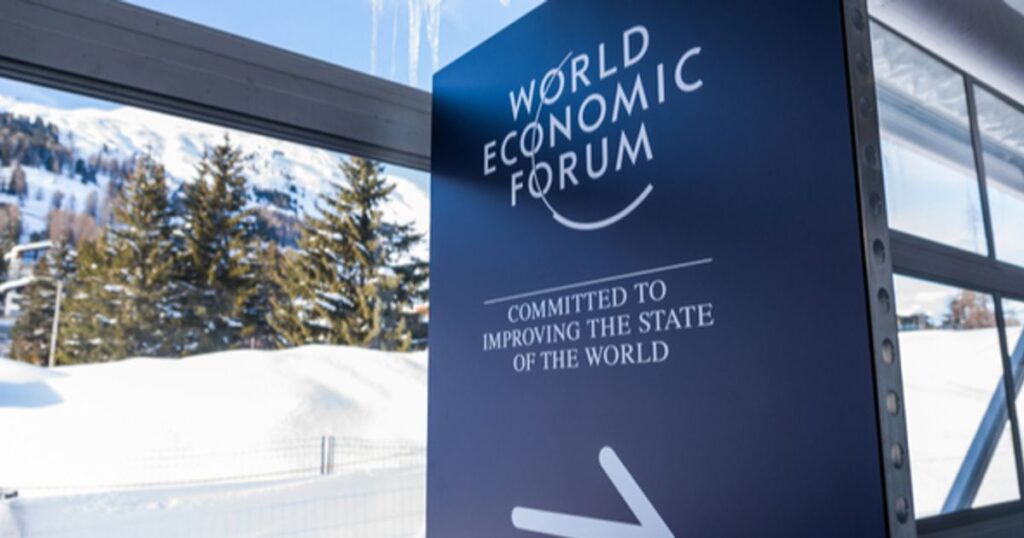
All eyes now turn to Davos, where Trump is due to speak at the World Economic Forum on Wednesday and Thursday. That timing matters. With tariffs not due to take effect until next month, there’s a window for diplomacy.
“There is hope that the temperature could be lowered,” Brooks said, adding that any selloff could prove short-lived if rhetoric softens. Still, she warned that the risk is Trump doubles down to force Denmark’s hand. “We would not put it past the President.”
Michael Brown, senior research strategist at Pepperstone, described the move as a classic Trump negotiating gambit of “escalate to de-escalate” and said markets may ultimately see this as another bout of headline-driven volatility rather than a lasting shock.
“For markets, such a scenario likely means some near-term choppiness as headline noise becomes deafening, before a relief rally in due course,” Brown said, adding that precious metals continue to look like clear beneficiaries in the meantime.
Data, earnings, and courts in focus
Away from geopolitics, the calendar is busy. Flash PMI data lands on Friday, offering a fresh read on global growth momentum. Revised US GDP figures could also draw attention later in the week.
Earnings season gathers pace, with results due from companies including Netflix, Intel, and 3M, ahead of the megacap tech reports next week.
Hovering in the background is the US Supreme Court, which is set to weigh in on the legality of some of Trump’s tariff powers. A ruling against the president could shake up the entire trade narrative but Treasury Secretary comments suggest the administration is confident tariffs will stand.
Whether this latest Trump shock fades quickly or morphs into something more serious will likely determine if January’s calm gives way to a rougher ride.