
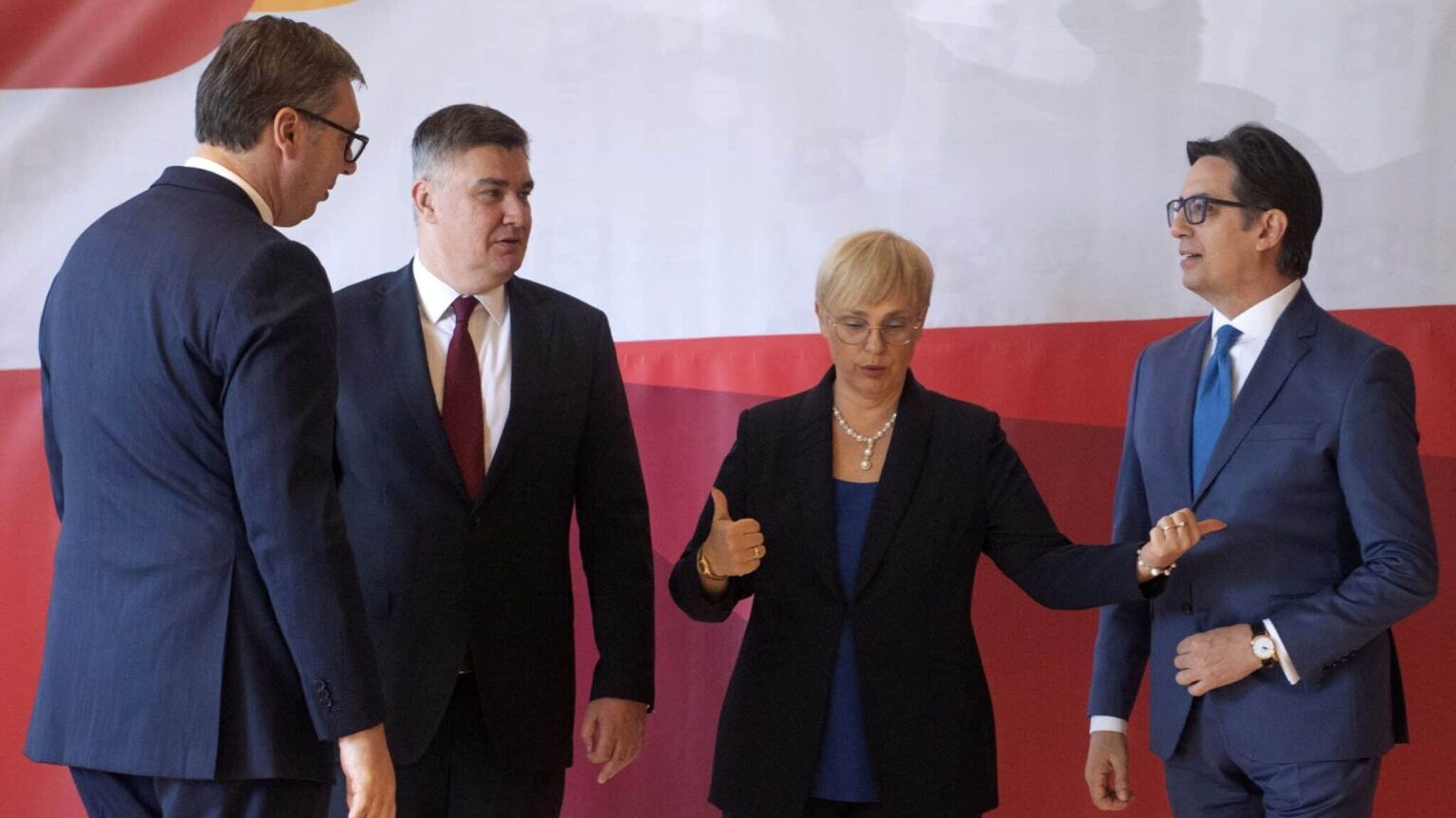
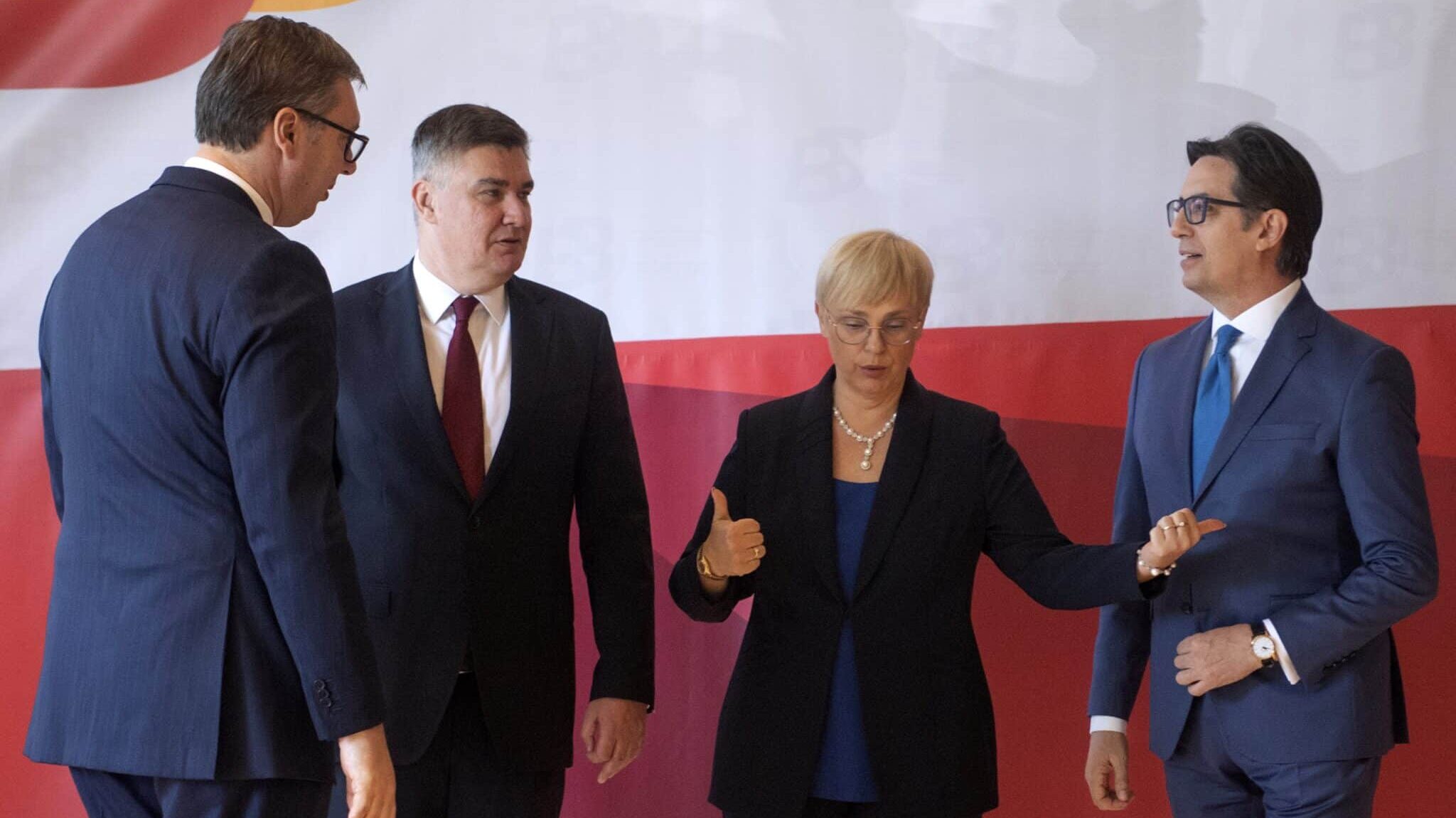
Serbian President Aleksandar Vucic (L), Croatian President Zoran Milanovic (2-L), Slovenian President Natasa Pirc Musar (C) and North Macedonia’s former President Stevo Pendarovski (R). Photo: EPA-EFE/GEORGI LICOVSKI
Serbian, Croatian and German minority languages remain underrepresented in Slovenian education and media, and raising public awareness of this issue is necessary, the Council of Europe said in a new report on Slovenia published on Wednesday.
The report by its Committee of Experts of the European Charter for Regional or Minority Languages acknowledges the efforts Slovenia has made to protect minority languages in the country but recommends strengthening their presence in education, including through teacher training, and in mass media.
“In Slovenia, the Hungarian and Italian languages continue to enjoy a relatively high level of protection,” the report stated, noting that bilingual education in Hungarian and Slovenian, as well as in Italian, are provided at all levels of education apart from university level.
But Slovenia’s legal framework makes no provision for the recognition of Croatian, German and Serbian as traditional minority languages, and the Committee of Experts recommends such recognition.
It stresses the need to raise awareness in Slovenia about regional or minority languages, their history and cultures, as an integral part of the country’s cultural heritage in mainstream education and in the mass media.
The Council of Europe proposes also that Slovenia take a more proactive approach to facilitate the use of Hungarian and Italian in administration.
“The Committee of Experts also emphasises the need to ensure the provision of radio and television programmes in Hungarian and Italian at an appropriate level,” the report said.
As regards Romani, afternoon lessons have been provided since 2021 as part of a pilot project at two schools, but so far, there is no regular teaching of the language in Slovenia. Romani is present to some extent in the media. The committee recommends teaching the Romani language and culture at all appropriate levels.
In 2014, the Council of Europe called on Slovenia to recognise German, Croatian and Serbian as traditional minority language and apply the Charter to these languages in cooperation with the respective minority communities.
They reached the same conclusions in reports published in 2019 and 2021, and now in 2025.
Slovenia says its legal framework on the recognition of national communities and their languages is linked to their historical presence and constitutional provisions. “The Croatian, German and Serbian communities in Slovenia are not constitutionally recognised as indigenous national communities,” the Slovenian authorities commented on the 2025 report.