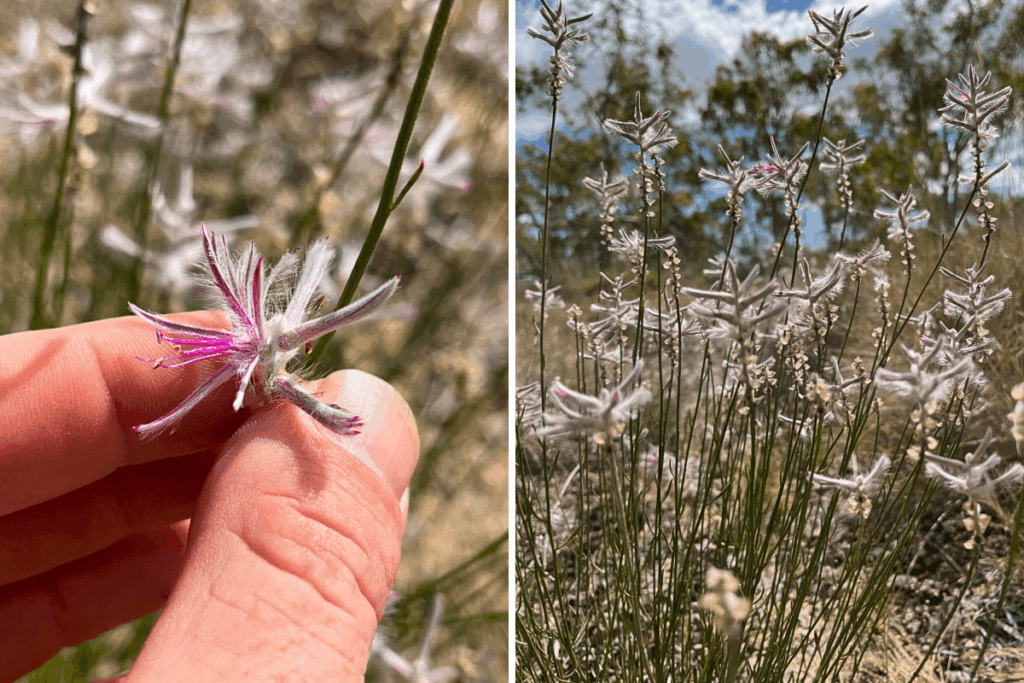
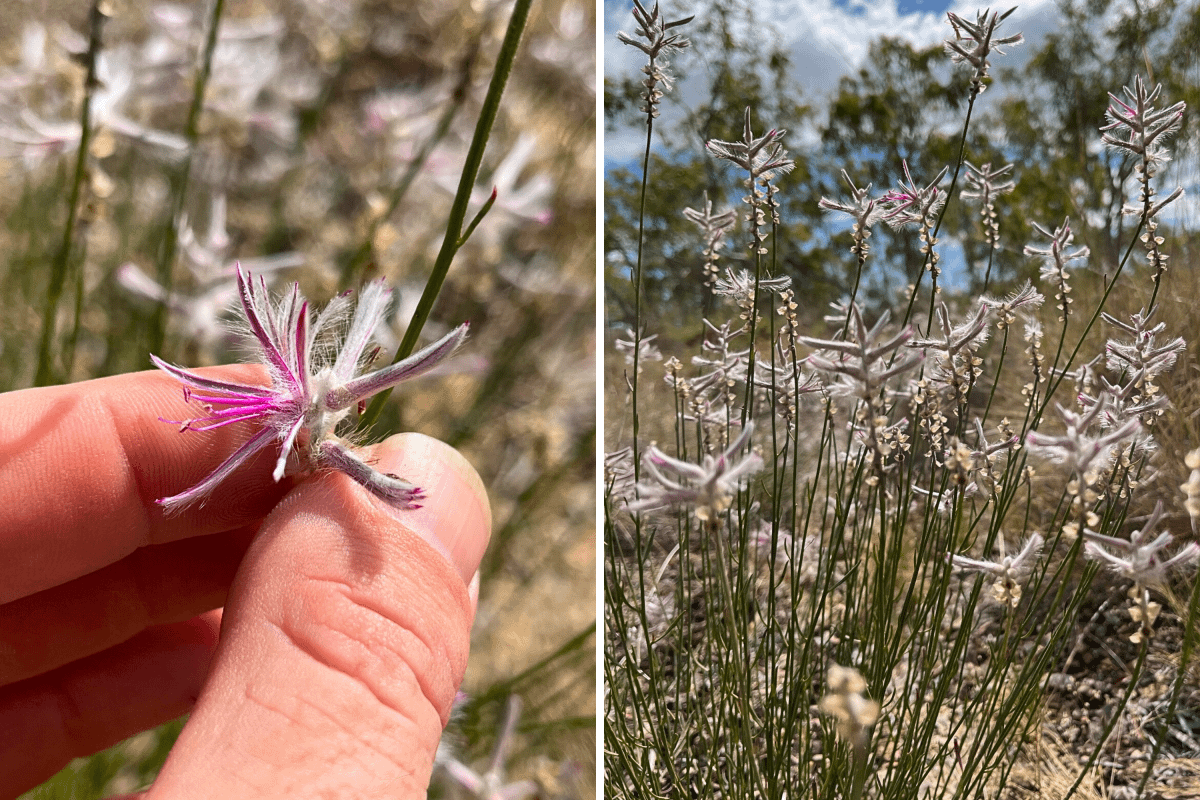
>A plant long presumed extinct in the wild has been rediscovered in Australia, ending nearly six decades without a confirmed sighting.
>Researchers say the small, slender shrub—Ptilotus senarius—has not been recorded since 1967 and was effectively written off as lost until new evidence emerged last summer on a remote property in the northwest of Queensland.
>The rediscovery occured back in in June, when horticulturalist and bird bander Aaron Bean uploaded photos of an unusual plant to the citizen science platform iNaturalist while working on private land in the Gilbert River region.
>The images quickly drew attention, prompting botanists to investigate further. A specimen subsequently collected from the site confirmed the identification, verifying that the species’ had still been alive, even if not seen, for the last 60 years.
>The researchers reporting the find say that the case demonstrates how digital platforms such as iNaturalist are reshaping conservation work. The discovery shows how routine uploads to the app can produce significant outcomes for biodiversity science.
>“Rediscoveries offer that opportunity to conduct follow-up, targeted surveys and consistent long-term monitoring to give us a better understanding of exactly where and how these species are distributed across the landscape” paper author and ecologist Thomas Mesaglio of the University of New South Wales said in a statement.
>”iNaturalist especially has become an invaluable tool for recording biodiversity on private property, which can often be difficult to access by professional researchers.”
>Scientists involved in confirming the specimen said that iNaturalist’s impact lies in its ability to rapidly publish observations from hard‑to‑reach places and connect them with expert identifiers worldwide.
>On the platform, users can post photographs instantly, allowing specialists to recognize rare or unusual species.
>iNaturalist holds over 104 million verifiable photographic vouchers of plants from around the globe having been uploaded to the platform as of July 2025, around the time of Ptilotus senarius’s rediscovery.
>The ability to capture and share observations instantly has become particularly important for species that exist in very small populations or survive in areas seldom visited by botanists. Without Bean’s June 2025 upload, the plant might have remained undetected indefinitely.
I wonder how many new/thought extinct species we miss because people look at something they’ve never seen before and think “I wonder what that is” or “that’s cool, haven’t seen that before” and then move on.
That’d definitely be me.
GraciaEtScientia on
“Follow up, targeted surveys and consistent longterm monitoring”
So is the goal to give it new opportunities to grow or just to monitor it until its gone?
Cobalt32 on
I have to imagine finding something that was thought to be extinct is by definition “unexpected” regardless of where it was found.
Cranberryoftheorient on
I was kinda hoping it was Silphium
Two_Digits_Rampant on
Wow. A piece of good news for once.
damian001 on
[It’s a shame the site is plagued with popups and ads](https://imgur.com/a/BTPsn2F) had to scroll too far down to see a picture of the plant
Cyanopicacooki on
It’s Australian. How toxic is it?
Necro_Badger on
I love reading news items like this amid all the depressing crud that’s going on. Never heard of this plant before but very glad that it’s not extinct. Hopefully some conservation efforts can make it more widespread and secure its future
Fanbelt on
Was it found up someone’s ass? I wouldn’t expect that. But in the ground is exactly where I would look for a plant.
Opposite_Bus1878 on
iNaturalist for the win
AnthropoidCompatriot on
Hmmm, I wonder if it’s possible to find a thought-to-be-extinct plant gradually.
BBS_Bob on
Perhaps the seed of one or more if them was preserved in an animal carcass undigested in a early death. Or within some other protective substrate until erosion/physical interaction of some kind freed it from its hibernation and it took root?

17 Comments
>A plant long presumed extinct in the wild has been rediscovered in Australia, ending nearly six decades without a confirmed sighting.
>Researchers say the small, slender shrub—Ptilotus senarius—has not been recorded since 1967 and was effectively written off as lost until new evidence emerged last summer on a remote property in the northwest of Queensland.
>The rediscovery occured back in in June, when horticulturalist and bird bander Aaron Bean uploaded photos of an unusual plant to the citizen science platform iNaturalist while working on private land in the Gilbert River region.
>The images quickly drew attention, prompting botanists to investigate further. A specimen subsequently collected from the site confirmed the identification, verifying that the species’ had still been alive, even if not seen, for the last 60 years.
>The researchers reporting the find say that the case demonstrates how digital platforms such as iNaturalist are reshaping conservation work. The discovery shows how routine uploads to the app can produce significant outcomes for biodiversity science.
>“Rediscoveries offer that opportunity to conduct follow-up, targeted surveys and consistent long-term monitoring to give us a better understanding of exactly where and how these species are distributed across the landscape” paper author and ecologist Thomas Mesaglio of the University of New South Wales said in a statement.
>”iNaturalist especially has become an invaluable tool for recording biodiversity on private property, which can often be difficult to access by professional researchers.”
>Scientists involved in confirming the specimen said that iNaturalist’s impact lies in its ability to rapidly publish observations from hard‑to‑reach places and connect them with expert identifiers worldwide.
>On the platform, users can post photographs instantly, allowing specialists to recognize rare or unusual species.
>iNaturalist holds over 104 million verifiable photographic vouchers of plants from around the globe having been uploaded to the platform as of July 2025, around the time of Ptilotus senarius’s rediscovery.
>The ability to capture and share observations instantly has become particularly important for species that exist in very small populations or survive in areas seldom visited by botanists. Without Bean’s June 2025 upload, the plant might have remained undetected indefinitely.
[Source](https://www.newsweek.com/botany-plant-believed-extinct-half-century-found-queensland-australia-11373400)
Its always in the last place you look.
Anyone else reminded of that Frieren episode?
I wonder how many new/thought extinct species we miss because people look at something they’ve never seen before and think “I wonder what that is” or “that’s cool, haven’t seen that before” and then move on.
That’d definitely be me.
“Follow up, targeted surveys and consistent longterm monitoring”
So is the goal to give it new opportunities to grow or just to monitor it until its gone?
I have to imagine finding something that was thought to be extinct is by definition “unexpected” regardless of where it was found.
I was kinda hoping it was Silphium
Wow. A piece of good news for once.
[It’s a shame the site is plagued with popups and ads](https://imgur.com/a/BTPsn2F) had to scroll too far down to see a picture of the plant
It’s Australian. How toxic is it?
I love reading news items like this amid all the depressing crud that’s going on. Never heard of this plant before but very glad that it’s not extinct. Hopefully some conservation efforts can make it more widespread and secure its future
Was it found up someone’s ass? I wouldn’t expect that. But in the ground is exactly where I would look for a plant.
iNaturalist for the win
Hmmm, I wonder if it’s possible to find a thought-to-be-extinct plant gradually.
Perhaps the seed of one or more if them was preserved in an animal carcass undigested in a early death. Or within some other protective substrate until erosion/physical interaction of some kind freed it from its hibernation and it took root?
Wouldn’t any spot be unexpected?
[https://i.imgur.com/k9hA2mK.jpeg](https://i.imgur.com/k9hA2mK.jpeg)
basically