
Photo by Peter Macdiarmid/Getty Images
Thought experiment: if you wanted to design the most regressive and distortive model for funding higher education imaginable – a system that would saddle a cohort of productive young people with a lifetime of higher taxes compared to those just a few years older than them, which got worse the more they earned but could be dodged via the simple trick of having rich parents, and which would also incentivise universities to flog cheap courses to as many eager teenagers as possible – what would it look like?
The answer is the Plan 2 student loan system, for individuals unlucky enough to embark upon a university degree between 2012 and 2023.
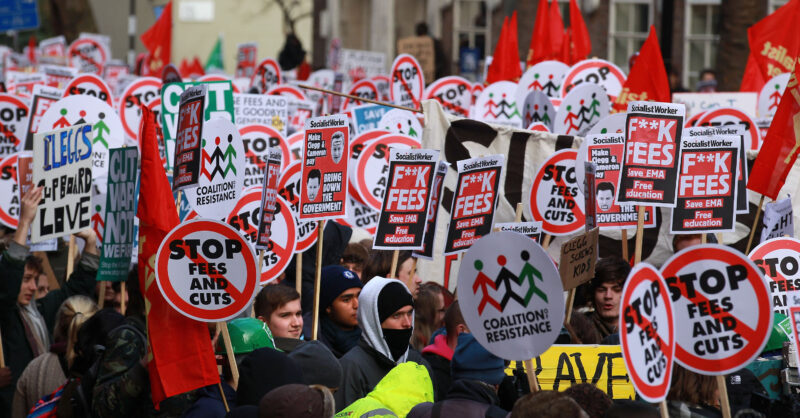
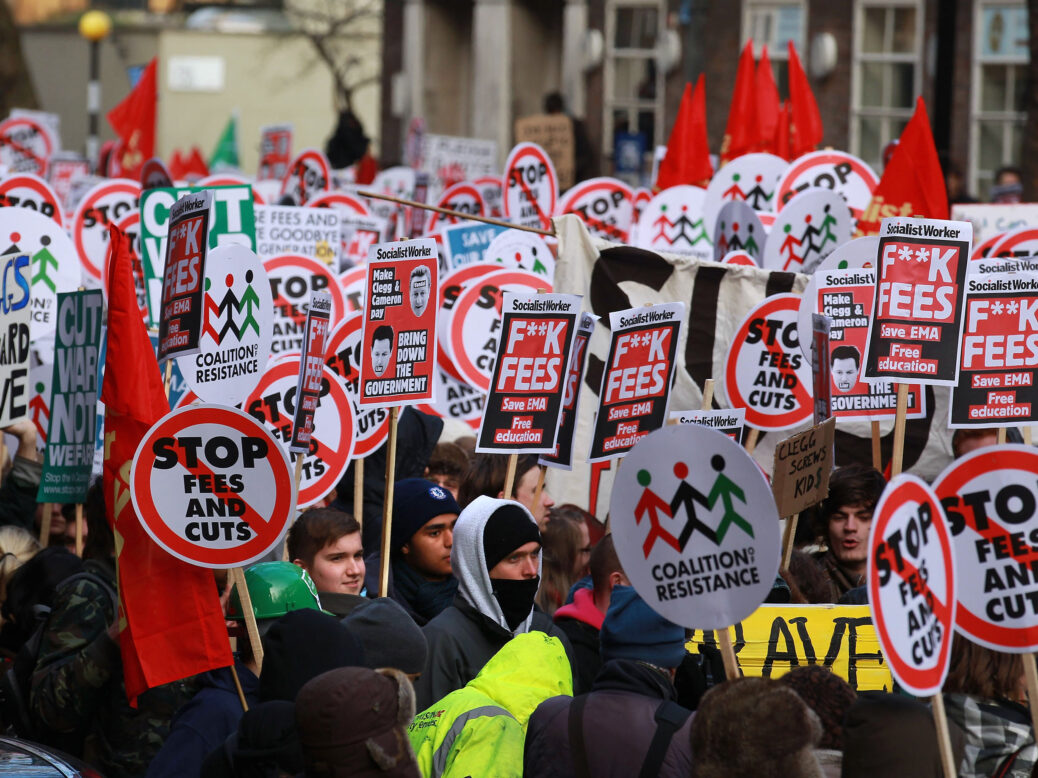
This isn’t news. Or, at least, it shouldn’t be. When Nick Clegg, in his infinite wisdom, chose to break his manifesto promise to back David Cameron and George Osborne in reforming student finance, the ramifications of what they dreamt up should have been obvious. Not only was the coalition government trebling tuition fees to over £9,000, which was projected at the time to leave the average graduate with close to £50,000 of debt before they even left university, but the new interests terms, which got far less attention than the headline fee increase, would make that debt almost impossible to pay off.
Pre-2012 graduates’ interest rate was set at the Bank of England base rate plus 1 per cent, or the RPI rate of inflation – whichever was lower. That suddenly shot up to RPI plus 3 per cent, charged from the moment the loan was taken out, before the student had even set foot on campus. A bizarre additional quirk meant the interest rate after graduation varied by salary, with higher earners subjected to a higher rate. The more graduates earned, the faster their debt would grow.

New year, new read. Save 40% off an annual subscription this January.
If that’s tricky to get your head around now (not surprising, given it’s the opposite of how any normal loan would work), imagine trying to understand it as an 18-year-old. Especially an 18-year-old who is receiving countless reassurances – by politicians, by schools, by supposed experts – that this isn’t debt in the normal sense as it doesn’t affect the debtor’s credit rating, and repayments only start after they are earning a sufficiently high amount. An 18-year-old who is being encouraged, in fact, to take out a loan on terms no one is really talking about as a route to a future-proofed high-earning career.
And so they did – in record numbers, as the cap on university places was lifted. And when the absurdities of the system began to become apparent down the line, those who created it didn’t want to know. In 2017, for example, the interest rate on student loans hit 6.1 per cent – more than 24 times the Bank of England base rate at the time of 0.25 per cent. Sceptics noting the insanity of this when you could take out a ten-year mortgage for 2.49 per cent were dismissed as scaremongers. The in-built injustice that students with parents able to pay the money upfront would take on zero debt, and therefore avoid a 9 per cent cut to their income for decades, was ignored. Proponents pointed out the surge in student numbers, especially from low-income backgrounds. Clearly, they argued, the terms of the loan couldn’t be so terrible, otherwise teenage applicants would not choose to take them out.
Those 18-year-olds – the first guinea pigs, the class who matriculated in 2012 – are now turning 31. And belatedly, the impact of the loans they were assured were a rock-solid investment in their futures are becoming apparent. Social media has been awash in recent weeks with graduates who have been making payments for almost a decade logging on to the student finance portal and discovering with horror that far from being paid down, their debt has in fact risen. This fact seems to come as a shock not just to them but to a political and media bubble that was certain a few years ago that anyone raising alarm about this just didn’t understand the very clever system cooked up by very clever people back in 2011.
The big picture stats are stark: in 2024-5, over £15bn of interest was applied to student loans. Repayments totalled just £5bn. On a macro level, that’s clearly unsustainable – and is why the terms were changed for those taking out a loan after 2023, with a lower interest rate and longer repayment period (watch out – today’s students will still be repaying their loans in their 60s).
There are big questions too for what this has done to the higher education sector, currently teetering on the brink of crisis. Universities used to receive more funding from government for more expensive courses. That got cut when fees trebled, creating an incentive to offer courses that were cheaper to teach. Whether these courses are the kind of intensive high-tech degrees most likely to lead to soaring growth for the country and high salaries for graduates is an open question. But the UK’s flatlining productivity for the past decade and the stagnation of graduate wages hints at an answer. As Alison Wolf, the crossbench peer who sat on the panel of the 2019 Augur review into higher education, told the Telegraph: “We’ve got ourselves into a trap where we have created a funding model that’s inherently irrational.”
However, it is on the individual level that the reality of the disaster really plays out. As there is little chance most people will ever pay it off, higher earners will pay back more, essentially subsidising those who never hit the repayment threshold. The repayments function like an additional 9 per cent tax that the vast majority of this cohort will never escape. It might not tank their credit rating in the technical sense, but it sure as hell affects their borrowing capacity if and when they look to take out mortgages. It impacts their ability to save for a pension, setting up an additional crisis on the horizon. It’s not unreasonable to speculate that it might be factored into decisions about if and when to have children. Adding insult to injury, the government has just frozen the loan repayment thresholds, amounting to an extra stealth tax specifically on 2012 graduates.
Thanks to the unstoppable passage of time, these graduates are gaining political capital. Some of them are even MPs who have been taking up the cause, talking about the “ticking time bomb” the system has created. The impact on growth, savings and economic dynamism, coupled with the dawning reality of a cohort coming into their professional prime with what is in essence a bespoke additional tax, is finally forcing the unique long-term injustice of this system into the public consciousness – where it should have been 15 years ago when all this was being dreamt up.
The 2012 graduates got screwed over. They were mis-sold a lifetime of higher taxes, chasing a degree pay-off that for many never materialised. And all the while, their peers who did the same degrees at the same universities a few years earlier or whose parents paid their fees upfront drift through life tens of thousands of pounds richer. No wonder they’re feeling radicalised. Wouldn’t you?
[Further reading: Farage target rules himself out]