
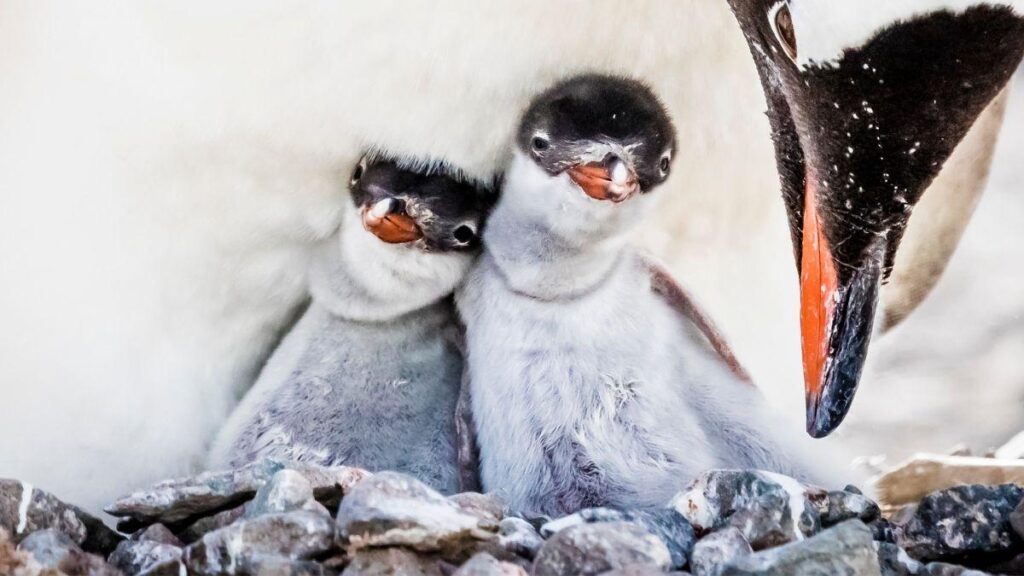
Penguins May Be Adapting to a Rapidly Warming Climate, Study suggests several species of penguin have shifted their breeding seasons, allowing them to cope with a decade of rapid warming despite the potential costs of changing such a carefully scheduled event.
https://www.sciencealert.com/penguins-may-be-adapting-to-a-rapidly-warming-climate-but-at-a-cost
1 Comment
>Penguins won’t lay their eggs any old time of year. They carefully synchronize breeding time with the seasons to give the next generation the best start to life. In the harsh ecosystem of Antarctica, this is essential for the survival of their species.
>And yet human-induced climate change may be destabilizing this delicate balance.
>A new [study](https://besjournals.onlinelibrary.wiley.com/doi/10.1111/1365-2656.70201) led by University of Oxford and Oxford Brookes University scientists suggests several species of penguin have shifted their breeding seasons, allowing them to cope with a decade of rapid warming despite the potential costs of changing such a carefully scheduled event.
>Seabird ecologist Ignacio Juárez Martínez and his team began monitoring three species of Antarctic penguins in 2012, using 77 timelapse cameras positioned across 37 penguin colonies on the Antarctic Peninsula and nearby Sub-Antarctic islands.
>The cameras provided unprecedented insights into the breeding lives of Adélie (Pygoscelis adeliae), chinstrap (P. antarcticus), and gentoo (P. papua) penguins, and the way chick rearing has changed for these species across a decade of rapid warming.
>The cameras also monitored temperature, providing 10 years of data on temperature changes at specific penguin colony sites.
>The temperature trends don’t bode well for the penguins: colony locations are warming up four times faster than the average increase in Antarctica (0.3 ºC per year, as opposed to the already-rapid 0.07 ºC per year).
>This puts penguin breeding colonies among the fastest-warming habitats on Earth. And statistical analysis suggests these rapid temperature changes are likely driving the birds to breed earlier and earlier in the year.