
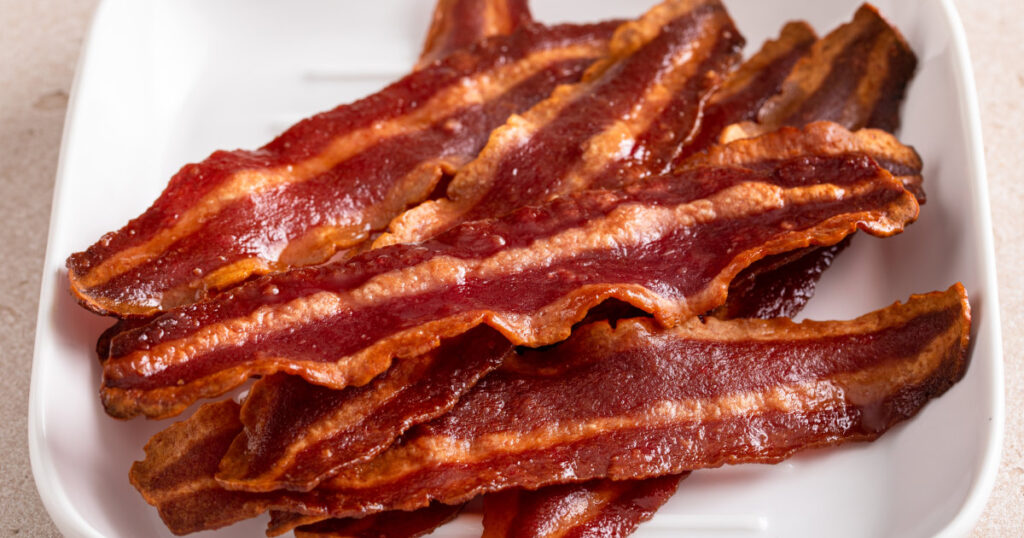
There’s no denying that bacon often takes an important spot on Americans’ breakfast plates. But we also know it’s not exactly the healthiest food to eat on a regular basis. That’s where lighter options, like turkey bacon, can come in, dietitians say.
If you’re expecting classic pork bacon, the taste and texture of turkey bacon is certainly different, Caroline Susie, registered dietitian and spokesperson for the Academy of Nutrition and Dietetics, tells TODAY.com.
“But turkey bacon is going to be a lower-fat alternative,” she notes.
Not all fat is bad for you, but those of us in the U.S. tend to already eat a diet too high in saturated fat, a type that has been linked to increases in cholesterol levels and heart-related issues. So, cutting out some of that fat by choosing an alternative like turkey bacon may be a way to reduce the amount of saturated fat you eat in a day.
But it’s important to remember that turkey bacon, chicken sausage and the like are still processed meats and high in sodium, says Natalie Rizzo, registered dietitian and TODAY.com nutrition editor. Depending on your serving size, you might also be eating a good portion of your daily saturated fat allowance — even with turkey bacon, she adds.
Here’s how to figure out what’s actually the healthiest option for you.
Why You Probably Want to Limit Bacon
“The saturated fat content in (bacon) products is going to be very high, in addition to the sodium,” Susie says.
Research shows that diets high in saturated fat from foods like bacon are associated with a higher risk for cardiovascular problems, she explains, including heart attack and stroke. That’s why people who are at risk for heart disease are typically advised to limit how much saturated fat they eat.
Keep in mind that that saturated fats aren’t just in pork, Susie adds. You’ll also find saturated fat in foods like full-fat dairy and coconut oil. Poultry, such as turkey and chicken, also contains saturated fat — particularly dark meat.
There’s also evidence that too much saturated fat can adversely affect cholesterol levels, insulin resistance and inflammation, TODAY.com explained previously.
However, there has been conflicting data, and the outcomes of some clinical trials showed no benefit to heart health from switching to a low-fat diet. Generally, research suggests it’s not just reducing saturated fat that has an impact on your health, but what you replace it with. And we know that some options — especially the polyunsaturated fats found in plant foods — are better for you and your heart than others.
Turkey Bacon Nutrition
Foods like turkey bacon or chicken breakfast sausage are worth a shot, Susie says, because they have a more favorable nutrient profile than their classic counterparts.
A single slice of turkey bacon has about:
- 30 calories
- 2.4 grams of protein
- 2 grams of fat, including 0.6 grams of saturated fat
Compare that to a slice of regular bacon, which generally contains:
- 54 calories
- 4 grams of protein
- 4 grams of fat, including 1.4 grams of saturated fat
When it comes to calories and saturated fat, turkey bacon definitely comes out on top. For the same amount of slices, pork bacon has almost double the amount of calories and more than twice the saturated fat of turkey bacon.
Keep in mind that we’re generally only supposed to get 10% or less of our daily calories from saturated fat, dietitians told TODAY.com recently.
For someone eating 2,000 calories per day, that’s only 13 grams of saturated fat, the American Heart Association explains. That means just a few slices of bacon can easily wipe out half of your daily saturated fat allowance.
Lighter Options Are Worth Trying, But Keep Saturated Fat In Mind
Be prepared for a different flavor and texture than traditional bacon or breakfast sausage, Susie notes. So, if you’re really craving a slice of crispy, greasy bacon, then turkey bacon probably isn’t going to scratch that itch.
But, if you accept them for what they are, turkey bacon and chicken sausage can still provide convenient protein in the morning with fewer calories and less saturated fat, Susie says. “It’s a lean option that that you can add to your morning routine to help meet your protein goals,” she explains, adding that many people struggle to get enough protein at breakfast.
Keep in mind, though, that “the sodium content is still there,” Susie says, especially if you’re using a frozen product because those tend to be higher in sodium across the board.
So if you need to limit your sodium intake due to a health condition, like high blood pressure, you should still be cautious with these foods.
That’s also why Rizzo actually recommends skipping these products in the morning when possible, including turkey bacon and chicken sausage. “If you’re starting out with that amount of saturated fat and sodium,” she says, you’re likely to hit your daily allotments of those things very early in the day.
That said, as long as you stay cognizant of your overall dietary patterns, there can still be a place for traditional bacon if that’s something you enjoy eating. “If it’s one of those days and you’re enjoying bacon and eggs with your family, enjoy it,” Susie says.