
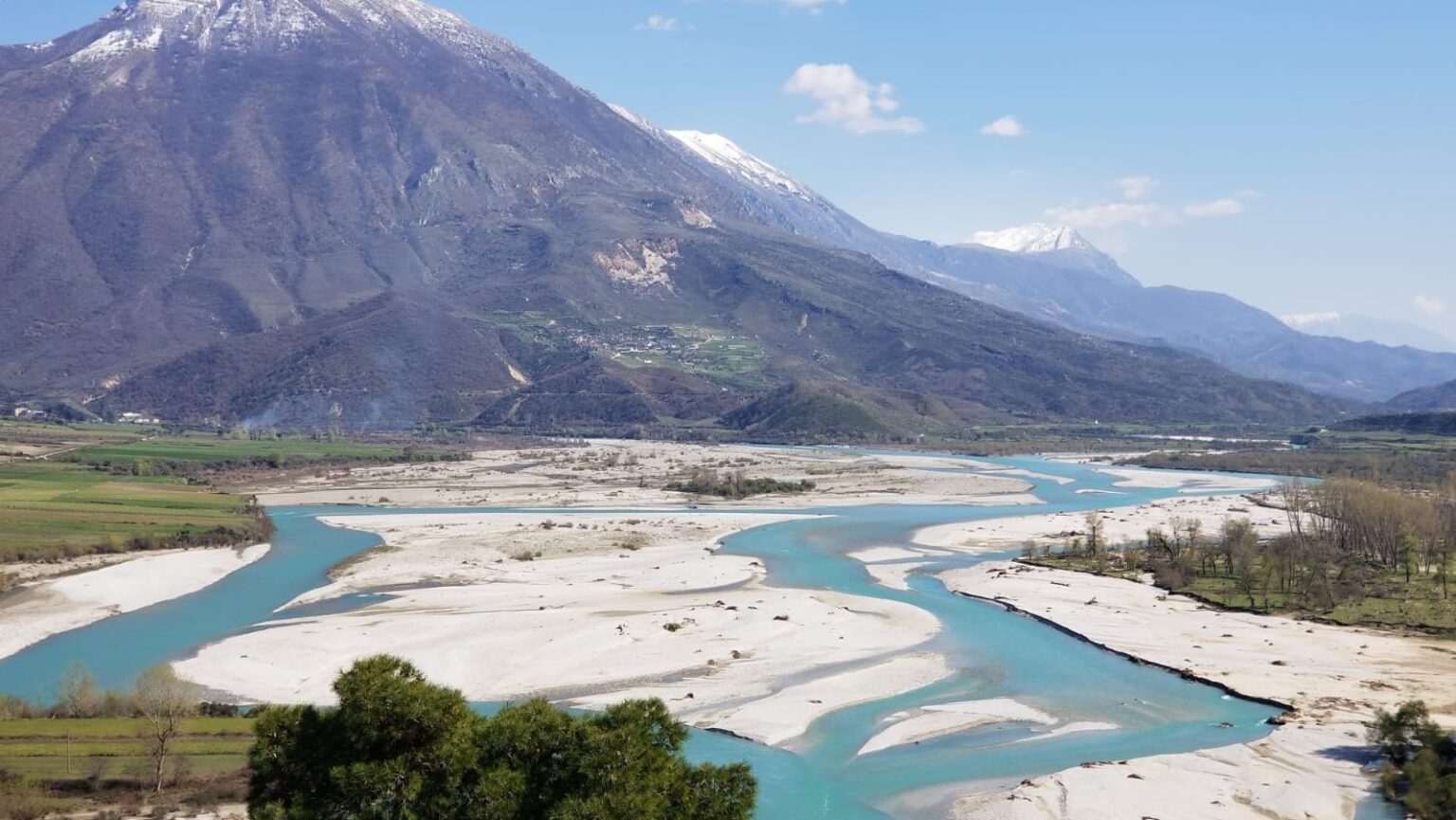
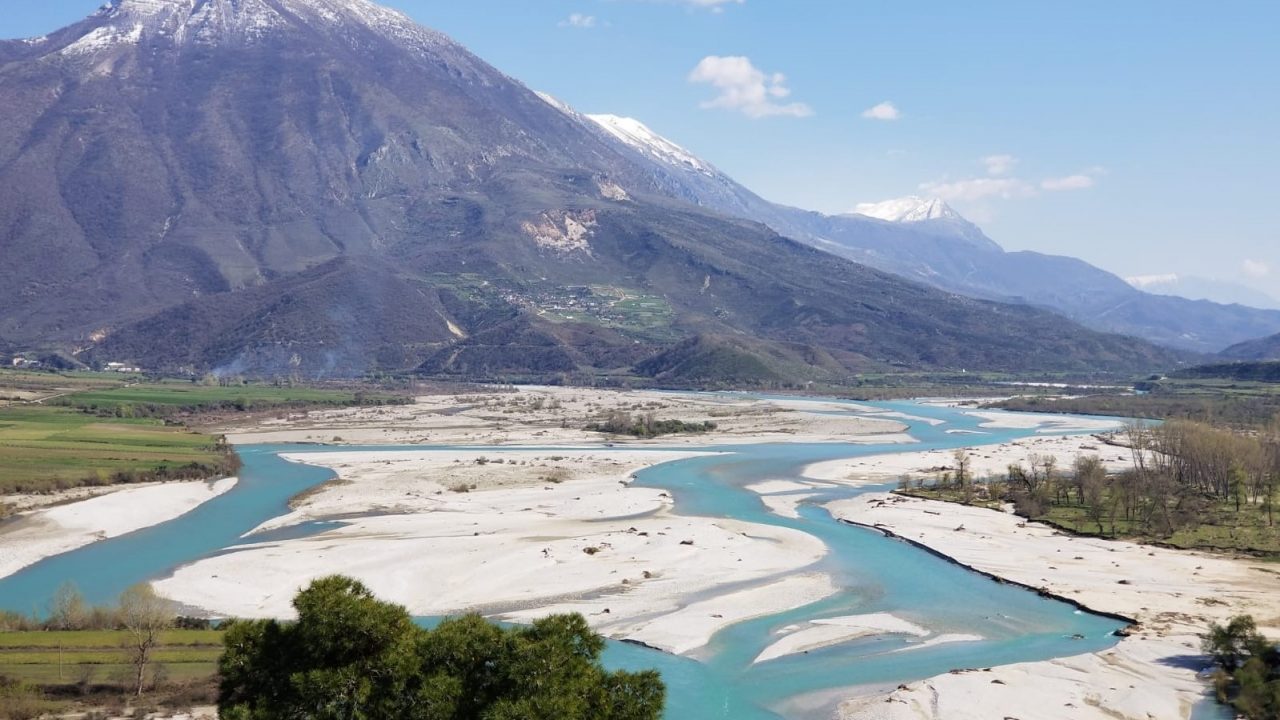
The Vjosa river in Albania. Photo: BIRN.
A new study by the environmental organisations EuroNatur and River Watch, on Balkan rivers, warns that some 2,450 kilometres of pristine rivers have been lost in the last 13 years.
Rivers in Albania and Bosnia and Herzegovina have seen a sharp decline in the share that were pristine, the report published on Wednesday said.
The study shows that the percentage of rivers in Albania that were clean plummeted from 68 per cent in 2012 to just 40 per cent in 2025. “In absolute terms, the length of nearly natural rivers dropped from 3,812 rkm [river kilometres] to 2,668 rkm in just seven years (2018–2025),” the study said.
In Bosnia and Herzegovina, surviving stretches of rivers that remain pristine fell from 1,170 rkm to 904 rkm, representing a 23-per-cent decrease in high-value ecological stretches from 2012 to 2025.
The study, “Hydromorphological Status of Balkan Rivers”, authored by Dr Ulrich Schwarz of Fluvius Vienna and commissioned by EuroNatur and Riverwatch, forms part of the Save the Blue Heart of Europe Campaign – a campaign that focuses on protecting Balkan rivers. The study assessed the state of 83,824 km of rivers across 11 countries.
“Hydropower development remains the key driver of degradation. Other major pressures include water abstraction, sediment extraction, and infrastructure construction,” the study highlighted.
Three main factors have been studied regarding the loss of pristine rivers in the Balkans: fragmentation of the rivers caused by dams and barriers that break the natural river continuum; structural damage caused by artificial reinforcement of riverbanks and the straightening of natural meanders and habitat loss, which causes the degradation or total disconnection of vital floodplain ecosystems.
The study notes some signs of hope for the embattled rivers of Albania and Bosnia.
“Amidst the decline, significant river protections have been achieved. Most notably, the Vjosa in Albania was designated Europe’s first Wild River National Park, successfully blocking nearly 40 planned dams,” it noted. The Vjosa River runs for about 272 kilometres through Albania and its other 80 kilometres flow through Greece.
Albania declared its section a national park in March 2023, after more than 10 years of campaigning by local and environmental activists and scientists. But, two-and-a-half years after this decision, no serious efforts are being made to protect it from industrial and human intervention.
In Bosnia, while high-value ecological stretches have decreased by 23 per cent, a landmark legal victory in 2022, amending the Law on Electricity in the Federation entity of Bosnia and Herzegovina, banned the approval of new small hydropower plants (under 10 MW), effectively halting approximately 116 planned projects.
“In total, some 200 km of large rivers and 700 km of small rivers have been preserved across the Balkans,” the study found.
But, it adds, despite such achievements, the trend is still moving rapidly in the wrong direction.
“While hydropower remains a dominant threat, the transition from wild rivers to infrastructure corridors is the result of cumulative human impacts such as hydropower and diversions, extractive industries and infrastructure and regulation,” it concluded.