
For more than a century, Egyptian king Thutmose II remained absent from the country’s most famous burial ground, leaving a quiet hole in the story of royal death and power.
That search ended near Luxor, where the long-lost tomb brings a major chapter of ancient history back into focus.
King Thutmose II’s tomb

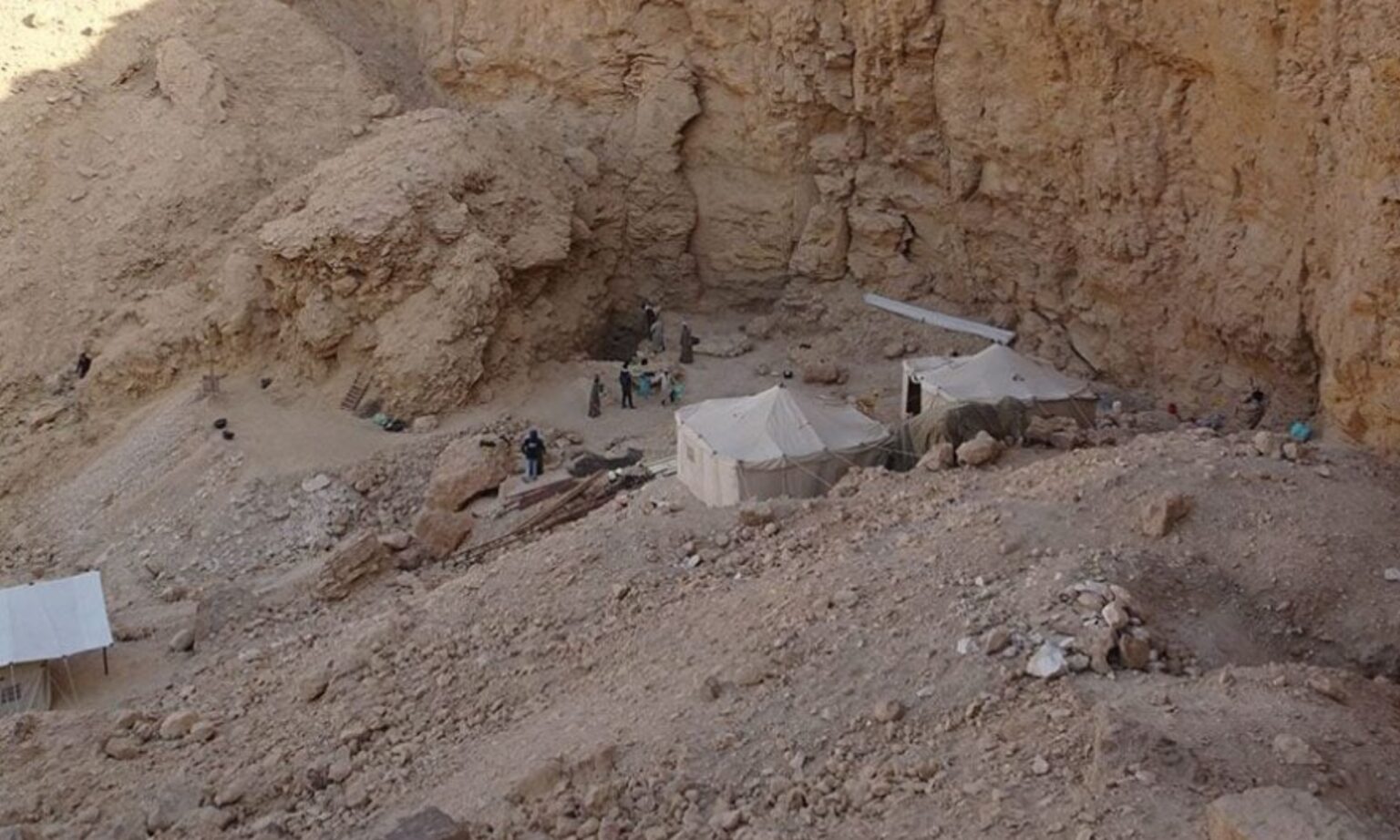
Archaeologists from Egypt and Britain are credited with identifying the tomb of King Thutmose II, the last Eighteenth Dynasty ruler whose burial place had never been located.
Crews traced an entrance marked Tomb C4 into a valley 1.5 miles (2.4 kilometers) west of the Valley of the Kings.
Survey maps from the University of Cambridge helped guide the mission across Luxor’s west bank.
Fieldwork was led by Piers Litherland, an honorary research associate whose excavations track early royal burials outside the main valleys.
Careful digging mattered because the first cleared corridor ended in collapse, giving no quick name for the owner.
Why the tomb fooled experts
Location near tombs of royal women made the burial look like another consort’s chamber, not a king’s.
Archaeologists treat the landscape as evidence, since builders often grouped wives, children, and officials in separate parts of the cliffs.
Nearby openings include burials linked to wives of Thutmose III and an intended resting place for Queen Hatshepsut.
That context shaped early expectations and delayed a royal claim until later fragments provided a clearer signature.
Paint tells a story
In the burial chamber, surviving plaster showed a blue ceiling dotted with yellow stars, a rare marker of kingship.
Fragments from the Amduat, a royal afterlife text about the sun’s night journey, appeared on bits of fallen wall.
“The discovery that the burial chamber had been decorated with scenes from the Amduat, a religious text which is reserved for kings, was immensely exciting and the first indication that this was a king’s tomb,” said Litherland.
Paint alone could not name the buried person, but it pushed the search toward royal objects hiding in the debris.
Reading names on fragments
Workers screened every bucket of rubble, separating fragments by size, and collected tiny inscriptions that survived crushing debris.
On alabaster, a soft stone carved into ritual jars, the team read Thutmose II named as the deceased king.
Other shards carried Queen Hatshepsut’s living name, including a blessing wishing her life, which helped fix the timeline.
“The artifacts discovered there are an important addition to the history of the archaeological site and the period of the reign of King Thutmose II,” said a statement from Egyptian Ministry of Tourism and Antiquities.
Floods rewrote the evidence
Ancient floods hit the tomb soon after burial and left thick deposits that cracked plaster and blocked corridors.
Fast water rushing through desert channels can turn loose sand into packed mud, and the mass presses on walls.
After the damage, ancient workers likely cleared out portable goods, leaving only broken pieces that modern crews could stabilize.
That loss means the tomb gives strong identity clues but little about daily life, wealth, or funerary rituals once performed.
Hatshepsut and a burial plan
Thutmose II died young, and the court turned to his wife and half-sister, Hatshepsut, to manage a delicate succession.
She first governed for the boy Thutmose III, then claimed the kingship and ruled for nearly 20 years.
That political role fits the evidence that she oversaw her husband’s burial while the child heir was still too young to rule.
For archaeologists, her fingerprints matter because they connect this tomb to the earliest years of her rise.
A blueprint for later tombs
The tomb’s corridors follow a simple left-turn layout that later became common for kings in this area.
Builders cut passages that bend and drop, forcing visitors to slow down and making hidden doors easier.
This plan appears early in the Eighteenth Dynasty, which ruled from about 1550-1292 BCE, before the Valley of the Kings matured.
Because the layout is stripped down, it offers a baseline for comparing later royal tombs with heavier carving.
Where is Thutmose II’s body?
No intact burial lay inside the chamber, leaving uncertainty about where Thutmose II ended up.
Debate continues over whether a mummy once linked to him truly matches, since ancient priests moved bodies more than once.
Recent work suggests the match remains uncertain, and Litherland suspects the king was moved again during later reburials.
Until teams find a second resting place, the tomb’s surviving objects may be the best direct link to his reign.
Rethinking Luxor’s landscape
The discovery refocuses searches on the western wadis, where narrow valleys hide entrances that tourists rarely see.
Teams combine old maps with satellite images, which reveal subtle cuts in bedrock and tracks from ancient workers.
Evidence that the original chamber was emptied early points to another nearby tomb that could still hold larger remains.
If excavators locate that place, conservation will matter as much as excavation because fragile surfaces crumble when exposed.
Together, the decoration, inscriptions, and architecture show how one damaged tomb can clarify a broader stretch of royal history.
Future seasons will focus on mapping nearby valleys and conserving plaster, since missing goods and remains still limit firm conclusions.
Image credits: New Kingdom Research Foundation.
—–
Like what you read? Subscribe to our newsletter for engaging articles, exclusive content, and the latest updates.
Check us out on EarthSnap, a free app brought to you by Eric Ralls and Earth.com.
—–