
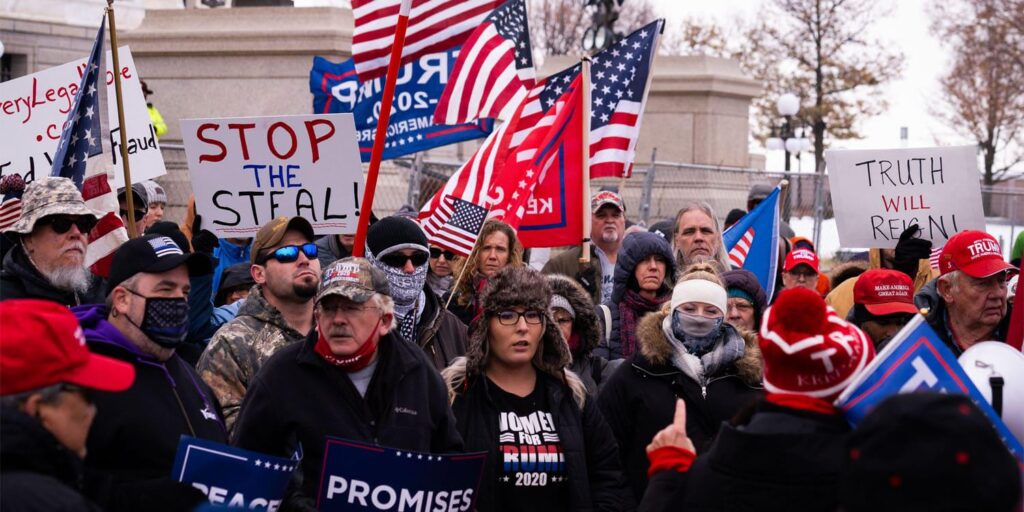
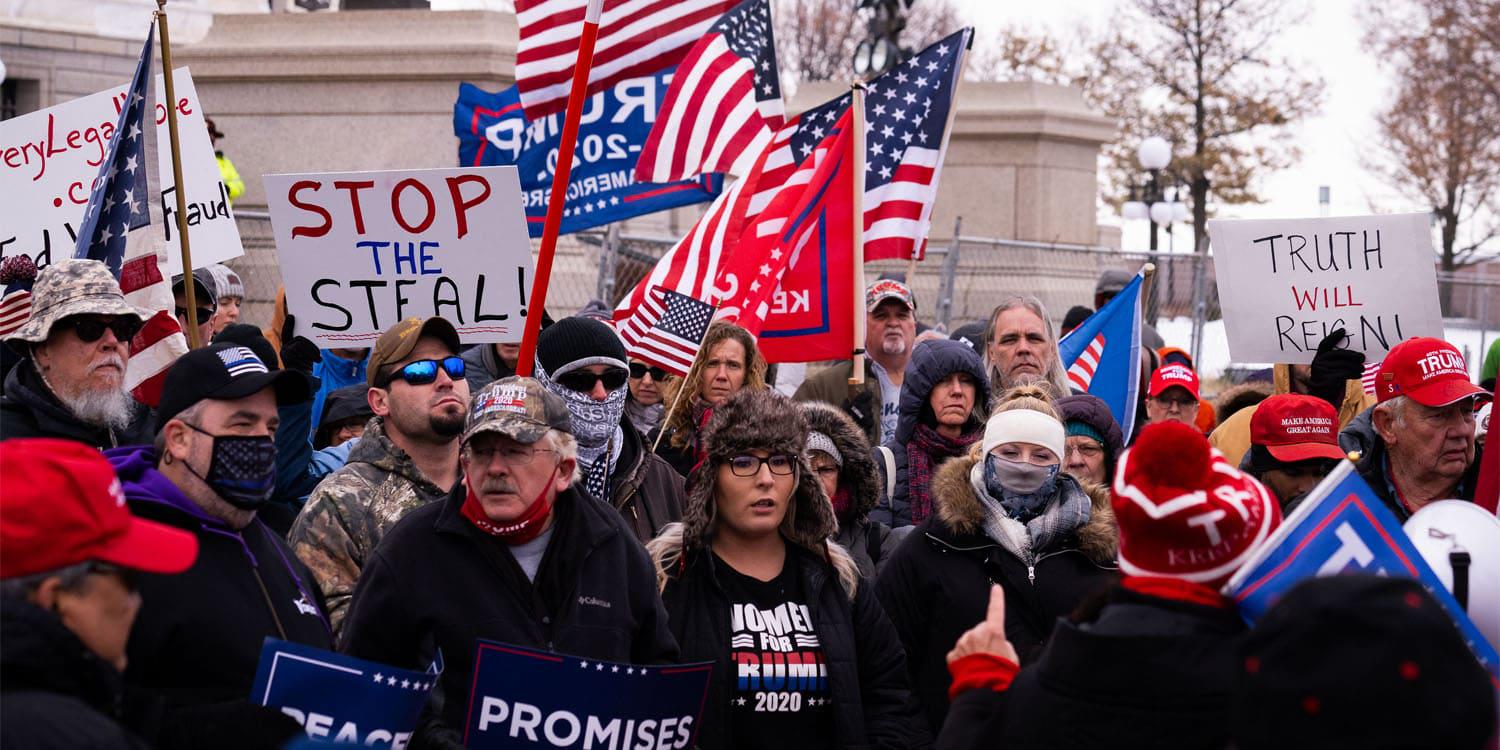
Collective narcissism fueled the pro-Trump “Stop the Steal” movement on Twitter. Study finds that messages expressing an exaggerated sense of group importance combined with victimhood were more likely to go viral.
Collective narcissism fueled the pro-Trump “Stop the Steal” movement on Twitter
8 Comments
>Social media platforms witnessed a surge in intense political debate following the 2020 United States presidential election. New research indicates that a specific psychological trait known as collective narcissism played a primary role in fueling the “Stop the Steal” movement on Twitter. The study finds that messages expressing an exaggerated sense of group importance combined with victimhood were more likely to go viral. These findings regarding online political behavior [appeared](https://doi.org/10.1177/14614448251365272) in the journal New Media & Society.
>Social psychologists describe collective narcissism as a belief system where individuals view their own group as exceptional. This belief is not merely about pride. It comes with a deep conviction that the group is not receiving the recognition or privilege it deserves from others. When the group faces a perceived threat, such as an election loss, this psychological trait can drive intense hostility toward outsiders.
>Liwei Shen, a researcher at the University of Wisconsin-Madison, led the investigation into how this dynamic functions online. The research team included Yibing Sun, Luhang Sun, Yun-Shiuan Chuang, and Kaiping Chen. They sought to understand how feelings of group superiority shape digital discourse. They specifically wanted to see if these sentiments helped spread narratives about voter fraud.
>The researchers based their work on a framework called the Social Identity Model of Deindividuation Effects. This psychological theory suggests that anonymous online environments change how people relate to their social groups. When individuals lose their personal visibility online, they often identify more strongly with their group. They also feel a stronger pressure to conform to that group’s norms and language.
Yes. Cults of personality function like collective narcissism. It is a known thing in psychology research.
It’s not clear (to me) from the article if or how they accounted for intentional disruptors, like Russian bots or other bad actors, who were intentionally sending and boosting specific kinds of messages. That is, does it account for the possibility that bad actors might help certain kinds of messages go viral in order to stir trouble rather than as a sincere expression of a sense of group importance?
J6 will forever be a stain on U.S. history, no matter how much certain people try to re-write what happened on that day and the days leading up to it.
That statement assumes there were no outside actors driving the narrative, which doesn’t seem to be the case in terms of Twitter.
Sounds like it can just as easily apply to all the left wing movements as well.
Being conservative requires a gigantic victim complex. At the same time, it’s mostly white people, and they have the majority of power in this country. Trying to make sense of this is impossible.
The fact that an open Nazi who manipulates the algorithms runs the main social media platform probably contributed too.