
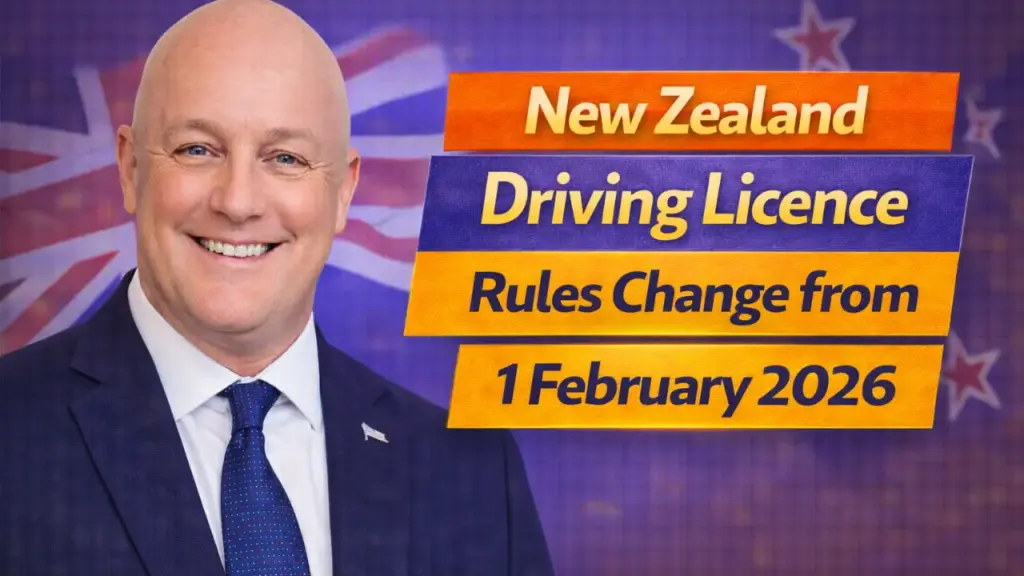
A wave of proposed and administrative changes to how New Zealand issues and manages driver licences has prompted wide attention online, and numerous outlets have reported a start date of 1 February 2026 for various measures. However, the Government and the transport agencies have clarified that major reforms to the graduated driver licensing system (GDLS) are subject to Ministerial decisions and implementation timetables that differ from some media reports. Drivers should therefore treat the early-2026 claims with caution, while preparing now for likely regulatory tightening in areas such as medical fitness checks, licence renewals, digital licence use and conversion of overseas licences.
What the official agencies say
Te Manatū Waka (Ministry of Transport) and Waka Kotahi NZ Transport Agency (NZTA) have been reviewing the licensing framework and consulting the public on improvements to the GDLS. The Ministry’s public material states that final decisions will be announced in early 2026 and that major GDLS changes are now scheduled to take effect in January 2027, not February 2026—the timing many secondary sources have cited. NZTA’s driver-licence pages and medical-requirements guidance remain the primary, authoritative references for what drivers must do now when applying, renewing or updating licences.
Why the confusion exists
A number of privately run news sites and social posts have published summaries that combine proposed policy elements with hypothetical implementation dates. These summaries have circulated rapidly, producing headlines that say “rules change from 1 February 2026.” While some administrative updates or local process changes may begin earlier in 2026, formal, nationwide changes to the GDLS have a different official timetable. Reported measures that appear repeatedly in commentary include: expanded digital-licence recognition, stricter medical and eyesight checks at renewal, removal or alteration of the second practical (full) test, and changed timeframes for converting overseas licences—each of which is at a different stage of policy development.
Key proposed and administrative changes drivers should know now
-
Digital licence recognition and MyNZ app use: The move toward formal recognition of digital licences and a stronger digital channel for renewals and checks is advancing. Drivers are advised to register and familiarise themselves with the MyNZ app and the online services NZTA offers for renewals and updates.
-
Medical and eyesight checks: Applicants must demonstrate medical fitness when applying or renewing; NZTA guidance emphasises eyesight standards and condition-specific reviews (for epilepsy, diabetes, dementia and other conditions). Expect more consistent enforcement of medical evidence at renewal.
-
Graduated Driver Licensing proposals: Consultation documents and media reporting indicate the Government is considering removing the second practical test for private car licences and shifting to a time-served and competency-verified pathway (for example, full privileges after a clean restricted period of 18 months or 12 months with approved courses). Final decisions and the implementation date rest with the Minister and official rulemaking.
-
Overseas licence conversion windows: Some proposals discussed extensions to the period a new arrival may drive on an overseas licence before converting; this has been raised in prior rule changes and consultations. Drivers who arrived recently should check their conversion deadlines and not rely on unofficial extensions.
Road safety context and why the changes matter
New Zealand has been actively pursuing road-safety objectives that aim to reduce deaths and serious injuries. Provisional national road-death figures have trended lower in recent years: 2024 provisional figures were under 300 fatalities and 2025 provisional figures showed further improvement. The Government’s road-safety work underpins the licensing reforms—stricter checks, improved training and clearer pathways are intended to reduce high-risk driving behaviour and the number of serious crashes. For drivers, that means licence processes are being designed around safety outcomes rather than solely administrative convenience.
Practical checklist for drivers — what to do now
-
Check your licence expiry date and renew early if you are approaching expiry. Use NZTA online services where eligible.
-
Ensure your contact details and residential address with NZTA are current so renewal reminders arrive correctly.
-
If you have a medical condition that could affect driving, obtain the required medical certificate from a New Zealand-registered health practitioner before applying or renewing. Keep the certificate current per NZTA guidance.
-
If you learned to drive overseas, confirm your conversion deadline and book any necessary tests early rather than waiting for possible rule changes.
-
Consider enrolling in an approved advanced driver-training course if you are in the restricted licence phase; policy proposals link course completion to shorter time before eligibility for a full licence.
Quick comparison table — current rules versus proposals and official timetable
Current rule (as at early 2026)
Proposal / reported change
Official timetable (agency guidance)
Likely operational impacts and common concerns
-
Processing time: If medical certificates or additional paperwork become more commonly required at renewals, expect some renewals to need more time. Book appointments early.
-
Costs: Some proposals were framed as reducing overall costs to progress to a full licence (fewer practical tests, more reliance on approved courses). However, short-term costs can increase for those who must pay for medical certificates or training courses.
-
Equity and access: The Government’s consultation emphasised avoiding new barriers for low-income or rural applicants. Watch for details on fee settings, course availability and exemptions.
FAQs
What exactly changes on 1 February 2026?
There is no single, government-announced nationwide licence reform scheduled to begin on 1 February 2026. Several secondary outlets have reported that date, but the Ministry of Transport and NZTA say final GDLS decisions will be announced in early 2026 with major changes planned for implementation in January 2027. Drivers should rely on NZTA and Ministry communications for confirmed effective dates.
Do I need a medical certificate to renew my licence now?
You must demonstrate medical fitness when applying or renewing where your licence class or medical condition requires it. NZTA’s medical-requirements pages describe which conditions and classes need certificates. If you are unsure, consult your GP or the NZTA guidance before you renew.
Will the full practical test be removed?
The Government consulted on removing or changing the second practical test as part of GDLS reform. The proposal is to replace it with a competency/time-served pathway in many cases, but the final decision and exact rules are set by the Minister and the regulatory process. Expect official detail in early 2026 and staged implementation.
If I arrived in New Zealand recently, can I still drive on my overseas licence?
Current rules allow a limited period to drive on an overseas licence before conversion is required (typically 12 months). Some proposals have discussed extensions for specific circumstances, but any change must be enacted by rule. Check NZTA’s “new residents and visitors” guidance for your status.
Where can I get authoritative, up-to-date information?
Use NZTA’s driver-licence webpages and the Ministry of Transport’s driver-licensing information. These are the authoritative sources for legal requirements, medical forms, booking tests and timelines.
Conclusion
Drivers should prepare for a period of transition in New Zealand’s licensing rules. While many articles and posts have promoted a 1 February 2026 start date for broad change, official agency material sets different timelines for the major GDLS reforms and emphasises that final decisions will be announced in early 2026 with many changes implemented from January 2027. In the interim, take practical steps now: check expiry dates, update records, obtain required medical certificates, engage with approved training if you are in the restricted phase, and register for NZTA’s online services. Doing these things will reduce the risk of disruption if or when the formal rule changes take effect.