
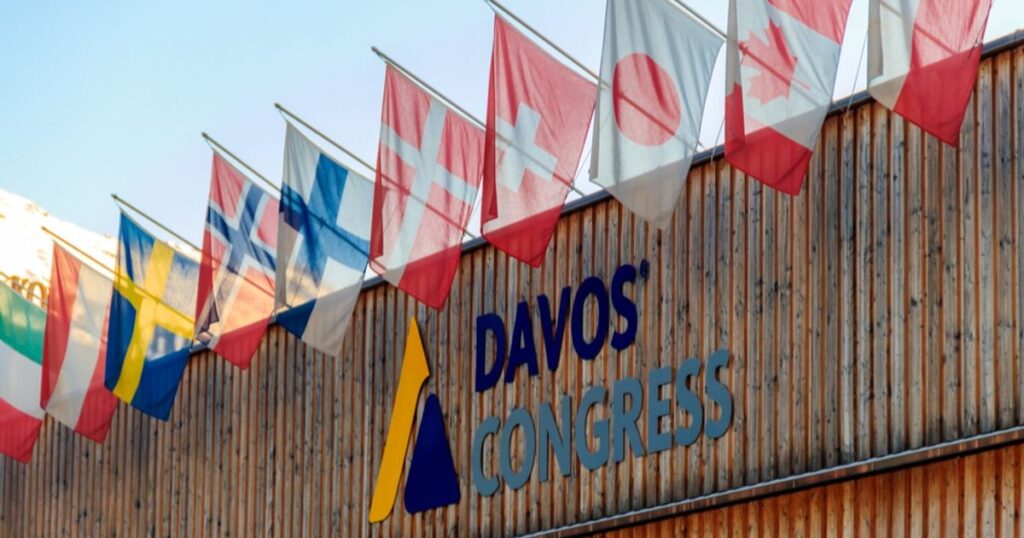
Conversations at the World Economic Forum this week are dominated by the accelerating artificial intelligence revolution, even as geopolitical tensions over tariffs and US-EU relations hover in the background, according to Wedbush Securities analyst Dan Ives.
After meeting with technology executives from around the world in Davos, Ives said discussions have centered overwhelmingly on AI investment, adoption and monetization, with political issues such as US tariffs and tensions surrounding Greenland ownership featuring only secondarily.
“While there is clearly geopolitical worries in a constantly changing global landscape, the one thing that is clear from Davos is the US tech world is dominating the AI Revolution with China a distant second,” Ives wrote.
Ives said Nvidia Corp (NASDAQ:NVDA, XETRA:NVD) remains the central force powering AI development, with demand from hyperscalers including Microsoft Corp (NASDAQ:MSFT), Amazon.com Inc (NASDAQ:AMZN) and Alphabet Inc (NASDAQ:GOOG)‘s Google driving what he described as the next stage of growth. He added that Palantir Technologies Inc (NYSE:PLTR) has emerged as a standout beneficiary as companies increasingly focus on turning AI investments into tangible business outcomes.
“Palantir is a clear star on the AI Revolution monetization phase as CIOs from a myriad of industries plot out their broader AI strategies in 2026 and beyond,” he said.
Heading into 2026, Ives said investors are increasingly split between enthusiasm for what he described as a fourth industrial revolution and concern over the scale of capital required to sustain it. He argued that both views can coexist, pointing to 2026 as a key inflection point for AI adoption.
“This is a 4th Industrial Revolution taking shape with the US leading China on tech for the first time in 30 years,” Ives wrote, while acknowledging investor nervousness around the trillions of dollars required to support enterprise and consumer AI deployment.
Ives expects the upcoming fourth-quarter earnings season to serve as a validation moment for the AI investment cycle, led by large technology companies with significant cloud and AI exposure. He said Wedbush’s field checks indicate robust enterprise AI demand during the quarter for companies including Microsoft, Alphabet and Amazon.
“We believe tech stocks will have a very strong 4Q earnings season led by Big Tech,” Ives wrote, adding that capital expenditure plans are likely to accelerate further into 2026.
While some investors remain concerned about valuations and the pace of spending, Ives said the market is underestimating the scale of the opportunity. He estimates roughly $3 trillion in AI-related spending over the next three years from enterprises and governments, with more than $550 billion in capital expenditures already underway.
“This is a mid-1996 moment — and not a 1999 moment,” Ives noted, arguing that AI-driven growth is still in its early stages and not yet fully reflected in technology valuations.
Looking ahead, Ives said the expansion of real-world AI use cases across software and semiconductor markets will be a defining theme over the next 12 to 18 months, reinforcing Wedbush’s bullish stance on the sector as the AI revolution gains momentum.