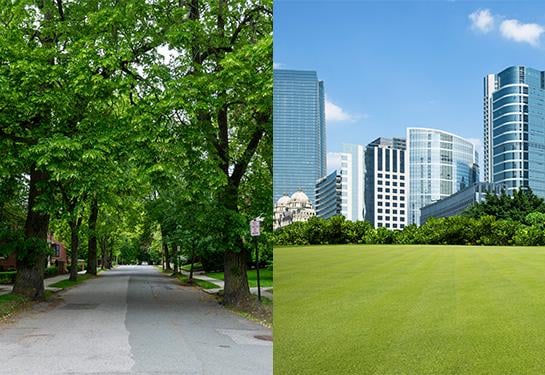
New research analyzing 350 million street view images finds urban tree canopies may reduce cardiovascular disease (-4%), while grassy areas may increase it (+6%)
https://health.ucdavis.edu/news/headlines/trees–not-grass-and-other-greenery–associated-with-lower-heart-disease-risk-in-cities/2026/01

6 Comments
> A multi-institutional study led by the University of California, Davis, finds that living in urban areas with a higher percentage of visible trees is associated with a 4% decrease in cardiovascular disease. By comparison, living in urban areas with a higher percentage of grass was associated with a 6% increase in cardiovascular disease. Likewise, a higher rate of other types of green space, like bushes or shrubs, was associated with a 3% increase in cardiovascular disease
>The new study was among the first to create a street-level assessment of how trees, grasses and other green spaces could impact cardiovascular health.
>
>The researchers used deep learning to analyze more than 350 million street view images to estimate how much of each neighborhood was covered by trees, grass, or other green space.
>
>They then linked those findings to nearly 89,000 women in the ongoing Nurses’ Health Study. They determined the type and percentage of greenery — trees, grass or other green space — within about 500 meters of each participant’s home address.
>
>They then compared the types and percentages of greenery with 18 years of health data — including medical records and death certificates — to determine which study participants developed cardiovascular disease.
>The researchers found that higher percentages of visible trees were associated with a 4% lower incidence of cardiovascular disease. Street views with a higher percentage of visible grass were associated with a 6% increase in cardiovascular diseases, and other green space types were associated with a 3% increase.
[Assessing greenspace and cardiovascular disease risk through deep learning analysis of street-view imagery in the US-based nationwide Nurses’ Health Study – Environmental Epidemiology](https://journals.lww.com/environepidem/fulltext/2026/02000/assessing_greenspace_and_cardiovascular_disease.11.aspx)
Probably because of all the pesticides put on grass
The effect seems to hold after controlling for socioeconomic status which is the first thing that came to mind.
Trees are good for us
Would be interesting to see health data associated with Notrees, Texas: [https://en.wikipedia.org/wiki/Notrees,_Texas](https://en.wikipedia.org/wiki/Notrees,_Texas)
Trees mean shade, so people will go out more in heat and still get light exercise. Grass means sun exposure, and if it’s watered or rained upon, tons of steam, meaning people will stay indoors and choose motor transportation, decreasing activity, increasing outdoor air pollution, and increasing time spent indoors where air quality may be worse than outside depending on the city.