
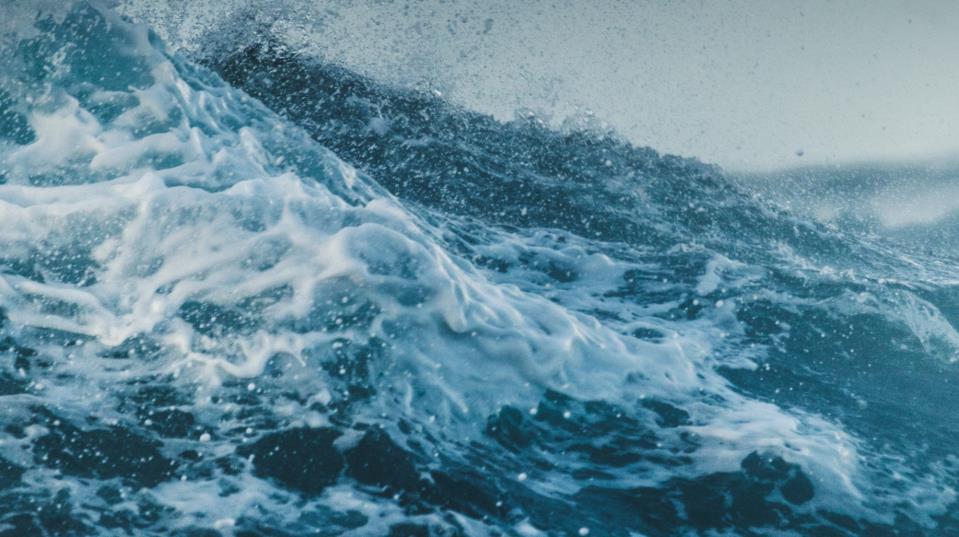

An oceanographic buoy positioned south of Sicily, in waters between Malta and Portopalo di Capo Passero, has recorded a wave measuring 16 metres in height during the most violent phase of Storm Harry – the highest wave ever documented in the Mediterranean Sea.
The extraordinary measurement was captured by a buoy operated by the Italian National Institute for Environmental Protection and Research (ISPRA) as the powerful Mediterranean cyclone battered Sicily and Calabria earlier this week. The buoy, part of Italy’s National Wave Measurement Network (RON – Rete Ondametrica Nazionale), registered the peak wave during what meteorologists described as an “historic eastern storm”.
The record-breaking wave was detected in the Strait of Sicily, a stretch of sea that includes maritime routes linking Sicily and Malta. While Malta did not experience the same level of destruction seen in parts of southern Italy, the data highlights the intensity of the storm system affecting the central Mediterranean.
Storm Harry caused widespread damage across Sicily and Calabria, with flooding, landslides and structural failures reported in several coastal and inland areas. Dozens of families were evacuated as emergency services responded to more than 1,600 incidents across the affected regions. Firefighters carried out numerous rescues using inflatable boats after floodwaters submerged vehicles and ground-floor buildings.
The most severe impacts were recorded in the Sicilian city of Catania and the Calabrian city of Catanzaro, where schools and public offices were ordered to close. Along the Ionian coast, waves reaching nearly 10 metres devastated seaside infrastructure, collapsing promenades, sinking fishing boats and damaging harbours.
Viral videos circulating online showed massive waves crashing into coastal streets, forcing residents and tourists to flee. In Santa Teresa di Riva, near Messina, part of a coastal road was destroyed by the force of the sea.
Despite the scale of the damage, authorities have confirmed that no fatalities have been reported.
The ISPRA buoy network consists of more than 15 oceanographic stations deployed throughout Italian waters, providing real-time data on wave height, direction, sea surface temperature and meteorological conditions. The system plays a crucial role in environmental monitoring, coastal management and tsunami early-warning mechanisms.
Experts say the 16-metre wave is unprecedented for the Mediterranean, a semi-enclosed sea where wave heights typically remain far lower than those recorded in the world’s major oceans. The measurement is expected to prompt further scientific analysis into the evolving behaviour of Mediterranean cyclones, which some researchers link to rising sea temperatures and changing climate patterns.
In Malta, the storm caused heavy disruption on Tuesday, with trees uprooted, roads damaged and walls collapsing. In the south, particularly Marsaskala, the high waves damaged restaurants and residences close to the coast.
Part of the islet of Filfla was sheared off while damage was also caused to the Ghar Lapsi coastal area. What was left of the historic Chalet in Sliema was also hit by the storm. The government has pledged to regenerate the areas that were mostly impacted by the storm.