Awesome to hear about something new like this. What a discovery
PurvisAnathema on
What a horrible thing to say about the Scottish. Leave them alone, you meanies.
Premoveri on
A new form of life that has been extinct for 370 million years.
Fire_Otter on
> However, researchers from the University of Edinburgh and National Museums Scotland have discovered that the fossil is **neither fungus nor plant**, but a new lifeform that became extinct around 370 million years ago.
woah that’s huge news!
L0K0MoTiVA on
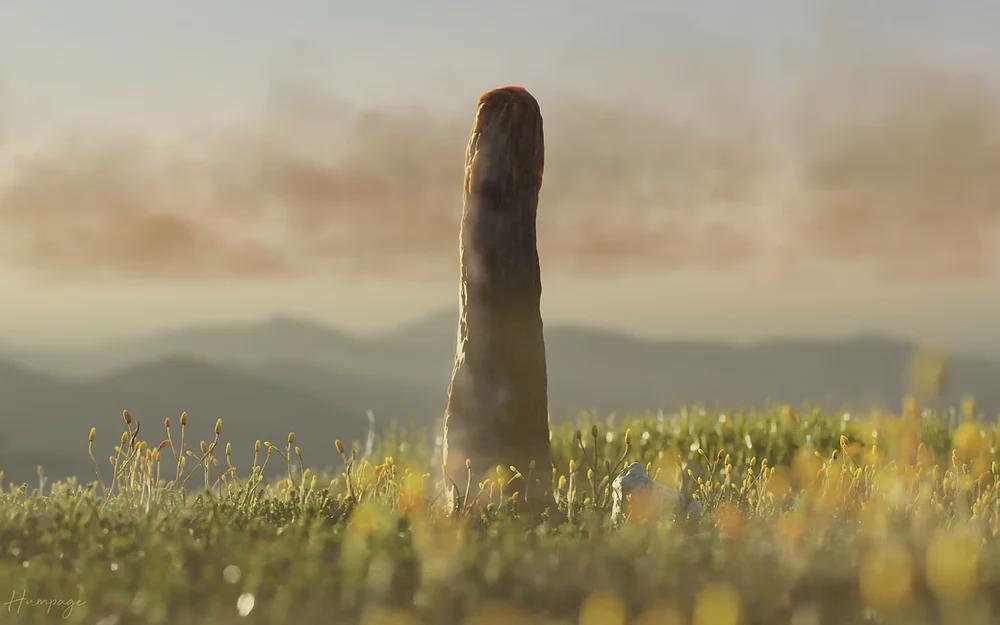
Prototaxites is the life form discussed in the article. This 370-million-year-old fossil, resembling a giant woody tree trunk up to 26 feet tall without leaves, has been confirmed by University of Edinburgh and National Museums Scotland researchers as neither a fungus nor a plant.
peoplearecool on
I thought these things were already discovered years ago. A few documentaries on the evolution of the planet shower those
zalurker on
That title sounds like the intro to a Monty Python skit. Fascinating article. Makes you wonder what else is out there. A lot of organic material did not fossilize.
GiroExpresser on
Pardon my ignorance; could it have been a zooid?
davidfalconer on
We’ve known about Forfarians for years
AbbydonX on
Here is the paper that published the work investigating the already well known, but extinct, Prototaxites that suggested they are less related to fungi than previously thought.
> Prototaxites was the first giant organism to live on the terrestrial surface, represented by columnar fossils of up to eight meters from the Early Devonian. However, its systematic affinity has been debated for over 165 years. There are now two remaining viable hypotheses: Prototaxites was either a fungus, or a member of an entirely extinct lineage. Here, we investigate the affinity of Prototaxites by contrasting its organization and molecular composition with that of Fungi. We report that fossils of Prototaxites taiti from the 407-million-year-old Rhynie chert were chemically distinct from contemporaneous Fungi and structurally distinct from all known Fungi. This finding casts doubt upon the fungal affinity of Prototaxites, instead suggesting that this enigmatic organism is best assigned to an entirely extinct eukaryotic lineage.
Filipe_Assis on
It’s Earth’s middle finger
Ehrre on
How can you possibly get enough information from a fossil to determine it’s neither a plant or a fungus
FourNaansJeremyFour on
I swear I remember reading a paper within the last couple of years that used some biochemical magic to convincingly tie them to an obscure but extant group of single-celled eukaryotes. Can’t find it now
maporita on
It’s life Jim, but not as we know it.
FranzLimit on
Didn’t find it in the article. It’s neither plant nor mushroom but was it an amimal? Was it related to something like sponges?
Honesty-Not-Allowed on
Prototaxites, Couldn’t they call it something easier, I mean we have animals, plants, fungus.
Students are going to have a hard time with this one.
I personally will call it Trungus.
natalieisadumb on
I can’t wait to hear some science communicators break down how exactly it was concluded that these are not fungus or plants, what structures separate them etc. In the meantime, any of y’all have a decent enough grasp to share with the class?
Aranthos-Faroth on
Not a plant, nor fungus, nor anything we’ve ever seen before.
Every time you hear of something like this it’s so hard not to think how truly alien our world is and has been. Fascinating!
MillionWilliam on
Look I know Scots are different, but I wouldn’t call them a new form of life.
monkeymetroid on
At first I thought the title was dramatic, however this quote changes things. “rather a member of an entirely new, extinct lineage of eukaryotes, distinct from modern fungi, plants, and animals. ”
That really would be a new form of life. It looks like prototaxites fossils were discovered long ago, so this title is still a little misleading with the wording. More prototaxite fossils have been found which have been debated by scientists for over a 100 years whether they fit within the current kingdoms of Fungi, plants and animals.
phasepistol on
Wow, it sounds like nature just keeps rolling the dice until something sticks. Things didn’t have to turn out this way at all… a tiny change and we wouldn’t even be here.

21 Comments
Awesome to hear about something new like this. What a discovery
What a horrible thing to say about the Scottish. Leave them alone, you meanies.
A new form of life that has been extinct for 370 million years.
> However, researchers from the University of Edinburgh and National Museums Scotland have discovered that the fossil is **neither fungus nor plant**, but a new lifeform that became extinct around 370 million years ago.
woah that’s huge news!
Prototaxites is the life form discussed in the article. This 370-million-year-old fossil, resembling a giant woody tree trunk up to 26 feet tall without leaves, has been confirmed by University of Edinburgh and National Museums Scotland researchers as neither a fungus nor a plant.
I thought these things were already discovered years ago. A few documentaries on the evolution of the planet shower those
That title sounds like the intro to a Monty Python skit. Fascinating article. Makes you wonder what else is out there. A lot of organic material did not fossilize.
Pardon my ignorance; could it have been a zooid?
We’ve known about Forfarians for years
Here is the paper that published the work investigating the already well known, but extinct, Prototaxites that suggested they are less related to fungi than previously thought.
[Prototaxites fossils are structurally and chemically distinct from extinct and extant Fungi](https://doi.org/10.1126/sciadv.aec6277)
> Prototaxites was the first giant organism to live on the terrestrial surface, represented by columnar fossils of up to eight meters from the Early Devonian. However, its systematic affinity has been debated for over 165 years. There are now two remaining viable hypotheses: Prototaxites was either a fungus, or a member of an entirely extinct lineage. Here, we investigate the affinity of Prototaxites by contrasting its organization and molecular composition with that of Fungi. We report that fossils of Prototaxites taiti from the 407-million-year-old Rhynie chert were chemically distinct from contemporaneous Fungi and structurally distinct from all known Fungi. This finding casts doubt upon the fungal affinity of Prototaxites, instead suggesting that this enigmatic organism is best assigned to an entirely extinct eukaryotic lineage.
It’s Earth’s middle finger
How can you possibly get enough information from a fossil to determine it’s neither a plant or a fungus
I swear I remember reading a paper within the last couple of years that used some biochemical magic to convincingly tie them to an obscure but extant group of single-celled eukaryotes. Can’t find it now
It’s life Jim, but not as we know it.
Didn’t find it in the article. It’s neither plant nor mushroom but was it an amimal? Was it related to something like sponges?
Prototaxites, Couldn’t they call it something easier, I mean we have animals, plants, fungus.
Students are going to have a hard time with this one.
I personally will call it Trungus.
I can’t wait to hear some science communicators break down how exactly it was concluded that these are not fungus or plants, what structures separate them etc. In the meantime, any of y’all have a decent enough grasp to share with the class?
Not a plant, nor fungus, nor anything we’ve ever seen before.
Every time you hear of something like this it’s so hard not to think how truly alien our world is and has been. Fascinating!
Look I know Scots are different, but I wouldn’t call them a new form of life.
At first I thought the title was dramatic, however this quote changes things. “rather a member of an entirely new, extinct lineage of eukaryotes, distinct from modern fungi, plants, and animals. ”
That really would be a new form of life. It looks like prototaxites fossils were discovered long ago, so this title is still a little misleading with the wording. More prototaxite fossils have been found which have been debated by scientists for over a 100 years whether they fit within the current kingdoms of Fungi, plants and animals.
Wow, it sounds like nature just keeps rolling the dice until something sticks. Things didn’t have to turn out this way at all… a tiny change and we wouldn’t even be here.