
CHARLOTTE, N.C. (WBTV) – Following the day two measles cases were confirmed in Mecklenburg County, health officials set up a discussion to answer questions about the virus and its treatment.
Related:2 measles cases confirmed in Mecklenburg County, health officials say
You can watch the stream live at 2:30 p.m.in the video player above.
Mecklenburg County Public Health Officials said the cases involved an adult and child who had been in contact with a child from Spartanburg, South Carolina, considered the epicenter of the outbreak.
Since last fall, 700 cases have been confirmed by the South Carolina Department of Public Health.
Related: New measles map shows vaccination rate, risk for each US county, zip code
What is the measles virus?
Measles is a highly contagious virus and is spread through the air and by person-to-person contact. It can remain airborne for up to two hours.
“Measles is a highly contagious disease caused by a virus that affects the respiratory tract, and can result in serious complications affecting the brain, blood cells, complications in pregnancy, and long-term neurologic effects,” said Dr. Linda Bell, state epidemiologist and Health Programs Branch director, in an issued statement.
It can lead to hospitalization and/or death. Symptoms include:
- High fever (may spike to more than 104 degrees)
- Cough
- Runny nose
- Red, watery eyes
- Tiny white spots on the inner cheeks, gums and roof of the mouth (Koplik Spots) two to three days after symptoms begin
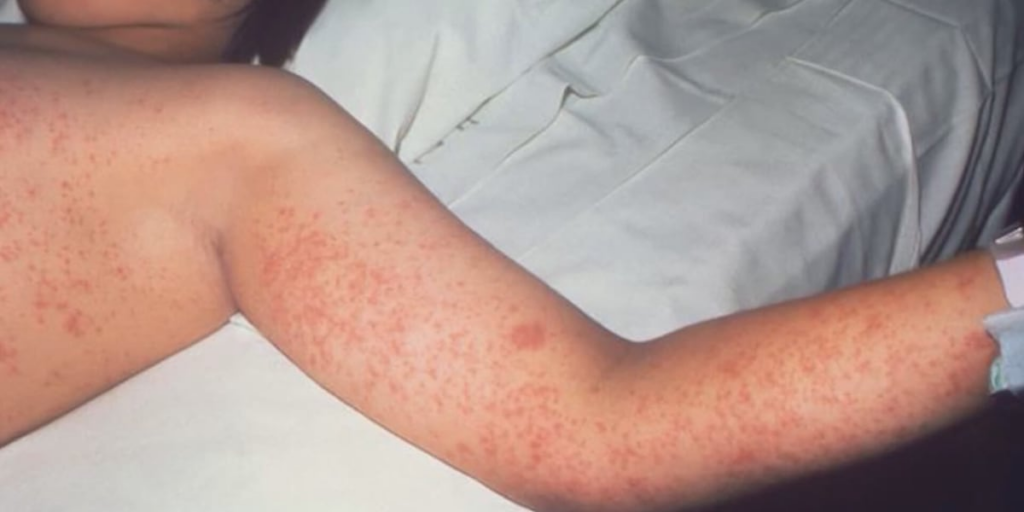
- A rash that is red, raised, blotchy; usually starts on face, spreads to trunk, arms and legs within three to five days after symptoms begin
See also: Why measles are so transmissible
Vaccine prevention
According to the U.S. Centers for Disease Control and Prevention, the measles, mumps and rubella (MMR) vaccine is 97% effective against measles and 86% effective against mumps if both doses of the vaccine are given.
The MMR vaccine is a common part of routine vaccination for children. The first dose is usually given between 12 and 15 months old, and the second between ages 4 and 6. Earlier doses may be given to children traveling internationally.
See also:Safety Alert: Measles vaccine recommendations
People who have already been exposed to measles can still get the vaccine.
For more information about measles, visit the South Carolina Department of Public Health website.
Copyright 2026 WBTV. All rights reserved.