
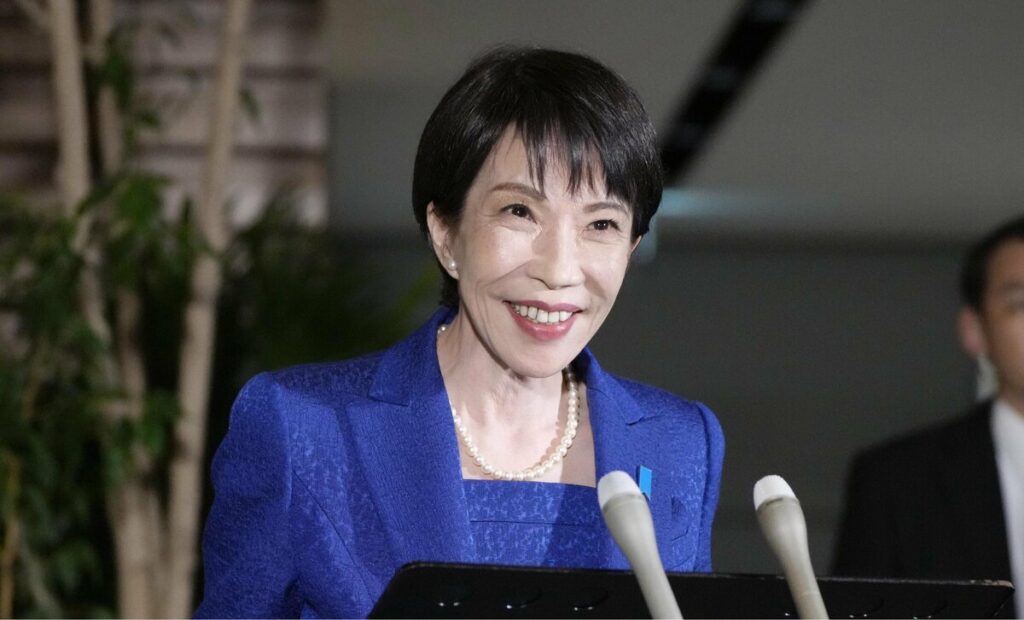
TOKYO – Prime Minister Sanae Takaichi said Sunday she aims to begin implementing a two-year suspension of the 8 percent consumption tax on food and beverage items within fiscal 2026, starting in April.
“My idea is that the two-year (break on food tax) would bridge the period until a refundable tax credit system is designed and implemented,” she said during a TV program. Reducing the tax rate has become a major point of debate in the lower house election on Feb. 8.
In a policy speech in parliament in October after becoming prime minister, she vowed to prioritize tackling rising living costs and said the government will begin designing a system to introduce a mix of income tax deductions and cash benefits for low- and middle-income households.
Japan’s consumption tax is set at 8 percent for food and beverages and at 10 percent for most other products.
The Centrist Reform Alliance, the new party pitching centrist policies and now the country’s largest opposition force in the House of Representatives, has made abolishing the consumption tax on food its campaign centerpiece.
Yoshihiko Noda, co-leader of the alliance, said on the same program that around 10 trillion yen ($64 billion) in funding would be needed to axe the tax.
“I will do my utmost to implement this within the year without issuing deficit-financing bonds,” he said, adding that should legislation be enacted at an early date, scrapping the food tax would be possible from fall.
Among the seven representatives of the ruling and opposition parties present during the program, Yuichiro Tamaki, head of the Democratic Party for the People, was the only one who did not agree to the fiscal 2026 timeframe.
“We must thoroughly discuss the matter” considering the impact a tax reduction would have on eateries, among others, said Tamaki, whose opposition party has called for a 5 percent reduction in consumption tax rate.