
Published on
January 25, 2026
By: Paramita Sarkar
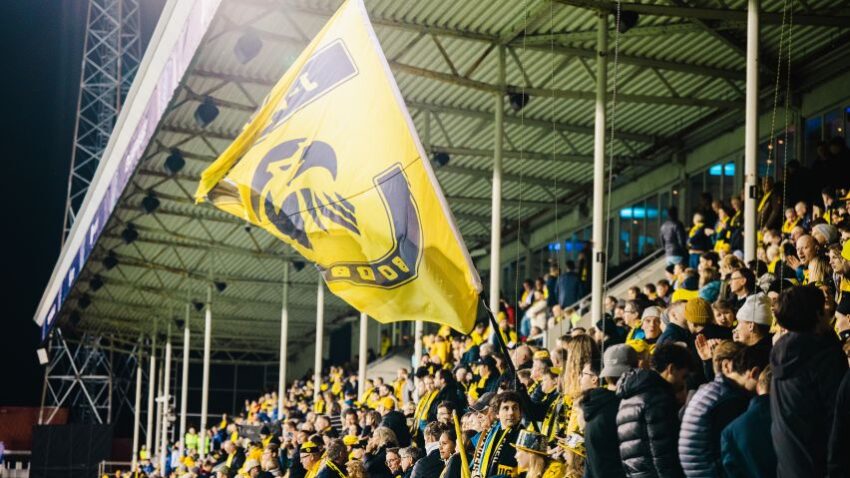
Norway now stands alongside England, Italy, Spain, the United States, and Canada in global football headlines as the Arctic city of Bodø prepares to host one of the most extraordinary UEFA Champions League matches in modern history. Above the Arctic Circle, in a city of just 53,000 residents, Bodø/Glimt are set to face Manchester City, led by Norway’s own global football icon Erling Braut Haaland.
This is not merely a football fixture. It is a collision of climate, culture, community ownership, and elite sport—played at Aspmyra Stadium, a compact 8,000-seat ground surrounded by Arctic winds, coastal weather, and a football philosophy forged through adversity.
Who Is Involved
At the center of the event stands Bodø/Glimt, a member-owned Norwegian club that has defied European football economics. Opposite them is Manchester City, one of England’s most powerful clubs and reigning continental giants, spearheading their attack with Haaland—born and raised in Bodø.
The match represents a rare convergence of hometown legacy and elite competition, as the Arctic city welcomes back its most famous football export on the grandest club stage in Europe.
Advertisement
Advertisement
Advertisement
Advertisement
What Is Happening
Bodø/Glimt have brought the UEFA Champions League north of the Arctic Circle for the first time in history. This milestone places Bodø among the most geographically extreme venues ever to host Europe’s premier club tournament.
Unlike many Champions League clubs, Bodø/Glimt operate without billionaire ownership. The club is owned by its members, rooted in local identity, and built around youth development rather than transfer-market excess.
Advertisement
Advertisement
When It Matters
The Arctic Champions League fixture arrives at a pivotal moment for Norwegian football. In parallel, Norway’s national team has qualified for the FIFA World Cup 2026, ending a 28-year absence from the tournament.
Norway dominated its qualifying campaign, winning all eight matches and setting a European record for goals scored in a single group. A decisive victory over Italy sealed qualification, reinforcing Norway’s re-emergence as a football force ahead of the tournament hosted across the United States, Canada, and Mexico.
Where It Is Happening
The match takes place in Bodø, a coastal city above the Arctic Circle in northern Norway. Aspmyra Stadium sits at the heart of the city, surrounded by residential neighborhoods, sea air, and dramatic landscapes shaped by wind, water, and winter darkness.
Bodø’s location is not a novelty—it is a competitive factor. Visiting teams must adapt to shifting winds, freezing temperatures, and artificial turf conditions that local players have mastered from youth.
Why This Story Matters
Bodø/Glimt’s Champions League presence is not an overnight success. In 2010, the club stood on the edge of bankruptcy. Players went unpaid. Survival depended on grassroots action: locals collected bottles for recycling income, fishermen donated seafood for resale, and neighboring sports clubs redirected ticket revenue to keep Glimt alive.
This collective rescue effort reshaped the club’s identity. Over the following decade, Bodø/Glimt invested in coaching, data-driven training, and local player development. By 2025, the club had become the richest in Norway—not through speculation, but through sporting results and European competition earnings.
Their rise challenges conventional football economics and has become a case study in sustainable sports governance.
How Bodø Became a Global Football Destination
Football is only one dimension of Bodø’s transformation. In 2024, the city held the title of European Capital of Culture, highlighting its thriving arts, music, and creative industries. This cultural momentum now intersects with global sport.
Bodø offers seamless accessibility for visitors. The airport lies within walking distance of the city center. The Nordland Railway terminates in the city, while the Norwegian Coastal Route Hurtigruten docks daily. Natural attractions—including national parks and the Saltstraumen maelstrom, the strongest tidal current in the world—sit minutes from the stadium.
For football travelers, Bodø offers something rare: elite sport framed by Arctic nature, local cuisine, and compact urban design.
The Broader Impact
This Arctic Champions League fixture is more than a match—it is a symbol of decentralization in European football. It demonstrates that elite competition is no longer confined to megacities or financial superclubs.
For Norway, it reinforces a golden era marked by World Cup qualification, European club success, and global stars rooted in local communities. For Bodø, it confirms that geography is not a limitation but an identity.
As Haaland returns home wearing Manchester City colors, the Arctic crowd will witness a rare moment where global football narratives loop back to their origin.
Conclusion
Norway’s Arctic city of Bodø now stands shoulder to shoulder with football centers across England, Italy, Spain, the United States, and Canada. Bodø/Glimt’s Champions League journey is a testament to resilience, community ownership, and long-term vision.
Whether drawn by football, culture, or nature, Bodø offers a compelling reminder that greatness in sport can rise from the coldest, smallest, and most unexpected places—right at the edge of the Arctic Circle.
