
Published on
January 25, 2026
Albania joins Cyprus, Latvia, Lithuania, Bulgaria, and more countries in facing restricted travel access and limited visa-free destinations. Despite being part of the European Union or the Schengen Area, these countries’ passports still provide limited global mobility compared to other European nations. For example, Albania’s passport offers access to just over 120 visa-free destinations, which is significantly lower than many other EU countries.
Similarly, Cyprus, Latvia, Lithuania, and Bulgaria also face challenges in securing unrestricted travel freedom for their citizens. While Cyprus offers access to around 178 destinations, and Bulgaria’s passport provides access to only 179 destinations, they still fall behind the top European passports. This lack of global mobility highlights the complex relationship between geopolitical factors, economic development, and visa policies, affecting millions of citizens who seek easier travel opportunities worldwide.
The Power of a Passport: What Does It Really Mean?
The Henley Passport Index ranks passports based on the number of destinations citizens can access without a visa or with visa‑on‑arrival access. The higher the rank, the more places a passport holder can visit freely. Countries with the most powerful passports give their citizens the freedom to travel, work, and study almost anywhere in the world without the hassle of visas or complicated paperwork.
However, some countries, even in Europe, don’t enjoy this luxury. The rankings can reveal how political, economic, and diplomatic factors affect how free people are to travel, making it clear that global mobility is not evenly distributed.
Albania: A Passport Struggling to Keep Up
Albania, ranked at around 43rd globally, holds a passport that allows its citizens visa‑free access to just over 120 destinations. This is significantly lower than many EU member states, many of which provide access to 180+ destinations.
Although Albania is working towards EU integration, it has not yet achieved full membership. This means that its passport holders still face restricted access to key global destinations, such as the United States, Canada, and much of Western Europe. Citizens of Albania may find themselves needing visas for major travel hubs, making trips more costly and time‑consuming.
Advertisement
Advertisement
The challenges are largely rooted in Albania’s political status and the complex processes involved in becoming an EU member state. Until these obstacles are cleared, the Albanian passport will likely remain one of the less powerful passports in Europe, limiting its citizens’ global mobility.
Cyprus: Limited Access Despite EU Membership
Despite being a member of the European Union and the Schengen Area, Cyprus ranks relatively low in terms of global passport strength. With access to only 178 visa‑free destinations, Cyprus remains well below the strongest European passports.
Advertisement
Advertisement
While Cypriot passport holders can travel freely within the EU and Schengen Area, they still face visa requirements for many global destinations outside of these regions. Countries like the United States, Canada, and the UK require Cypriot citizens to obtain visas before traveling. This is in sharp contrast to countries like Germany or France, whose citizens can travel to almost every country in the world without a visa.
Cyprus’s relatively low ranking highlights how even being a member of the EU and Schengen Zone doesn’t guarantee complete global mobility. Cypriot citizens still face restrictions that many other EU citizens do not, preventing them from experiencing the same level of freedom when traveling globally.
Latvia: A Stronger Passport But Still Behind the Best
Latvia, a member of the European Union and Schengen Area, is slightly ahead of Cyprus, with access to around 183 visa‑free destinations. However, this still places it behind some of the most powerful European passports, which offer access to 185+ destinations.
While Latvia’s passport is far from the weakest in Europe, it reflects a modest level of mobility compared to other EU countries. Although Latvian citizens can travel across most of Europe and several global destinations, key regions, such as the United States, Canada, and Australia, remain out of reach without visas. This puts Latvia in a difficult position, as its citizens must deal with the extra time, cost, and bureaucratic hurdles involved in applying for visas to many of the world’s most important destinations.
The Latvian passport highlights that even within the Schengen Zone, access to international opportunities is not guaranteed for all EU members. Geopolitical factors and diplomatic agreements continue to play a role in the level of freedom each country’s passport provides.
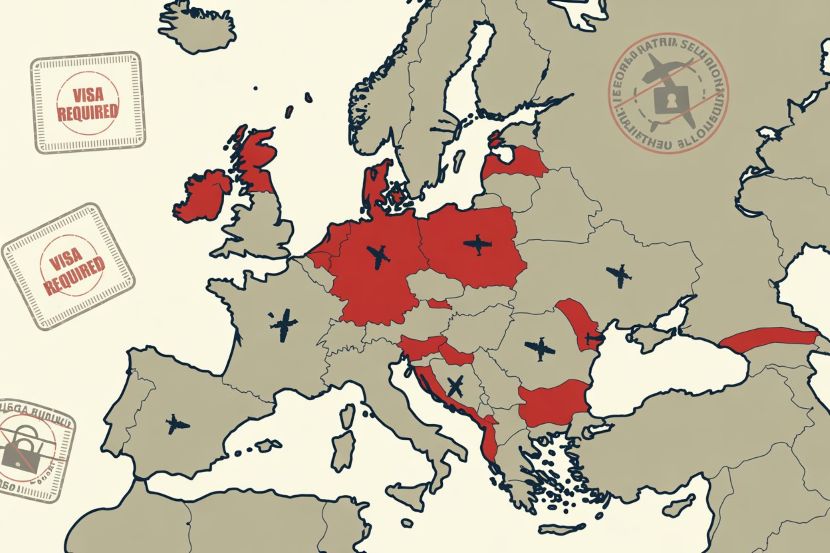
Lithuania: Limited Global Reach Despite EU Membership
Lithuania, like Latvia, is a member of the EU and Schengen Area, yet its passport access remains limited. Lithuanian passport holders enjoy visa‑free access to about 182 countries, which is slightly less than Latvia and still far below some of the more powerful EU passports.
Despite Lithuania’s membership in the EU, its passport strength places it in the mid‑tier of European countries in terms of global mobility. While Lithuanian citizens can travel to most European countries and several others, major destinations such as the United States and Canada require a visa. This highlights how EU membership does not necessarily equate to unrestricted travel freedom, especially when it comes to non‑EU regions.
For Lithuanian passport holders, the ability to travel freely around the EU and Schengen Zone is an advantage, but when it comes to global access, their passports are still limited. Diplomatic agreements and visa policies are major factors in determining how much mobility citizens of any country enjoy, even if they are EU members.
Bulgaria: Struggling for Full Travel Freedom
Despite its EU membership, Bulgaria continues to face restricted travel access, with its passport offering visa‑free access to about 179 countries. This puts Bulgaria behind several EU countries, many of which have access to over 180 destinations without a visa.
Bulgaria’s passport is stronger than those of some non‑EU countries, but still trails many EU states in terms of global mobility. Bulgaria’s citizens still face visa requirements for travel to key destinations like the United States, Canada, and Australia, which are generally visa‑free for citizens of many stronger EU passports.
This limited access can create frustration for Bulgarians who wish to travel freely to popular business hubs, tourist destinations, and educational centers around the world. While being part of the EU and Schengen Zone offers certain travel advantages, Bulgaria’s passport still holds it back from being on par with the most powerful European passports.
Why These Countries Struggle with Limited Travel Access
The limited access experienced by Albania, Cyprus, Latvia, Lithuania, and Bulgaria is not just a matter of passport rankings. These countries’ global mobility is influenced by several factors, including:
- Geopolitical Considerations: Political relations and historical ties with other nations play a key role in visa agreements. Some countries struggle with diplomatic recognition and tensions, which can result in restricted access to certain regions.
- Economic Development: Countries with weaker economies or less influence on the global stage often face limitations in visa‑free travel. While Western European countries have the economic power to negotiate visa waivers, countries like Bulgaria and Albania may not have the same clout.
- EU Membership: While EU membership grants certain travel advantages, it does not automatically guarantee global travel freedom. Even EU countries like Bulgaria and Cyprus are held back by their status and ongoing political and economic struggles.
What Can These Countries Do to Improve?
To improve global mobility, countries like Albania, Cyprus, Latvia, Lithuania, and Bulgaria must focus on:
- Strengthening Diplomatic Relationships: Bilateral agreements and international diplomacy are key to securing visa waivers and improving passport strength.
- Economic Growth and Global Influence: By enhancing their economic power, these countries can improve their global standing, leading to greater mobility for their citizens.
- Advocating for EU Reforms: EU integration and reforms in visa policies could improve travel access for these countries. Full Schengen membership would also boost travel freedom for countries like Bulgaria and Romania.

The Battle for Global Mobility
The Henley Passport Index for 2025 reveals that Albania, Cyprus, Latvia, Lithuania, and Bulgaria face a global mobility crisis. While they enjoy the benefits of being part of the EU, their passports still have significant limitations. Citizens from these countries are not able to travel as freely as their counterparts from other European nations. However, by focusing on strengthening diplomacy, boosting economic development, and pushing for greater EU integration, these countries can improve their passport strength and provide their citizens with greater freedom to explore the world. Until then, their citizens will continue to face the barriers of restricted travel and visa requirements, limiting their global mobility.
