
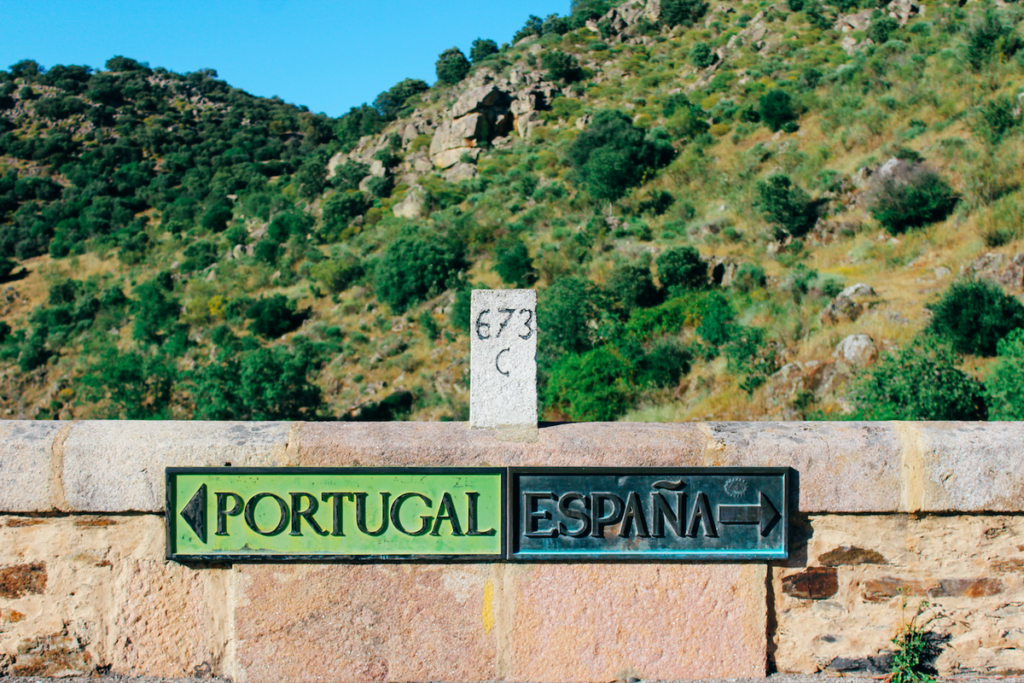
The two countries have been working on a range of mobility projects. Photo credit: Ivo Filipe/Shutterstock
Portugal has confirmed that finishing the high‑capacity road section that will solidify the Madrid–Lisbon corridor is a key priority for its infrastructure agenda, with authorities aiming to begin work this year and bring forward delivery timelines significantly. The project forms part of broader efforts to improve connectivity between the Iberian capitals and to promote economic cohesion within border regions.
The planned route, known as the IC31, will link the Portuguese motorway network with the Spanish system by connecting the motorway A23 near Alcains to Monfortinho on the Portuguese‑Spanish border, and from there directly into the Spanish road network via the EX‑A1. Completing this link will reduce travel times and offer a modern, high‑capacity alternative to existing low‑standard roads.
Under the 2026 Portuguese State Budget, the government has introduced changes to enable the works to begin as early as this year, a significant acceleration compared with earlier schedules that had envisaged completion closer to 2031. This shift reflects the strong political and economic support for the project, which has long been advocated by regional representatives who say the road is essential for territorial cohesion and development in the interior.
Most Read on Euro Weekly News
Responding to regional demand and strategic necessity
The IC31 project has attracted attention and support from a broad range of voices, including the Portuguese Communist Party, which successfully pushed for budget revisions that allow the government to start work sooner. Supporters argue that the route will improve mobility, relieve isolation in border regions, and bolster economic opportunities by strengthening links between central Portugal and western Spain.
Portugal’s decision to eliminate tolls on the IC31, a departure from earlier proposals that examined a public‑private partnership model that included tolling, reflects both technical and political re-calibrations. After parliamentary opposition blocked the toll option, the government opted to redefine the financing and technical framework to ensure that the route remains toll‑free, reducing barriers for people and commerce using the corridor.
Completion of the IC31 will address long‑standing grievances in interior areas, where residents and local authorities have lamented the lack of a high‑capacity, direct link to Spain. A modern road of this type is expected to benefit agricultural producers, businesses and tourism sectors on both sides of the border, supporting more fluid transport of goods and travel.
Broader context in Iberian transport policy
The priority given to the Madrid–Lisbon road link sits within a larger landscape of cross‑border infrastructure initiatives designed to tighten economic integration between Spain and Portugal. The two countries have been working on a range of mobility projects, including rail and road connections, to enhance trade, tourism and commuter flows, particularly under the framework of EU‑backed cooperation programmes.
Other cross‑border infrastructure actions in recent years include agreements to build international bridges over rivers such as the Guadiana, aimed at improving physical connectivity and fostering socio‑economic development in border regions that historically have suffered from relative isolation.
Portugal’s prioritisation of the IC31 comes at a time when both Lisbon and Madrid are also advancing rail connectivity plans, including high‑speed rail segments and corridor enhancements that will further knit the two transport networks together. While rail initiatives plan for longer‑term completion dates, road projects such as the IC31 can deliver relatively quicker improvements to mobility and economic exchange.
Economic and social impacts expected
Experts and stakeholders say that the new high‑capacity road will yield multiple economic and social benefits:
- Reduced travel time: The road will drastically cut journey times between central Portugal and western Spain, making trade and tourism more efficient.
- Improved logistics: Businesses will be able to move goods more quickly and reliably across the border.
- Regional development: Interior regions, often bypassed by major infrastructure projects, stand to gain better access to economic hubs.
- Cross‑border cohesion: Enhanced mobility will support labour market integration and cultural exchange.
The expectation is that smoother road connectivity will help small and medium‑sized enterprises in border zones integrate into larger supply chains and attract investment that might otherwise be deterred by inadequate transport links.
Challenges and next steps
Despite the political commitment, challenges remain. The technical execution of the project, including upgrading existing stretches and constructing new road segments, will require careful planning, environmental assessments and continuous coordination with Spanish road authorities to ensure seamless continuity at the border.
Public consultations, land acquisition and detailed engineering work will need to be completed before full construction can get underway. Securing funding beyond the 2026 budget and aligning timelines with related infrastructure projects will also be crucial to keeping the accelerated schedule on track.
What the project means for Iberian connectivity
- High‑capacity road link between Alcains and Monfortinho will form the core of the Madrid–Lisbon corridor.
- Construction planned to start this year, ahead of original timelines.
- Works accelerated by changes in the 2026 Portuguese State Budget.
- Route will be toll‑free, a key political and economic decision.
- Boost to regional economies, especially interior and border areas.
- Part of broader EU‑backed cross‑border infrastructure strategy.
- Complementary to rail and other transport projects connecting Iberian nations.
With construction poised to begin imminently, the project marks a major step forward in improving transport integration between Portugal and Spain, promising enhanced connectivity, economic growth and social cohesion across the Iberian Peninsula.