
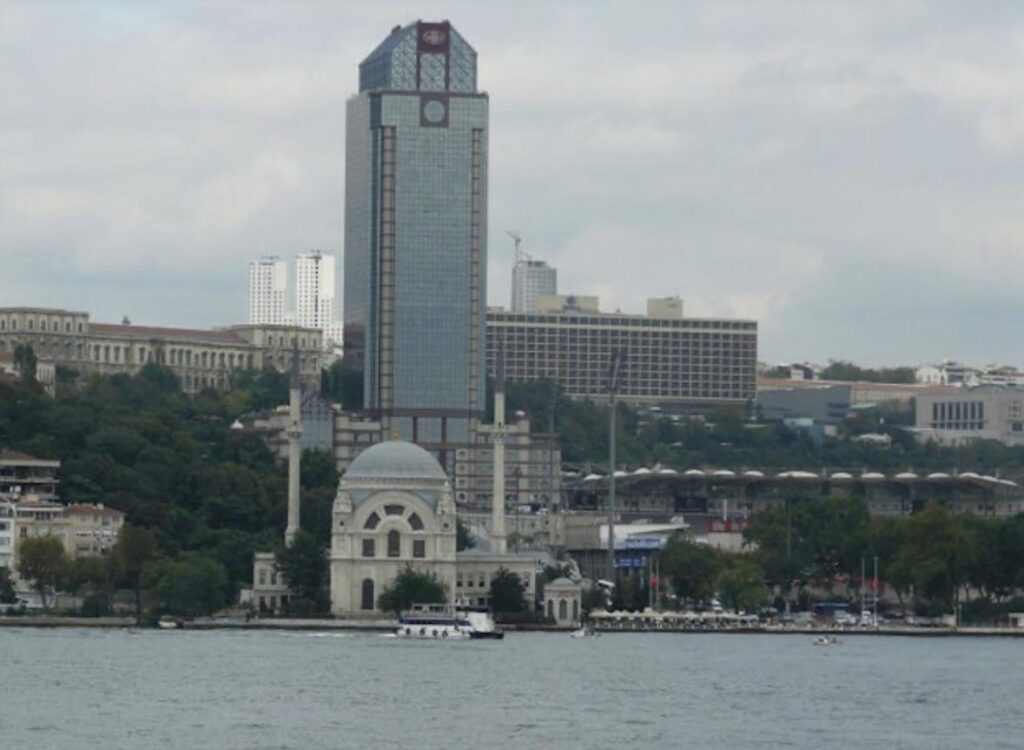
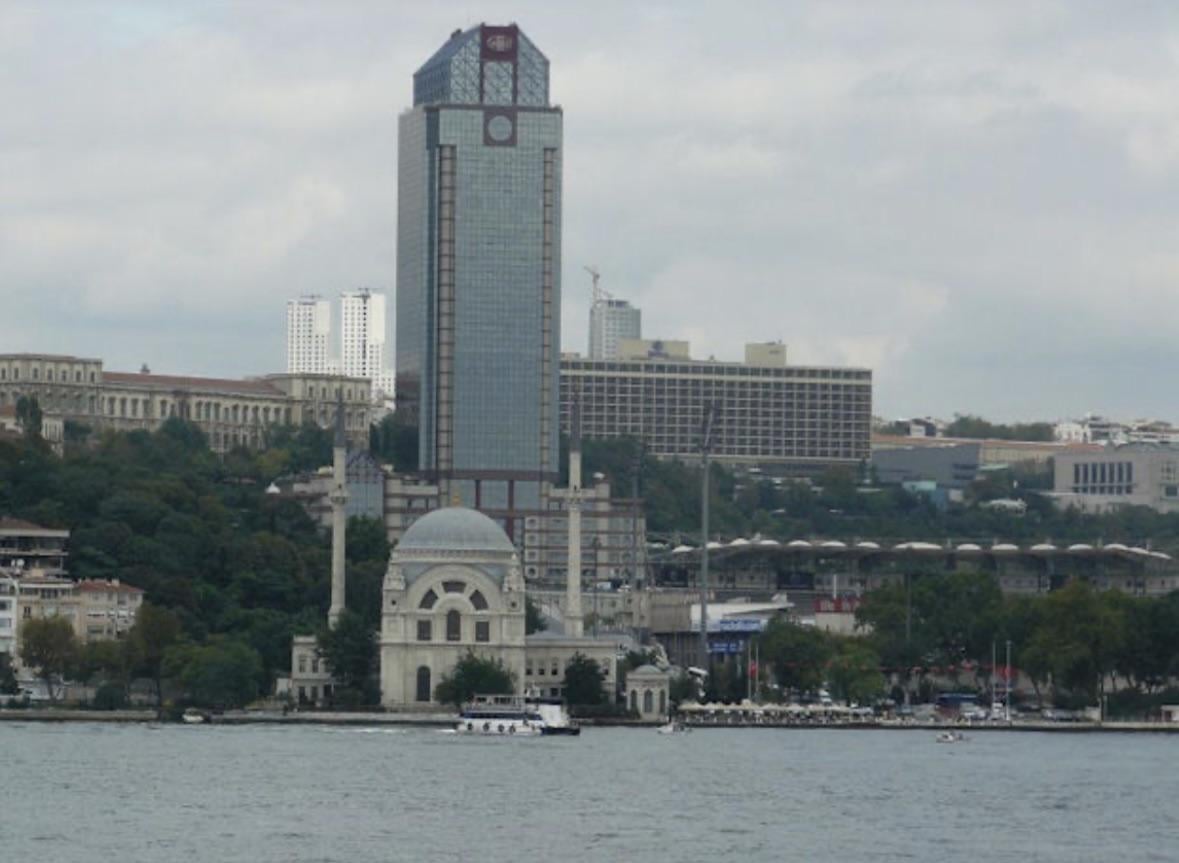
When urban crimes are mentioned, one of the first examples that comes to the mind of those living in Istanbul – and perhaps even in the whole of Türkiye – is Süzer Plaza. This building is a striking example of how the planning discipline has been eroded in Türkiye and how the political-economic conjuncture directly intervenes in space. For this reason, it is necessary to start from the upper scale and move down to the lower scale.
The first important information known is that the area where Süzer Plaza is located was closed to construction during the Ottoman period. In 1908, II. During the reign of Abdulhamid, in the Dolmabahçe Valley; It is clearly stated in the plan notes that this area, located between the Taşkışla, Gümüşsuyu and Maçka military barracks and the gas plant that distributes gas to Istanbul, should not be opened to construction for security reasons. This area has been defined as an area that should be protected as a green area because it is surrounded by military structures.
Master zoning plans and implementation zoning plans prepared during the Republic period also confirmed this decision; It has been repeatedly emphasized that the green area status of the area should be protected. In other words, the basic planning approach for this region was continuous during both the Ottoman and Republican periods.
However, by the 1980s, a radical transformation process began in Türkiye. One of the most important breaking points of this transformation is the entry into force of the Tourism Incentive Law. With this law, the groundwork was prepared for the planning violations and urban crimes we encounter in many cities of Türkiye today. It is necessary to underline the concept of “central government” here. While municipalities in Türkiye are defined as local governments, the Ankara-based administration is the central government, and in an ideal planning order, the central government is expected to have limited influence on local decisions. However, in practice, this situation often works the other way around.
The period when the Tourism Incentive Law affected the Süzer Plaza land corresponds to 1984. In this process, the Mayor of Istanbul Metropolitan Municipality is Bedrettin Dalan. New plan decisions were produced for the parcel that was converted from green area status to a “tourism area”. While the building height, which was initially limited to approximately 24.5 meters by taking Taşkışla and similar structures in the surrounding area as a reference, was determined to protect the Bosphorus silhouette; With the plan changes, this limit was increased to 134 meters. In addition, the rate of business centers that can be built in the area has been increased from 20% to 80% and the plan notes have been radically changed. Construction started in 1987, and the license was obtained in 1988 based on these changes.
At this point, the importance of the upper-scale political context emerges. Dalan is a mayor from ANAP; During the same period, the central government was also under the administration of ANAP. The president is Turgut Özal and the prime minister is Yıldırım Akbulut. Nurettin Sözen, who was elected Mayor of Istanbul Metropolitan Municipality in 1989, is a CHP member and clearly defined Süzer Plaza as a city crime, initiated the lawsuit process and managed to have the construction sealed in the process.
Recep Tayyip Erdoğan, who became mayor in 1994, also opposed the construction of Süzer Plaza, and even added II. He requested that the plan notes from the Abdulhamid period be added. However, in 1997, during Mesut Yılmaz’s term as prime minister, a critical move was made: the municipal boundaries were changed overnight and the project was removed from the boundaries of Beyoğlu Municipality and included within the boundaries of Şişli Municipality. The main purpose of this change is to save time in the litigation process.
While this conflict between local and central governments continued, the Supreme Court made a very clear decision in 1997: The area is a green area, the project cannot be carried out, the construction must be stopped and demolished. However, after this decision, the central government stepped in and brought zoning amnesty to the agenda. Thanks to the zoning amnesty, unlicensed or unzoned buildings have become legal by paying certain fees.
Decree Laws (Decree Laws) also played an important role in this period. While the legislative power belongs to the parliament under normal circumstances, the executive branch quickly gained the authority to make regulations through decree laws and these regulations were implemented with the force of law. Thus, the impact of judicial decisions has been effectively eroded.
In addition to all these, Süzer Holding filed more than 40 compensation lawsuits; Extremely high amounts were demanded under the conditions of the period. These cases were also interpreted as a means of gaining time and locking down the legal process. Ultimately, at the end of this process, which lasted approximately 13 years, Süzer Plaza was completed and engraved in the city’s memory as a concrete example of how planning law can be bypassed in Türkiye.
Source:
•To destroy or not to destroy! – Arkitera.com
•Daggers on Istanbul’s back-MIMDAP
•Documentary story of a legal case – REMGO
•A look at the Beyoğlu planning process – Pelin Pınar Giritlioğlu
https://i.redd.it/ubt8ih05gjfg1.jpeg
Posted by ropika4
8 Comments
The Marmara keza.
Yuh ! kimsede utanma yok
Conrad otel de Özal’ın marifetiyle, emekli sandığına ait araziye çökülerek yapıldı. Özal Erdoğan’dan bile beter suçlar işleyen bir haindi, buraya gelip gelip hala onu savunan gerzekler var. Ermeniler Azerbaycan’lılara saldırınca yardım talebine onlar şii değil mi, İran yardım etsin diyen mezhepçi bir meczuptu.
Süzer plazaya olan nefretimi anlatmaya kelimeler yetmez. Yıkıl da enkazını göreyim
Sözen en azından Park oteli engellemeyi başardı. Yoksa 2. bir ucube yükselecekti.
Orası plaza falan değil, Doofenshmirtz Evil Incorporated’ın merkez üssü.
Her İstanbul’a gidip şunu gördüğümde bir tur bela okurum. Ulan madem araziye çöküp binbir dalavere ile böyle bir faciayı mümkün kıldınız, paraya kıyıp düzgün bir mimar tutsaydınız. Biz yine geçerken söverdik te değeri falan yükselirdi belki binanın.
Mezarına tükürdüğüm Özal sağolsun…