
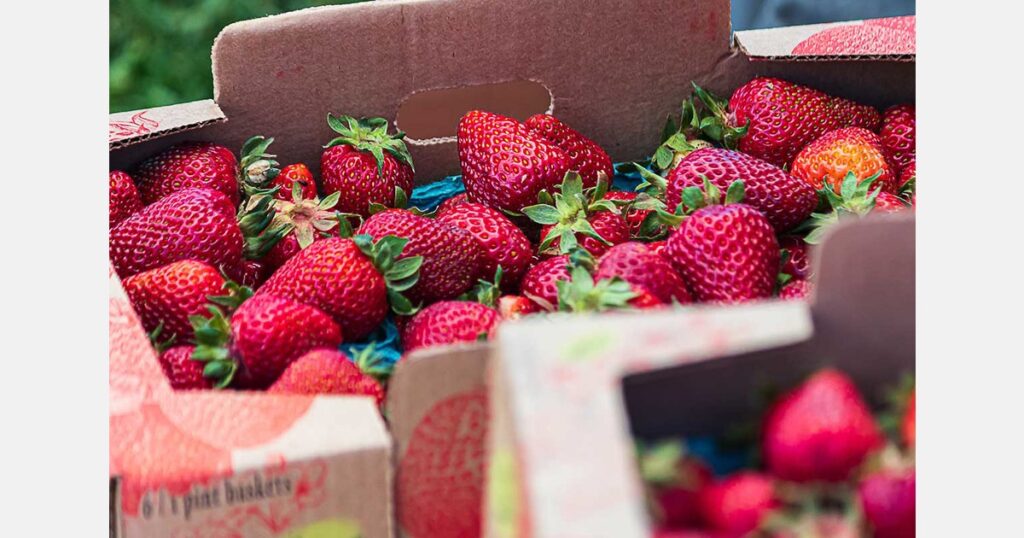
Strawberries have become a core winter fruit category in South Korea, with strong retail presence from January to March across convenience stores, coffee chains, bakeries, and large retail formats. While strawberries are often associated with spring, winter production plays a central role in the domestic and export market.
Industry sources note that strawberries grown under low winter temperatures ripen more slowly, resulting in higher sugar levels and firmer flesh. These production characteristics have supported winter demand in both retail and foodservice channels.
Strawberries are also positioned as a winter fruit linked to nutrition and hydration, given their high water content and vitamin C levels. Historic Korean and Chinese medical texts have documented strawberries as a food supporting energy levels and recovery from fatigue. From a nutritional standpoint, strawberries contain anthocyanins and polyphenols, which are associated with antioxidant activity, vascular health, and digestion, alongside dietary fiber.
South Korea’s strawberry sector has increasingly targeted export markets. Domestic varieties, including Seolhyang and Maehyang, form the base of export volumes, alongside newer varieties such as Geumsil, which combines traits from Seolhyang and Maehyang, and Kingsberry, which is positioned as a large-fruited variety. According to the Ministry of Agriculture, Food and Rural Affairs, South Korea’s strawberry exports reached US$72 million last year, an increase of 4 per cent year on year. The South China Morning Post reported that “Korean strawberries are the most popular fruit in winter and spring.”
Production is concentrated in Nonsan, South Chungcheong Province, which accounts for about 20 per cent of national strawberry output. Strawberry cultivation in the area dates back to 1967, with varietal development accelerating in recent decades. The release of the Seolhyang variety in 2005 reduced reliance on foreign genetics and associated royalty payments. More recently, the Joyberry variety was introduced, advancing the harvest window by around 15 days and supporting export scheduling.
Local authorities and industry stakeholders in Nonsan are positioning strawberries beyond primary production. Plans are underway for the Nonsan World Strawberry Industry Expo, scheduled to open in 2027. Unlike domestic strawberry festivals, the event is planned as an international expo with a focus on production technology, processing, distribution, and bioindustry applications.
The organizing committee was established in July last year and is developing a structure that integrates smart farming systems, downstream value chains, and international engagement. An official from the organizing committee said, “We are preparing meticulously so that Nonsan strawberries can leap from Korea to a global agri-food brand,” adding, “Through this expo, we will imprint Nonsan as a global city symbolizing smart agriculture and a sustainable future.”
Source: ChosunBiz