
Published on
January 26, 2026
By: Paramita Sarkar
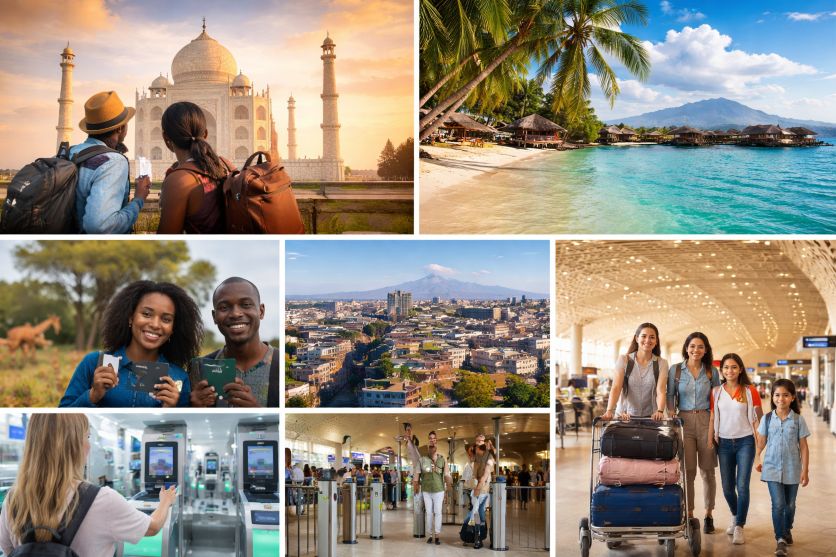
Kenya, Algeria, Fiji, Uruguay, Armenia, and North Macedonia have emerged at the forefront of a sweeping transformation of India’s immigration framework as the country officially expands its e-Visa eligibility to 166 nations worldwide, coupled with a parallel rollout of fast-track digital immigration systems at major international airports.
Effective January 2026, the updated policy reflects a coordinated national push to simplify travel, stimulate tourism, strengthen business connectivity, and modernise border management using technology-driven processes. The expansion marks one of the most ambitious visa liberalisation efforts undertaken by India in recent decades and signals a strategic recalibration of how the country engages with global travellers.
A Comprehensive Expansion of India’s e-Visa and Digital Entry Framework

At the core of the update is the formal expansion of India’s electronic visa system to 166 eligible countries and territories, enabling citizens of these nations to apply for short-term visas entirely online without visiting an Indian mission abroad.
The inclusion of Kenya, Algeria, Fiji, Uruguay, Armenia, and North Macedonia is particularly notable, as it reflects India’s intent to broaden access beyond traditional tourism and business markets, extending equal digital entry opportunities to travelers from Africa, Europe, Oceania, and Latin America.
The e-Visa framework now uniformly supports five visa categories:
- e-Tourist
- e-Business
- e-Medical
- e-Medical Attendant
- e-Conference
This expansion is administered exclusively through official government portals, reinforcing a centralised, secure, and transparent visa issuance system.
Advertisement
Advertisement
The Global Travelers and Sectors Impacted
The policy directly impacts millions of potential travelers from the newly included and existing eligible countries who intend to visit India for tourism, business, healthcare, or professional events.
Key stakeholders affected include:
Advertisement
Advertisement
- International tourists planning short-term visits
- Business travelers attending meetings, trade fairs, and investments
- Medical travelers seeking treatment at Indian healthcare institutions
- Airlines and airport authorities managing passenger flows
- Hospitality, transport, and tourism service providers across India
Despite the broad expansion, the government has retained specific exclusions. Individuals of Pakistani origin, holders of Pakistani passports, and travelers using diplomatic or official passports remain outside the e-Visa framework and must continue applying through regular visa channels at Indian missions.
January 2026 Implementation Timeline
The updated e-Visa eligibility list and the associated digital entry measures came into effect January 2026, with operational deployment occurring in a phased but accelerated manner.
Applicants are advised to submit e-Visa applications a minimum of four days before arrival, maintaining continuity with existing processing timelines while benefiting from faster airport clearance upon entry.
Airports, Seaports, and Digital PlatformsDesignated Entry Points
The e-Visa is valid for entry through:
- 29 designated international airports
- 5 designated seaports
Major airports where the Fast Track Immigration – Trusted Traveller Programme (FTI-TTP) is already operational or undergoing rollout include:
- Delhi
- Mumbai
- Bengaluru
- Chennai
- Kolkata
- Hyderabad
- Kochi
- Ahmedabad
These airports collectively handle the majority of India’s international passenger traffic, making them critical nodes in the digital immigration network.
Online Infrastructure
All processes are carried out exclusively through official government platforms:
- indianvisaonline.gov.in for visa applications and eligibility verification
- ftittp.mha.gov.in for Fast Track Immigration registration
The use of these portals ensures data security, regulatory compliance, and protection against fraudulent intermediaries.
Strategic Drivers Behind the ExpansionTourism Growth and Global Accessibility
India’s tourism policy increasingly emphasises accessibility, predictability, and ease of entry. Expanding e-Visa eligibility lowers entry barriers for travelers who previously faced lengthy or complex visa procedures.
Economic and Business Connectivity
By facilitating faster entry for business travelers, India strengthens its attractiveness as a destination for investment, conferences, and international collaboration.
Medical Tourism Facilitation
India’s globally competitive healthcare sector benefits from smoother entry for patients and attendants, reducing administrative hurdles during time-sensitive travel.
Immigration Efficiency and Security
Automated systems reduce congestion at immigration counters while enabling risk-based screening and biometric verification.
Digital Governance and Modernisation
The policy aligns with India’s broader digital governance initiatives, integrating immigration control with secure, technology-enabled platforms.
From Online Application to 30-Second Airport ClearanceStep 1: Online e-Visa Application
Eligible travelers from Kenya, Algeria, Fiji, Uruguay, Armenia, North Macedonia, and other approved countries apply online by selecting the appropriate visa category and duration:
- 30-day visa (double entry)
- 1-year visa (multiple entry)
- 5-year visa (multiple entry)
Step 2: Optional Fast Track Immigration Registration
After obtaining an e-Visa, travelers may register for the Fast Track Immigration – Trusted Traveller Programme through the Ministry of Home Affairs portal.
Step 3: First-Arrival Biometric Enrollment
On the first arrival, registered travelers complete biometric capture at designated counters, linking facial recognition and passport data.
Step 4: Subsequent Entries via Automated E-Gates
Once whitelisted, travelers can clear immigration by scanning passports and facial biometrics at automated e-gates, reducing processing time to under 30 seconds.
This streamlined process remains valid throughout the visa or programme membership period.
Key Visa Rules That Continue to Apply
- Maximum stay per visit:
- 90 days for most nationalities
- 180 days for nationals of the USA, UK, Canada, and Japan
- Purpose compliance:
Travel must strictly align with the visa category granted. - Entry restrictions:
Entry permitted only through designated airports and seaports.
The Global Scale of the 166-Country Network
The expanded list now spans continents, including:
- Africa: Kenya, Algeria, Ghana, Morocco, Tanzania
- Europe: Armenia, North Macedonia, UK, Germany, France
- Americas: USA, Canada, Brazil, Uruguay
- Asia-Pacific: Fiji, Japan, Australia, Singapore
This geographic diversity underscores India’s commitment to inclusive global engagement rather than region-specific access.
Official Advisory on Authorised Platforms
Authorities have reiterated that travelers must use only official government websites ending in “.gov.in.” Private or look-alike websites charging additional service fees are not authorised and do not represent government services.
A Structural Shift in India’s Border Management
The inclusion of Kenya, Algeria, Fiji, Uruguay, Armenia, and North Macedonia within a 166-country e-Visa ecosystem, combined with biometric-enabled e-gate entry, represents a structural shift rather than a routine policy update.
India’s borders are transitioning from manual, document-centric processes to identity-driven digital systems that prioritise speed, security, and scalability. For international travelers, the change translates into reduced uncertainty, shorter queues, and predictable entry experiences.
As the rollout expands and more airports adopt automated immigration, India’s digital border framework is set to become one of the most advanced among major travel destinations worldwide.
