
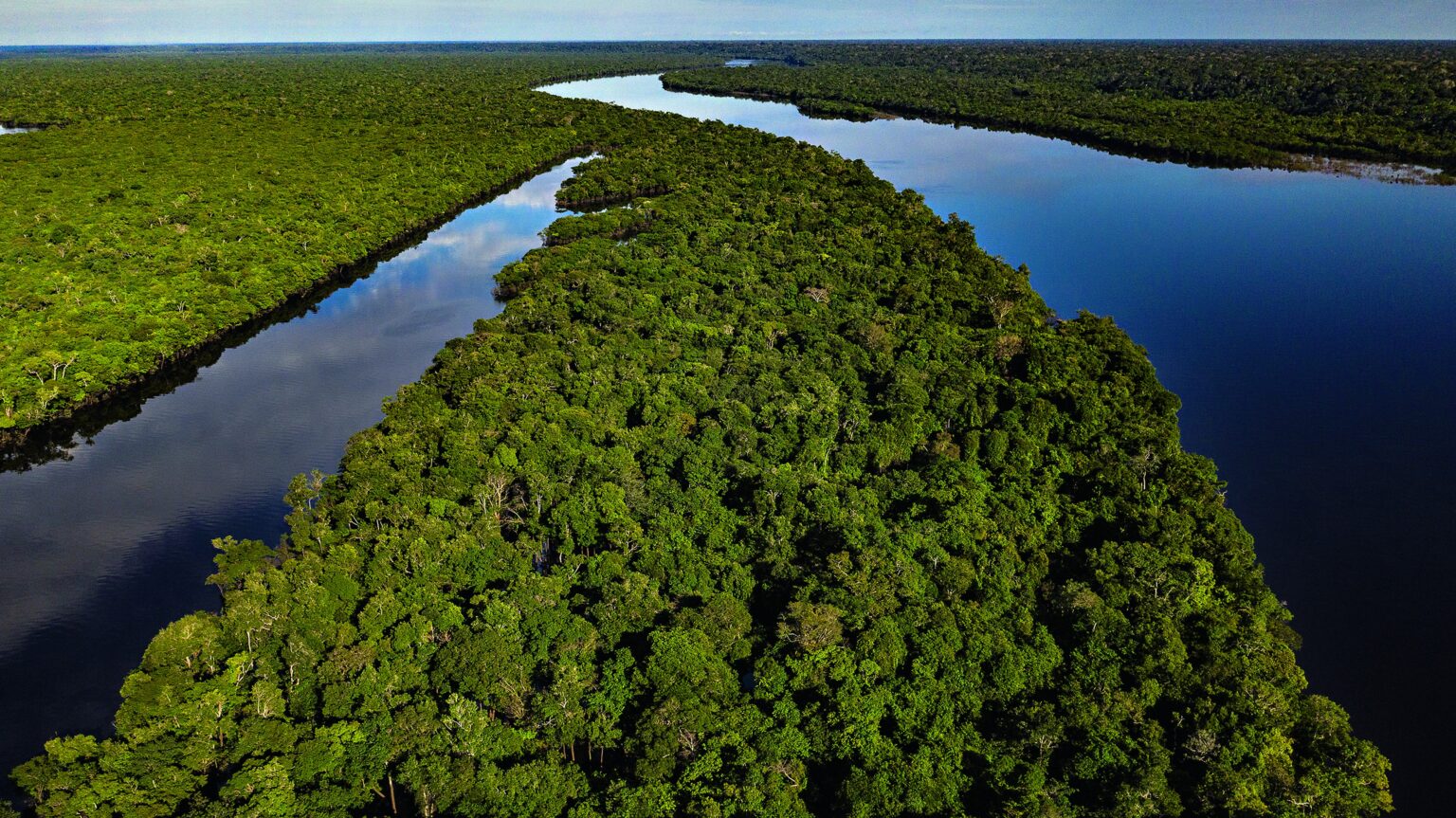
The Amazon is often described in superlatives. It is the planet’s largest rainforest, its most prolific storehouse of biodiversity, and a vast engine of moisture and carbon. For years, that scale made it feel unbreakable – damaged, but enduring. In recent years, the forest has offered a different image: rivers so low that boats cannot pass; towns cloaked in smoke; communities watching the seasons shift out of rhythm.
A new study by Brazil’s Ministry of Management and Innovation, the United Nations Development Program (UNDP) and the Igarapé Institute show why. The rainforest does not simply sit under the sky. It helps make the sky. Trees pull water from the ground and release it back into the atmosphere; that moisture becomes clouds and rain, nourishing the forest and regions far beyond it. When you remove enough forest, you weaken the system that keeps the forest wet. A drier forest burns. Fire kills trees. Fewer trees mean less moisture.
Scientists have warned for years that this loop can become self-reinforcing. The late Thomas Lovejoy and Carlos Nobre argued that the Amazon faces a danger zone around 20 to 25 percent forest loss, especially when combined with warming of 2°C , beyond which large areas could shift toward a much drier, savanna-like state. Their point was not that the whole forest flips overnight. It is that ecosystems, like institutions, can fail gradually — and then suddenly.
In the past few years, scientists have moved from issuing warning signs to listing quantified risks. Compounding pressures — heat, drought, fire, and land-use change — are raising the likelihood of “critical transitions” in parts of the Amazon. By 2050, the joint study estimates that roughly 10 to 47 percent of the forest could be exposed to disturbances severe enough to increase the risk of abrupt ecosystem shifts. The carbon ledger is shifting too: hotter, more degraded southeastern Amazon can behave as a net carbon source in the dry season — less a claim of total collapse than evidence that the most stressed regions are starting to flip.
The economic costs of a tipping Amazon are stunning. The new assessment estimates that climate inaction could erase 14–33% of the Amazon countries’ combined GDP by 2070. Near-term losses amount to $525–$915 billion a year between 2026 and 2030. They include degraded ecosystem services ($50–100 billion), falling carbon stocks ($30–50 billion), lower agricultural yields ($20–30 billion), hydrological disruptions ($20–30 billion), lost productivity ($15–25 billion), and catastrophic, compounding shocks ($100–200 billion). These costs show up in pricier food and energy, strained health systems, broken supply chains, and battered public budgets.
So how can the worst outcomes be avoided? For one, the bill for prevention is far smaller than the costs of repair. Prevention starts with strengthening the readiness of national and subnational governments to anticipate, absorb, and adapt to the climate shocks facing the Amazon. Priorities include institutional and policy readiness to anticipate risks early and meet them quickly. Fiscal and economic readiness can ensure that funds are mobilized and spent effectively. Community and social resilience help ensure that those on the frontline—Indigenous peoples, riverine communities, rural workers—are inside the process.
It is also critical that readiness is tracked precisely because, in public policy, what gets measured gets managed. The study introduces a readiness scorecard that helps authorities spot opportunities and gaps, prioritize spending, and access climate and nature finance from relevant ministries, multilateral banks, and private investors. Publishing scores also invites scrutiny and healthy competition, much as fiscal responsibility and corruption indices did a generation ago. If a country can document rising execution rates and higher absorption of climate funds, concessional finance and guarantees tend to follow.
None of this absolves governments and businesses from cutting carbon emissions or ending illegal deforestation. The focus on strengthening readiness complements such goals by making adaptation and resilience doable at the pace a changing climate now demands. Regional coordination is also essential. The report recommends that the Amazon Cooperation Treaty Organization (ACTO) track readiness across all eight countries to help them stand up joint alerts, manage shared river basins, and align budget priorities. It also encourages investors to direct risk capital to high-impact resilience projects, guided by transparent scores. After all, there are links between forest cover and rainfall, and where readiness will pay the highest dividends.
While the Amazon’s future is not preordained, the trend lines are moving in the wrong direction. The science is clear on the risks of inaction, and the economics are clear on the costs of a lack of preparedness. Strengthening state readiness is a bridge between the two: a way to improve governance, leverage markets, and build stronger communities moving in the same direction. Measurement, in this case, is not a theoretical or academic exercise. It is a strategy to safeguard a biome that helps steer the planet’s climate—and the livelihoods of the almost 60 million people who call it home.
Robert Muggah is cofounder of the Igarapé Institute