
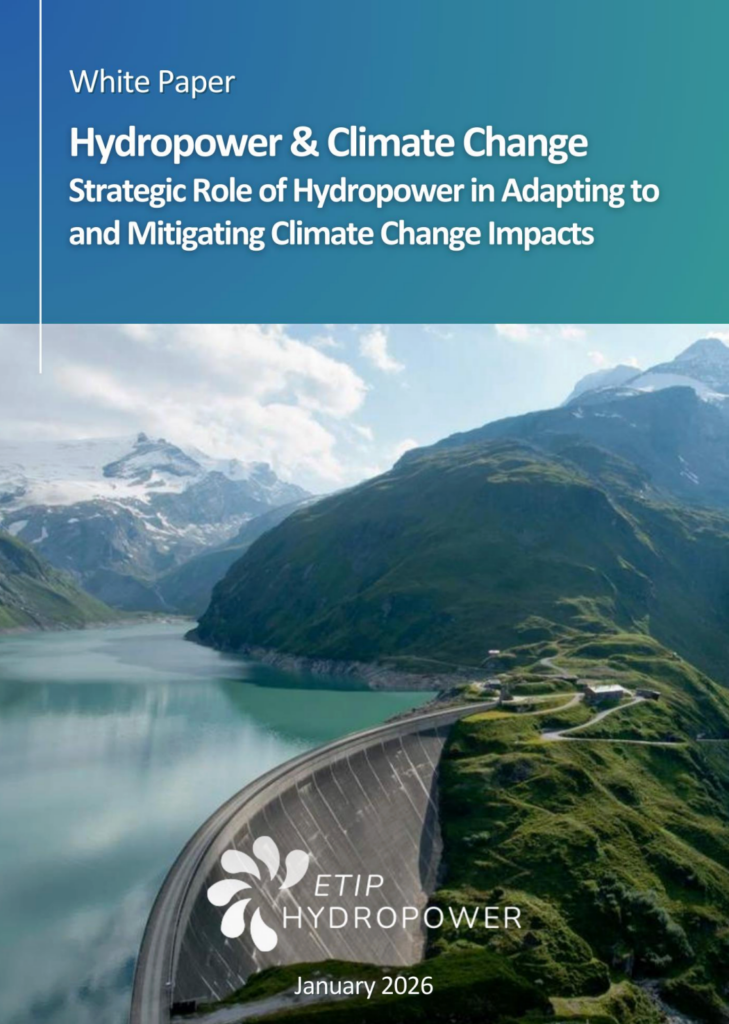
Europe’s hydropower sector is entering a pivotal phase as climate change reshapes water availability, energy demand and infrastructure resilience, according to a newly released white paper from ETIP Hydropower. The publication, Hydropower & Climate Change: Strategic Role of Hydropower in Adapting to and Mitigating Climate Change Impacts, argues that hydropower must be viewed not only as a climate-vulnerable technology, but as a cornerstone of Europe’s adaptation and decarbonisation strategy
Launched during a dedicated industry webinar, the ETIP White Paper outlines how shifting hydrological regimes, rising temperatures and more frequent extreme weather events are already affecting hydropower operations across Europe. Southern Europe is expected to face increased water scarcity, while northern regions may benefit from higher precipitation. At the same time, earlier snowmelt, glacier retreat and more intense rainfall are creating new operational risks, and new opportunities for innovation .
Despite these challenges, ETIP Hydropower highlights the sector’s unique strategic value. Hydropower currently represents around 152GW of installed capacity in the European Union, supplying roughly 12% of net electricity generation. More importantly for future energy systems, it provides flexible, dispatchable renewable power and large-scale, long-duration energy storage, particularly through pumped storage hydropower (PSH).
“Hydropower is one of the few renewable technologies capable of balancing variable wind and solar generation across multiple timeframes, from seconds to seasons,” the white paper notes. This flexibility, combined with services such as frequency regulation, grid inertia and black-start capability, positions hydropower as a backbone technology for power system stability in increasingly renewable-heavy grids.
Beyond electricity, the report emphasises hydropower’s expanding role in multipurpose water management. Reservoirs and regulated river systems already support flood mitigation, drought management, irrigation, navigation and water supply. Under climate stress, these services are expected to become even more critical, reinforcing the need for integrated water–energy–ecosystem planning – often referred to as the WEFE nexus.
To fully unlock this potential, ETIP Hydropower calls for a coordinated modernisation drive across Europe’s existing hydropower fleet. Priority actions include upgrading aging infrastructure to withstand extreme weather, deploying digital tools for real-time monitoring and advanced hydrological forecasting, and selectively expanding reservoir capacity where environmentally and technically justified .
The white paper also highlights emerging innovation pathways, such as hybrid hydro-wind-solar systems, closed-loop pumped storage projects that minimise freshwater use, and new reservoir developments in glacier forelands to replace shrinking natural ice storage. Case studies from Alpine regions, including projects under development in Switzerland, demonstrate how climate-driven changes in water availability could be transformed into long-term resilience assets
Cross-border cooperation is another central theme. With many of Europe’s major river basins shared between countries, ETIP Hydropower argues that coordinated data sharing, joint basin management and harmonised operational strategies will be essential to optimise water use and reduce climate-related risks.
However, the platform warns that technical solutions alone will not be enough. Clear, stable and coherent regulatory frameworks are needed to unlock the long-term investments required for refurbishment, digitalisation and new pumped storage capacity. Given hydropower assets often operate for more than a century, regulatory certainty is seen as a prerequisite for mobilising private and public capital at scale.
For the international hydropower community, the message is clear: Europe’s experience is likely to mirror global trends. As climate pressures intensify worldwide, hydropower operators and policymakers will increasingly need to balance energy security, water management and ecosystem protection in integrated planning frameworks.
ETIP Hydropower concludes that recognising hydropower as a strategic enabler – rather than a legacy technology – will be critical to building climate-resilient power systems. With the right combination of modernisation, innovation and policy support, hydropower could remain at the heart of Europe’s clean energy transition for decades to come
