
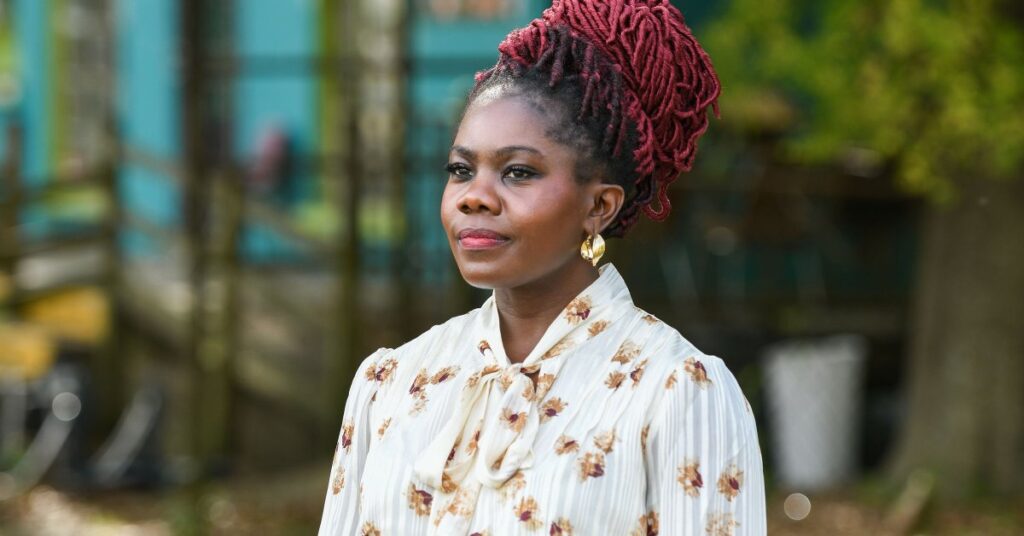
Now the director of the Center for Environmental and Climate Justice at the NAACP, Conner has spent her career pushing for long-term systemic changes. In 2022, she testified before the House Committee on Homeland Security on how Mississippi’s state government intentionally withheld resources from Jackson, helping secure over $600 million in funding to address the water crisis impacting more than 150,000 residents. She’s also worked with organizations in central California to advocate for a state-level buffer zone to prevent the use of toxic pesticides around schools.
As AI data centers crop up around the country, Conner is grappling with their environmental impact. Studies have shown that data centers rely heavily on fossil fuels—and stand to add millions of metric tons of carbon dioxide to the atmosphere. According to the Environmental Energy and Strategy Institute, large data centers can consume up to 5 million gallons of water a day to keep servers cool, impacting nearby residents’ supplies. Living near a data center has also been linked to higher exposure to air pollution, including fine particulate matter, that can result in significant respiratory-related health consequences. Those health impacts are estimated to cost up to $20 billion per year in the United States by 2028, according to Harvard Business Review.
When these new data centers raise concerns from local residents, Conner steps in to help ensure they don’t further harm Black, Brown, and low-income communities, many of which are already disproportionately exposed to higher levels of air pollution.
In December, Conner, along with other NAACP leaders and environmental and climate justice advocates, led a strategic summit around data centers, creating a first-of-its-kind framework to help communities advocate for their rights. Among the recommendations laid out were that commitments be legally binding and publicly disclosed, and that temporary construction contracts do not replace stable, living-wage employment in communities. “It’s about learning and listening to the community members themselves,” she says.
Looking ahead, Conner’s goal is to help communities protect and advocate for themselves as new challenges arise and the effects of climate change intensify. “To see people across the country talking about environmental and climate justice at a hyper-local level and in a way that feels personal to them—that gives me a lot of hope,” she says. “We have a chance to get it right.”