

- In mid-January 2026, Duke Energy faced widespread power outages across the Carolinas from Winter Storm Fern, mobilizing more than 18,000 workers and deploying advanced grid technologies to restore service while supporting communities through a rapid-response grant to the American Red Cross.
- At the same time, the company accelerated its transition efforts by advancing large-scale battery storage projects at retired coal sites and realigning senior leadership to oversee generation and new nuclear decisions, underscoring how reliability planning and clean energy investments intersect during extreme weather events.
- We’ll now examine how Duke Energy’s large storm response and grid-resilience investments may shape the company’s broader investment narrative.
Outshine the giants: these 23 early-stage AI stocks could fund your retirement.
What Is Duke Energy’s Investment Narrative?
For anyone considering Duke Energy, the basic belief is that a large, regulated utility can keep compounding modest earnings while investing heavily to keep the lights on. The recent response to Winter Storm Fern, including mobilizing more than 18,000 workers and deploying self‑healing grid technology, speaks directly to near term catalysts around reliability and regulator confidence, but the financial impact of this single storm looks unlikely to be material given the muted share price reaction and the scale of the business. The bigger near term swing factors still appear to be upcoming rate decisions, execution on battery storage and nuclear planning, and how management balances a sizable capital program with already tight interest and dividend coverage. Leadership changes in generation and nuclear now sit squarely inside that risk and catalyst mix.
However, there is one reliability related risk here that investors should not overlook.
Duke Energy’s share price has been on the slide but might be dropping deeper into value territory. Find out whether it’s a bargain at this price.Exploring Other Perspectives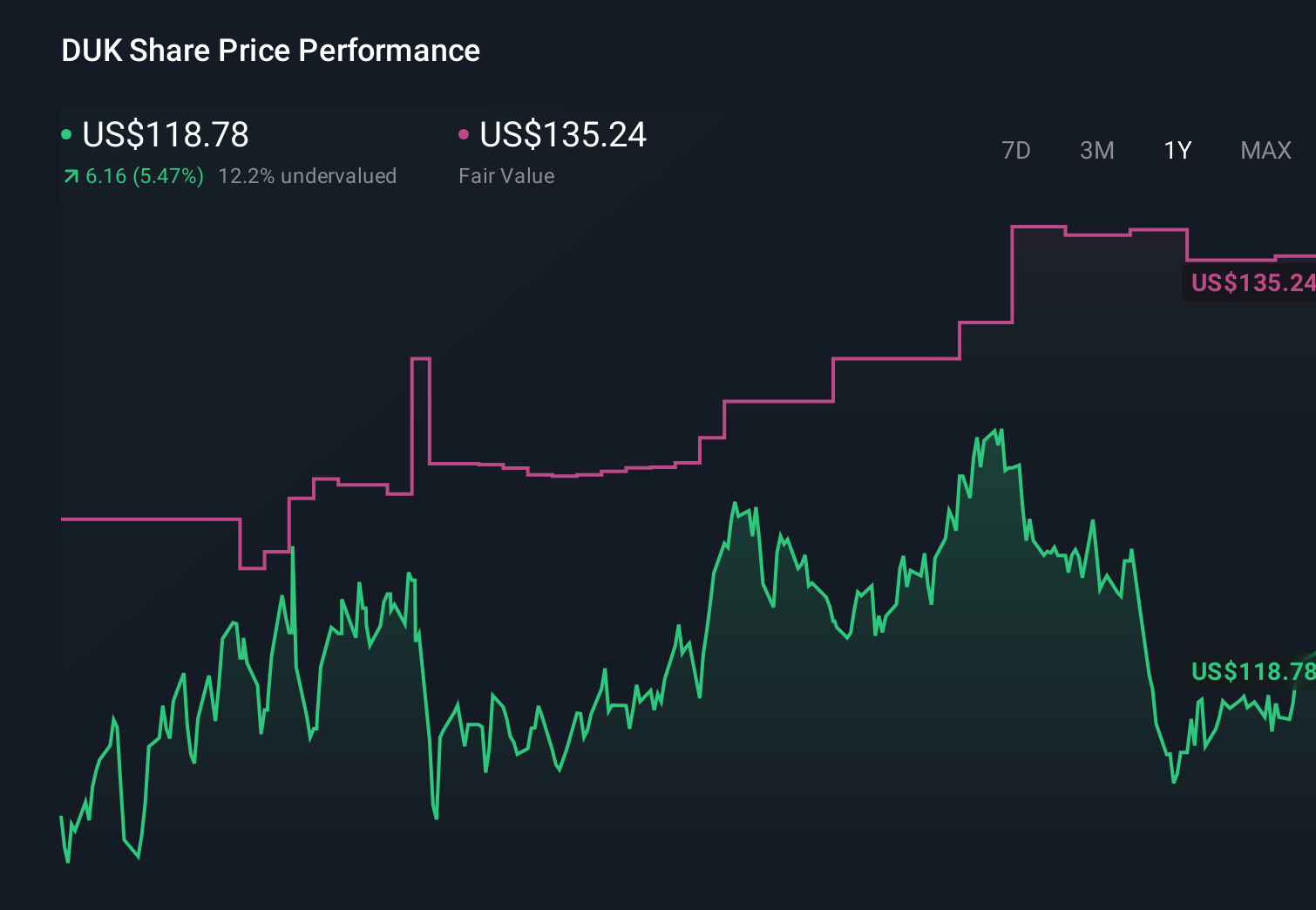 DUK 1-Year Stock Price Chart Eight Simply Wall St Community members currently see Duke Energy’s fair value anywhere from roughly US$65 to about US$135 per share, highlighting sharply different expectations. Set that against today’s focus on grid resilience, storm response and nuclear decisions, and you can see why opinions on the company’s long term performance potential may continue to diverge.
Explore 8 other fair value estimates on Duke Energy – why the stock might be worth as much as 14% more than the current price!
Build Your Own Duke Energy Narrative
Disagree with this assessment? Create your own narrative in under 3 minutes – extraordinary investment returns rarely come from following the herd.
Seeking Other Investments?
Opportunities like this don’t last. These are today’s most promising picks. Check them out now:
This article by Simply Wall St is general in nature. We provide commentary based on historical data
and analyst forecasts only using an unbiased methodology and our articles are not intended to be financial advice. It does not constitute a recommendation to buy or sell any stock, and does not take account of your objectives, or your
financial situation. We aim to bring you long-term focused analysis driven by fundamental data.
Note that our analysis may not factor in the latest price-sensitive company announcements or qualitative material.
Simply Wall St has no position in any stocks mentioned.
We’ve created the ultimate portfolio companion for stock investors, and it’s free.
• Connect an unlimited number of Portfolios and see your total in one currency
• Be alerted to new Warning Signs or Risks via email or mobile
• Track the Fair Value of your stocks
Have feedback on this article? Concerned about the content? Get in touch with us directly. Alternatively, email editorial-team@simplywallst.com