
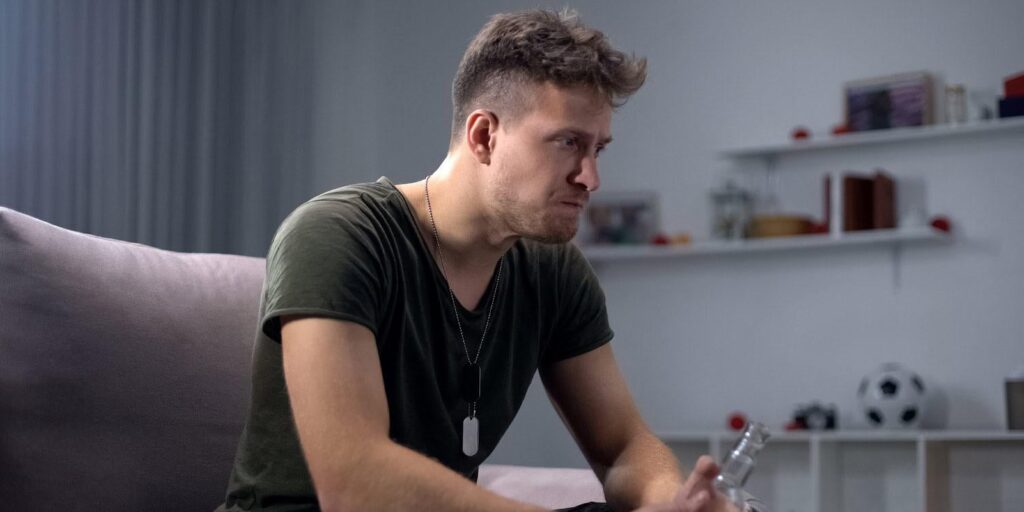
Hyperarousal symptoms drive alcohol problems in male soldiers. Research highlights that symptoms of hyperarousal specifically increase the risk of alcohol-related problems for men but not for women.
Hyperarousal symptoms drive alcohol problems in male soldiers, new research suggest
5 Comments
>A new longitudinal analysis suggests that specific symptoms of post-traumatic stress disorder, rather than the condition as a whole, drive hazardous drinking behaviors in military reservists. The research highlights that symptoms of hyperarousal specifically increase the risk of alcohol-related problems for men but not for women. These findings were published in the [journal](https://onlinelibrary.wiley.com/doi/10.1111/acer.70211) Alcohol, Clinical and Experimental Research.
>Post-traumatic stress disorder is often viewed by the general public as a singular diagnosis. However, mental health professionals categorize the condition into four distinct groups of symptoms. These include re-experiencing the trauma, avoiding reminders of the event, negative changes in mood or thinking, and hyperarousal. Understanding these specific categories is necessary for treating patients effectively. This is particularly true for military populations where trauma exposure is common.
>Rachel A. Hoopsick, the study’s lead author from the University of Illinois Urbana-Champaign, sought to understand these connections better. Along with colleagues from the University at Buffalo, she investigated how these symptom clusters relate to alcohol use. The research team focused specifically on the United States Army Reserve and National Guard. These service members face different challenges than active-duty personnel.
>Reservists comprise more than one-third of the United States military. They must navigate the dual demands of civilian and military life. This often results in role conflict and reduced access to military-specific health resources. They also may lack the consistent social support from fellow soldiers that active-duty troops enjoy. Previous data indicates that reservists are at a higher risk for mental health and substance use issues than their active-duty counterparts.
PTSD was NOT what I imagined when I read hyperarousal in the title
Makes sense, it’s to take the edge off and appear calm. It’s more expected of men to keep up appearances this way and that’s a good buffer. They also can’t have weed instead so that makes alcohol appealing.
I wonder if anyone has considered preventive measures, like *not* using young adults for target practice in rich people’s wars?
From the article:
“ This aligns with gender role socialization theories. These theories suggest men are often socialized to externalize distress.”
Or, hear me out here, there could be a biological component. Men and women have different brains, different endocrine systems and have faced different evolutionary pressures regarding physical threats
Perhaps this is caused by those features more than by gender theory.