
Published on
January 28, 2026
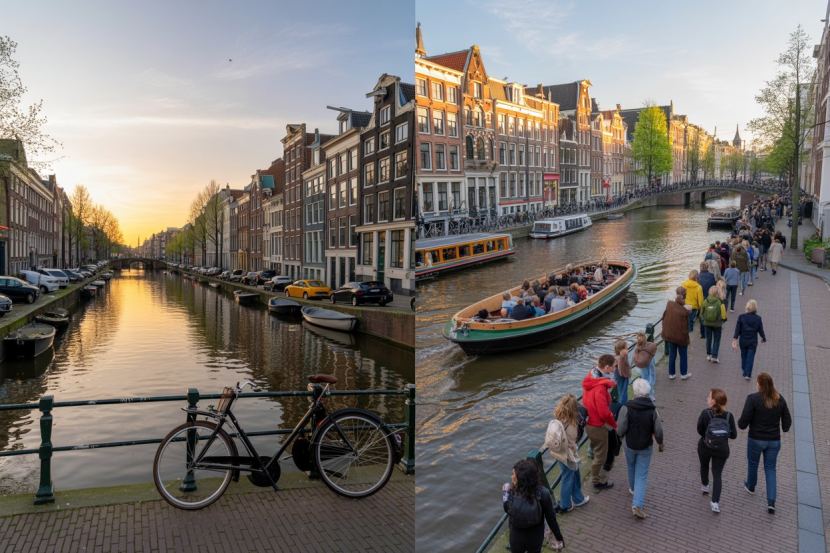
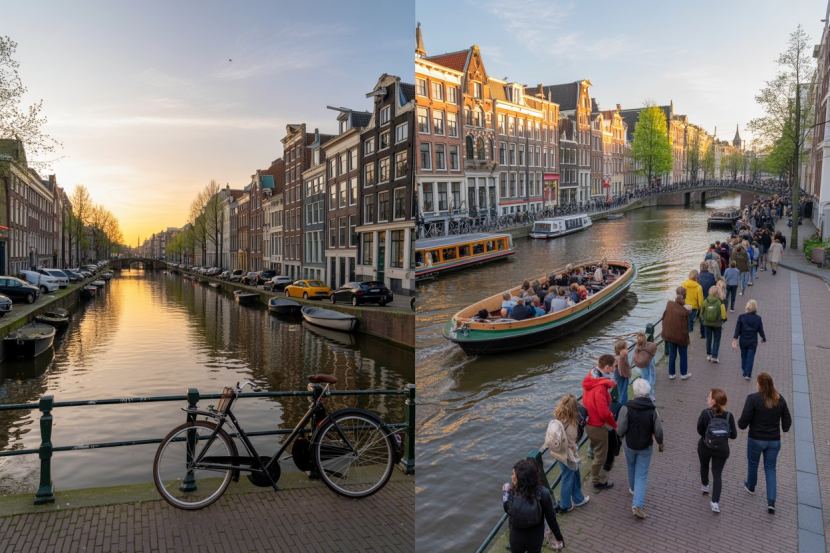
Venice is literally sinking under the weight of tourists. In The Netherlands, Amsterdam’s bridges groan with Instagrammers jostling for the same canal shot. Barcelona’s Gothic Quarter has become an open-air theme park where actual residents can’t afford rent anymore. Santorini’s iconic white cliffs, the ones plastered across every travel blog on earth, are crumbling from millions of footsteps. Dubrovnik? Game of Thrones fans swarm its medieval walls so aggressively the city had to install crowd-counting cameras like it’s a Black Friday sale.
This is overtourism: when the very thing that makes a place magical gets loved to death. And now, after decades of rolling out the welcome mat and cashing the checks, these cities, from the Netherlands to Italy, Spain to Croatia, and all the way to the Greek islands, are finally saying “enough.” No more expansion. No more cruise ships dumping 5,000 people into narrow streets built for donkey carts. Instead, they’re throwing up barriers, literally. Entrance fees. Visitor caps. Reservation systems for sidewalks. Because it turns out you can’t run a city like an all-you-can-eat buffet without eventually breaking something—or someone.
Dubrovnik and Santorini Introduce Daily Limits to Address Overtourism
Dubrovnik has long been associated with overtourism due to sustained daily influxes of visitors into its medieval Old Town. Often cited alongside Venice, the Croatian city implemented the “Respect the City” initiative to address these pressures. As part of this approach, Dubrovnik partnered with the cruise industry to stagger arrival times and imposed a strict limit of two cruise ships per day, with a maximum of 4,000 passengers.
In addition, cruise ships are now required to dock for a minimum of eight hours. This measure is designed to spread visitor movement throughout the day and reduce congestion in the city’s narrow streets. By encouraging visitors to disperse beyond the main thoroughfares, the policy aims to ensure tourism contributes more meaningfully to the local economy rather than overwhelming it in concentrated bursts.
Santorini faces a different but equally intense form of overtourism. The Greek island has experienced days when up to 18,000 cruise passengers arrived simultaneously, creating severe congestion and placing unsustainable pressure on infrastructure and its volcanic landscape. To counter this, authorities are reinforcing a daily cap of 8,000 cruise passengers.
This limit is supported by a digital berth allocation system that smooths arrival flows and avoids sharp spikes in visitor numbers. In addition, an eco-tax on cruise passengers has been introduced to fund essential infrastructure projects. These measures are intended to preserve Santorini’s position as a premium destination rather than allowing it to function as a high-volume transit point.
Amsterdam, Venice, Bruges and Barcelona Restructure Urban Tourism Models
The Netherlands’ capital, Amsterdam, has announced some of the clearest numerical limits tied to overtourism. Beginning in 2026, the city will restrict ocean cruise ship visits to 100 per year as part of a wider initiative aimed at reducing congestion and easing strain on urban infrastructure. This measure forms part of a longer-term plan that targets the complete removal of large ocean cruise ships by 2035. The policy direction aligns with Amsterdam’s commitment to sustainable urban development and reflects concerns related to crowding, environmental impact, and livability for the people of The Netherlands.
Advertisement
Advertisement
Venice had already taken decisive action earlier, with large cruise ships barred from entering the historic city center since 2021. This measure was introduced to protect the city’s UNESCO-listed heritage and fragile lagoon ecosystem. Cruise arrivals have since been redirected to industrial ports outside the historic core, reducing direct pressure on central areas while still allowing tourism activity to continue in a modified form.
Barcelona has approached overtourism through infrastructure restructuring. Faced with persistent crowding in historic districts, the city has reduced the number of cruise terminals and consolidated docking operations into fewer locations. This change aims to distribute visitor movement more evenly and reduce pressure on areas such as La Rambla and the Gothic Quarter. The broader objective is to limit short-stay tourism patterns and support travel behavior that delivers more sustained economic benefits.
Advertisement
Advertisement
Bruges in Belgium has moved to curb cruise-driven overcrowding by limiting arrivals at the port of Zeebrugge to two ships per day. The city is also discouraging day-trip tourism, promoting weekday docking and overnight stays to ease pressure on its historic UNESCO-listed centre.
Tourism Pressure and the Shift Toward Managed Visitor Experiences
Across these destinations, overtourism is no longer being addressed through promotional restraint alone. Instead, physical limits, scheduling controls, and access management are shaping how travelers interact with cities. The emphasis is increasingly placed on quality of experience rather than volume of arrivals, with tourism framed as something that must coexist with everyday urban life.
For travelers, this approach changes how and when destinations are accessed. Regulated arrival times, capped visitor numbers, and redistributed access points contribute to less intense crowding and a more navigable travel environment. While access may be more controlled, the resulting experience is positioned as more immersive and less disruptive.
This evolving tourism model reflects growing coordination between local governments, tourism stakeholders, and residents. Overtourism is being treated as a structural issue requiring long-term planning rather than temporary crowd management.
A Shared European Effort to Rebalance Tourism
Amsterdam in the Netherlands, Venice in Italy, Barcelona in Spain, Dubrovnik in Croatia, Bruges in Belgium, and Santorini in Greece illustrate how overtourism is being addressed through destination-specific controls rather than uniform solutions. Each location has adopted measures suited to its geography, infrastructure, and tourism profile, but all share a common objective: reducing pressure without eliminating tourism altogether.
By capping arrivals, restructuring access, and managing visitor flow, these destinations are reshaping how tourism integrates into daily life. The focus has shifted toward sustainability, cultural preservation, and infrastructure resilience. For future visitors, the result is expected to be a more regulated but potentially more rewarding travel experience, where iconic destinations remain accessible while being protected from the effects of unchecked tourism growth in Europe.
Image Source: AI
