There’s a rare sense of momentum building in Australia’s foreign policy establishment centred on one deceptively simple phrase: conflict prevention. This is a new incarnation of an old idea, but it risks dilution through diplomatic etiquette and a destructive geopolitical spiral.
The conflict prevention agenda is in the Foreign Minister’s speeches, both in the region and at the United Nations General Assembly. It’s in the Prime Minister’s leader-level engagements with Australia’s most important partners. It’s the core mission of a new branch within the Department of Foreign Affairs and Trade’s Defence and National Security Policy Division. It’s the basis for a boost to the UN Peacebuilding Fund, membership of the Peacebuilding Commission and a bid for a seat on the Security Council. And most recently, it’s the subject of a parliamentary inquiry by the Joint Standing Committee on Foreign Affairs, Defence and Trade.
As other analysts have noted, the phrase is straining under the weight of competing priorities and logics. It must capture the monumental, even existential, risks of great power conflict as well as the unrelenting, smaller scale but higher probability threat of intra-state violence. Australia’s approach to a kinetic conflict between the United States and China over Taiwan would require, for example, a fundamentally different model of engagement to electoral violence in the Philippines or tribal violence in Papua New Guinea.
Some of Australia’s most important conflict prevention work is carried out by the Australian Electoral Commission, the Australian Federal Police, and the aid program. Accordingly, the focus of the current parliamentary inquiry is to “consider the role of Australia’s international development program in preventing conflict”.
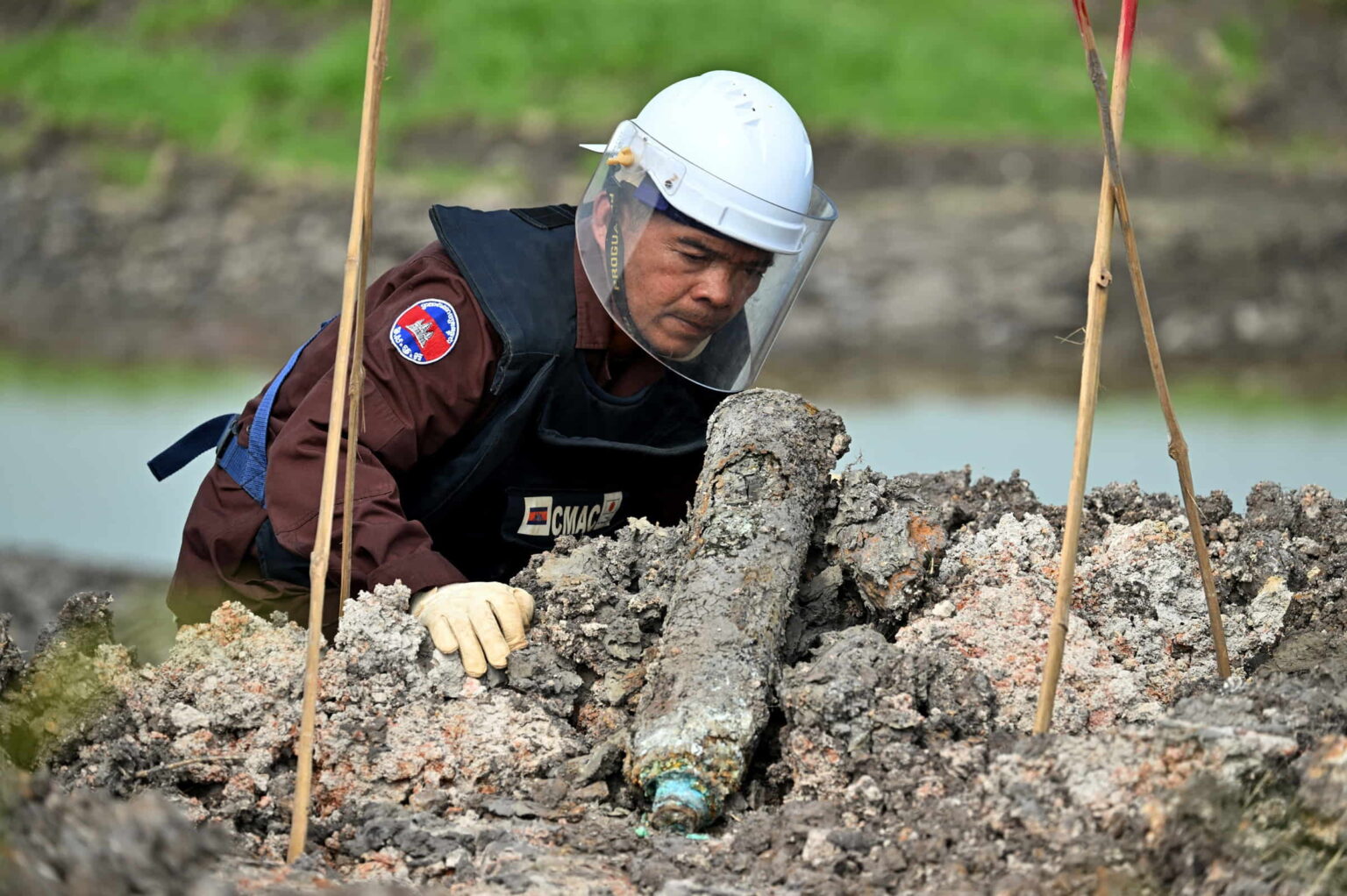
There’s good reason for reassessment. Despite a storied history including the Regional Assistance Mission to Solomon Islands, International Force East Timor, and the 1991 Paris Peace Agreements for Cambodia, Australia’s priority for the last decade has been on the indirect conditions for peace rather than direct peacebuilding interventions. Australia ranks 21st of 32 aid donor peers for proportionate spending on primary peacebuilding and conflict prevention – a category that includes civilian peace processes, peacekeeping operations, and landmine clearing – but third for its support for secondary peace work such as bolstering governance, institutions, and elections.
Circumstances will demand a recalibration of Australia’s approach if it wants to elevate direct peacebuilding.
That preventive activity is crucial to economic development and political stability, but cannot substitute for active peace processes, negotiations and resolutions. There is no better (or worse) test case in the Indo-Pacific than the devastating civil war in Myanmar, where Australia’s core peace spending has averaged less than US$2 million a year for the last three years – much less than Canada, Finland, South Korea, Norway, Sweden, Switzerland or the United Kingdom. Australia does provide substantial humanitarian relief, second only to the United States in 2024. A recent review of Australia’s aid praised Canberra’s heavyweight relief program but found it risked “viewing conflict prevention solely through a humanitarian lens”.
Canberra is also, for appreciable reasons of bilateral relationship management, far from forward-leaning on nearby conflicts such as West Papua. A delicate balancing act with Indonesia and Papua New Guinea, with stakes raised in recent diplomatic elevations, leaves Australia with very little room to move despite pressure from human rights groups and civil society to intervene. At times, this restraint can resemble conflict avoidance at the diplomatic level more than commitment to conflict prevention on the ground.
Circumstances will demand a recalibration of Australia’s approach if it wants to elevate direct peacebuilding. Top traditional donors and peace financers such as the United States, Germany and the United Kingdom are slashing aid budgets as conflict risks and insecurity rise, globally and in the Indo-Pacific.
Other emerging powers are seizing the initiative. A sample of aid projects in the Pacific and Southeast Asia reveals instances of India clearing mines in Cambodia; Qatar and the United Arab Emirates providing relief to Rohingya refugees; and Taiwan financing police assistance, judicial infrastructure and social stability funds in Kiribati and the Marshall Islands.
The most prominent new player, building both peace and influence, is China. Aside from its recent role in peace negotiations between Cambodia and Thailand, Beijing has cultivated a conflict prevention profile through material and technical assistance to police forces in Samoa, Solomon Islands, Fiji, Vanuatu, Papua New Guinea and Myanmar; landmine clearing in Cambodia; relief for wounded troops in the Philippines; support for electoral processes in Fiji, Cambodia and, most concerningly, Myanmar; and donations to civilian peace processes in Myanmar.
The greatest risk for Australia and the near region is that divergent and fragmented peace efforts, backed by competing geopolitical powers, will entrench conflict and fragility rather than resolve it. Canberra and Beijing likely hold different views of what constitutes an inclusive and sustainable political settlement. Australia’s aid program is also shaped in ways that China’s is not by principles of development effectiveness and transparency. A do-no-harm approach must be the foundation of any credible – and therefore competitive – conflict prevention agenda.
The inquiry would do well to heed the warnings from the Pacific on the divisive and damaging effects of China-Australia competition in law enforcement: more spending on security does not mean the region will be more secure.