
By Ashley Brickner, Editor-in-Chief
As we congregated at the boarding terminal in Newark, New Jersey, carry-ons in hand and passports aimlessly stuffed into our pants’ pockets, the entirety of my GO class eagerly awaited the adventure we were about to embark on. Some of us bemoaned the eight-hour journey ahead of us, yet some students, including myself, anxiously awaited the plane’s takeoff. We endured the harrowing flight from Newark to Frankfurt, with many of us resenting the screaming toddler who cried in agony for hours into the night. Nevertheless, our arrival in Frankfurt produced several additional anxieties. Our group hastily weaved between aimless passersby. With our carry-ons in tow behind us, we scurried across the Frankfurt airport, emulating the frantic bustle of the McCallister family. We boarded the plane and watched in awe of the mountains rising below us. Our journey had just begun, and many of us could not comprehend the excitement we were about to forgo.
We arrived in Salzburg, Austria with eyelids almost as heavy as our luggage. With the glimmering sunshine beaming down on us, all sixteen of us dragged our luggage through the cobblestone streets of old town Salzburg. We stared in awe of the grandiose architecture surrounding us from every direction, consuming us amongst miles of vibrant culture, music, and Austrian cuisine. The spirit of Salzburg floated in the atmosphere around us, which seemed almost as natural as the molecules in the air we breathe. Even for students who had traveled abroad before, it felt as if the tornado that once scuttled Dorothy to the magical land of Oz had just whisked us away to the fantastical streets of Salzburg. Yet, as my group navigated through a bustling itinerary and the excitement of traveling, I found the most unlikely takeaways hidden behind the fantastical guise of “Austrian” culture. Stuffed amongst several trivial souvenirs and the dirty clothes haphazardly wedged into my suitcase, I returned from my GO Austria trip with new perspectives and experiences that I never thought I’d have the privilege of grappling with. To say I am grateful for the opportunity is an understatement, and even though it is cliche, I truly encourage each student to embrace the discomfort that might arise from such a challenging yet rewarding experience.
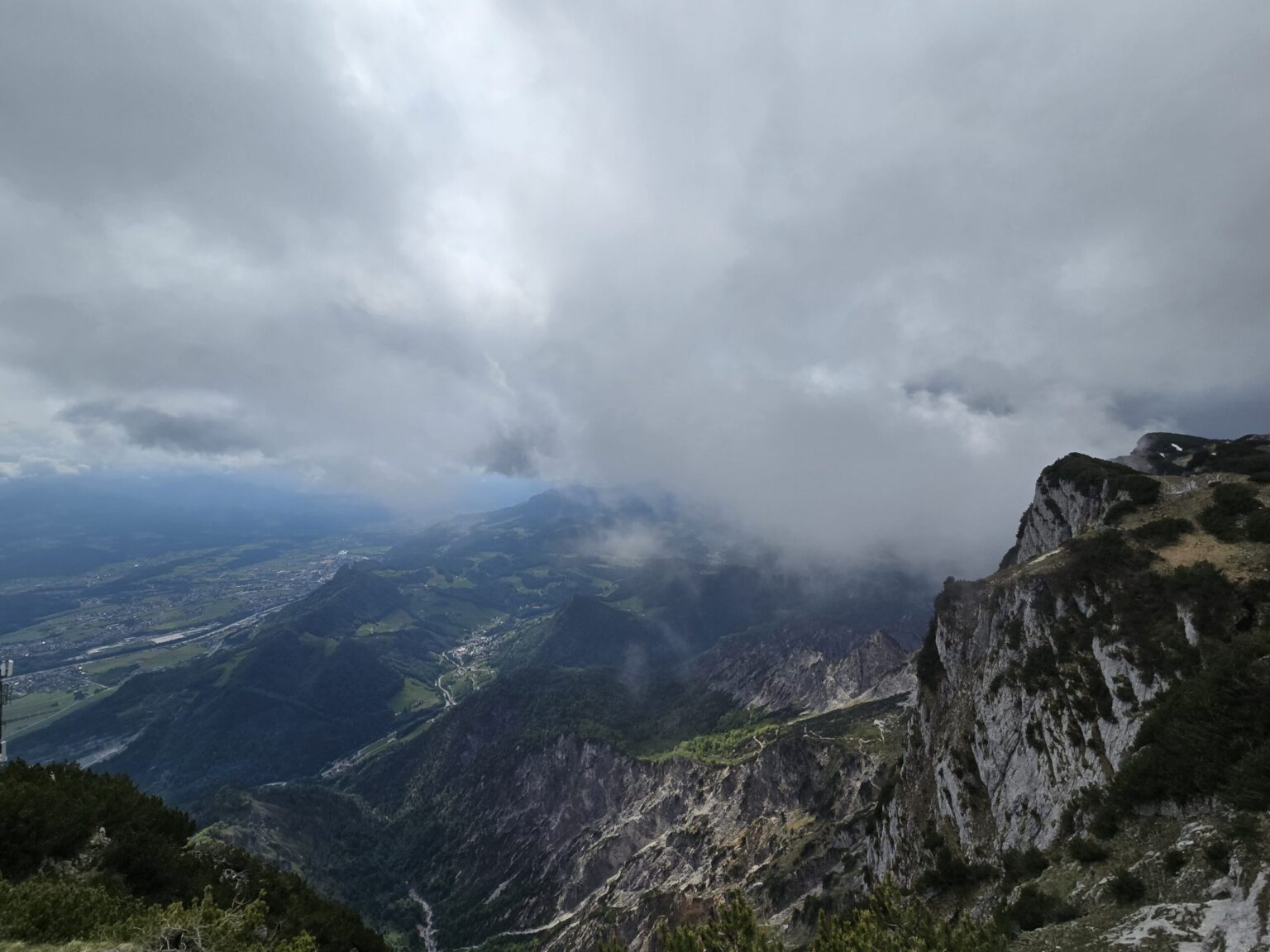
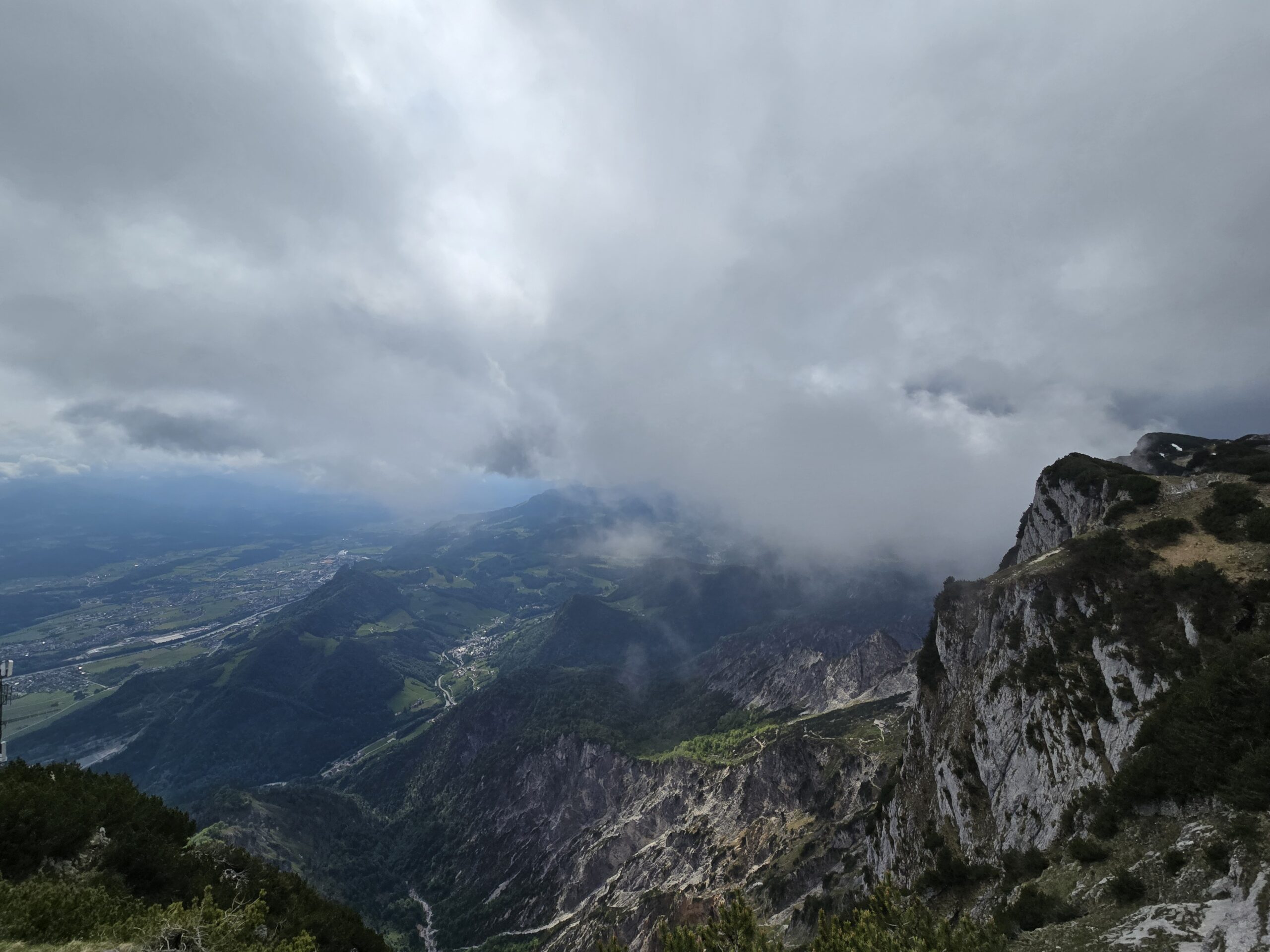
It is easy to enumerate the number of buildings that left me in disbelief or the excitement of hiking both the Untersberg and Gaisberg mountains, but those experiences will never stand in comparison to the cultural humility that my GO trip thrust upon me. I cannot emphasize enough how enlightening such an intensive form of cultural immersion can be. Although uncomfortable at times, my experience in Austria forced me to reflect upon my own identity and the ways in which the modern American consciousness impacted the misperceptions I had toward other cultures. These reflections began almost immediately upon our arrival in Austria. After having spent nearly ten hours on a plane, elbow to elbow with classmates I had barely met, I felt easily frustrated by the newness of everything within my vicinity, including the challenges that arose when confronting the German language. Growing up in the U.S., the familiarity of the English language sheltered me from the realities associated with a language barrier. While navigating through the English-speaking, American world, there’s never been a doubt that most everyone I’d encounter would speak my language. It has been an immense privilege to exist in a country where I never have to reconcile with the fear of being misunderstood linguistically. My arrival in Austria forced me to broach that language barrier dichotomy where, for the first time in my life, I was the outsider within the dominant conversational world, subject to the frustrations others exuded by trying to understand the message I lacked the language to communicate.
It is humbling to be on the other side of a language barrier. On our first night in Austria, as sleep deprivation choked every ounce of emotional stability I had, I desperately reconsidered traveling to any country that did not speak English. I debated sending a desperate text to my family, begging them to book me the first flight back to Newark. Yet, while unnerving and deeply uncomfortable in a myriad of ways, my experience on the opposite side of a language barrier is an experience I will never forget, and I recommend any student embrace the opportunity to immerse yourself in such an unsettling experience. Not only do these experiences equip students with a newfound sense of compassion for others, but these experiences leave you with an understanding of cultural humility. Moving through the streets of Salzburg and Vienna, I could not decipher the messages scrawled across the signs lining each venue we passed. The cacophony of Austrian passerby sounded like a strange mixture of syllables unrecognizable to my ears. Nevertheless, my horrid attempts at German pronunciation did not go unnoticed by native Austrians. In fact, it is worth noting that several Austrians and Germans still understood a wide variety of English. The familiarity of the English language lurked nearby. As fellow students and I haphazardly stumbled over dinner menus and subway maps, the locals quickly oscillated from one language to another, accommodating our group without hesitation.
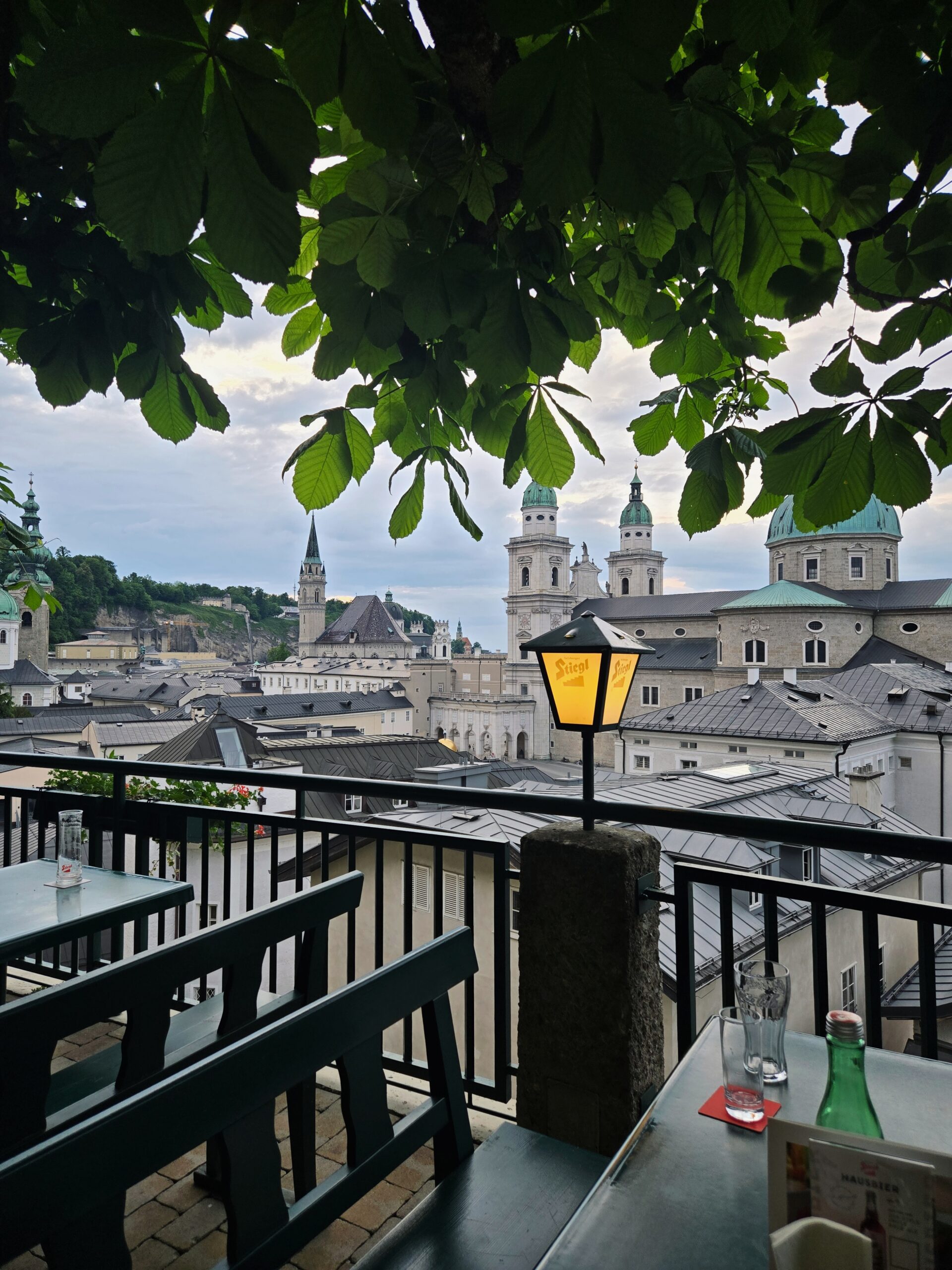
Nevertheless, the unwavering kindness presented by strangers was not a universal trait. It was difficult to determine how willing the locals might be to teach you how to properly articulate basic phrases, but some people would genuinely appreciate the effort you gave to try to speak their language. The language barrier challenge followed the entirety of my group throughout our three weeks, lurking over our shoulder like a helicopter parent we couldn’t seem to get rid of, but the entire experience undoubtedly left me with a new appreciation for the compassion of strangers, especially as they vividly watched an entire group of American twenty-somes struggle with the German language. I vividly remember the server at Die Weisse, a restaurant in Salzburg. Our professor encouraged us incessantly to order our food in German. As we went down the table, each of us butchering the German dialect, unable to gurgle our R’s like a native, the server found much amusement in our respective attempts. While he made joking comments in German to our professor, the server appreciated our attempts to utilize his language and even tutored some of us on the exact pronunciation of common words. It was only our second night in Austria. A lot of our group traveled to Austria with the misconception that Austrians and Germans were all blunt and unsociable, and while some locals epitomized that standard, the server’s demeanor instantaneously warmed the entire atmosphere, making each student more willing to accept the challenge of ordering in German.
As we indulged in a delicious feast of traditional Austrian cuisine, most of us satiated by the sweet and savory blend of wiener schnitzel, we conversed about the stark differences between American and Austrian culture. Our dinner conversation oscillated between boisterous laughter and the quiet of intellectual intrigue as we listened to the mesmerizing anecdotes our professors shared. Many of our subsequent dinners would share similar themes with each of us switching between bellows of laughter and pure fascination, and it was the communion of food that provoked many of these discussions. Over a shared L’Osteria pizza, with Ali sitting on my right side and Ella to my left, we laughed and conversed with the two University of Salzburg students we collaborated with for a group presentation. Sophia, one of the Salzburg students, illustrated the intrigue many Salzburg students shared. Since it is not custom within Austrian schools, many of the Salzburg students marveled over the mandatory recitation of the National Anthem that many U.S. schools enforce. Ali, Ella, and I chuckled, admitting how contentious some Americans found the practice, too. Sophia’s surprise diverted our conversation into a different path. Ali, Ella, and I described our experiences attending U.S. high schools amid the gun violence epidemic. Sophia and Anna sat in awe of the anecdotes we shared, their faces growing long and solemn as we untangled the grave realities that our generation combats. We ruminated on the increasing implementation of active shooter drills; a collective experience shared amongst most American children of the twenty-first century. We detailed the impacts of our generation’s collective grief, sketching the consternation that immobilizes our bodies anytime a headline shares the names of those wrongly taken from our generation’s embrace. Confounded by the stories we shared, Anna and Sophia contrasted our grave perspective with the safety of Austrian culture. While it was a simple comment, her monotonous tone exerting no sense of power or emotional impact, Anna explained that her biggest concern was leaving her phone unattended in public.
 Processed with VSCO with g3 preset
Even now, it is difficult for me to comprehend how American standards of safety differ from other countries. As Ali and I walked back to our hotel after dinner, I struggled to imagine what the U.S. might look like without the threat of acute violence around every corner. From such a young age, we program the American conscious to remain in a state of constant hypervigilance. We break our necks walking home each night, constantly checking over our shoulder for the next boogeyman that might appear. We instinctively approach most strangers with caution, unconsciously fearing that the cashier who spoke too politely might be the next Joe Goldberg. This is not to undermine the atrocities that each European country inevitably encounters, but it baffles me how perceptions of safety can differ so vastly based on geographical location. For someone’s worst fear to be a stolen phone seems miraculous, if not fantastical to most Americans.
Even as we wandered through the halls of the University of Salzburg, some members of our group balked at some of the building’s features. As we scattered ourselves throughout the entrance of the university building, students and professors briskly weaving between the cluster of American students, Nicole and I watched a variety of class schedules and locations flick across some of the TV monitors mounted in the hallways. Almost mesmerized, Nicole and I discussed how American schools could never post class schedules and locations in public spaces such as a university hallway. It was unclear whether the display was something specific to the University of Salzburg or if it was something most European schools did. Nevertheless, we dwelled on the fact that personal safety seemed to be guaranteed within an educational setting, even without security guards and metal detectors. Even the way young children boarded the subway with no parents, navigating the world without an adult watching over their shoulders, hopping on and off subways with obvious self-assurance, it confounded me how freely Austrians seemed to move through the world without the looming fear of potential dangers. As I packed my suitcase to return to the U.S., tossing new books and dirty t-shirts in my overstuffed suitcase, I never thought I’d also be taking home a new conception of what safety can look like. My takeaway is this: one’s sense of safety is also dependent on sociocultural influences, and America’s hypervigilance within and outside of educational institutions is also a byproduct of our everchanging surroundings. Our hypervigilance and national fear are not standard across other countries, and the exorbitant rise in persistent violence has done a great disservice to many generations of Americans.
Enveloped in the beauty and intrigue of Austrian culture, we strolled down the streets of Salzburg and Vienna. Our group grew close to one another. We connected over similar frustrations with the Vienna subway system and the treacherous hike to find water in a city where there seemed to be nothing but bottled sparkling water. We trauma-bonded over the peculiarity and sheer horror of the tree-nis, a penis-shaped inflatable tree, featured in a rendition of Mozart’s “Le nozze de Figaro.” Yes, you read that last sentence correctly. While our group inevitably bonded over the beauty painted across every inch of Austria, the humility that the trip inflicted upon us brought us together in ways we couldn’t have ever imagined. An amalgamation of quirky music lovers mixed with others from miscellaneous disciplines, the uniqueness of the GO experience introduced me to a group full of individuals with warm and gracious spirits, and it was a delight getting to share such a memorable journey with them. Ali and I aimlessly wandered several bookstores, fighting every desire not to pile on another book onto our already mountainous stacks. What became an exuberant quartet, Ali, Brandon, Jacob, and I howled over the most frivolous things imaginable, our faces growing red as we laughed deliriously at German definite articles and mysteriously appearing baguettes. Additionally, the initial shock of the subway fine and our avoidance of the Austrian prison system became the most memorable anecdotal highlight for everyone. Nevertheless, all sixteen of us shared one commonality even before arriving in Austria: our American narrative. While we all harbor different conceptions of the American narrative, most of us concluded that our trip to Austria forced us to grapple with what it meant to be American.
I think for many of us, our visit to the Mauthausen concentration camp confronted us with the question of our Americanness. The tour of the camp left many of us in silence as we grappled with such a raw illustration of our species’ failed humanity. We traversed the Stairway of Death, a staircase that prisoners treacherously climbed each day for several hours, lugging heavy sediment on their skeletal frames. The stairs themselves were dizzying regardless of whether you were climbing up or down. Nevertheless, it was a sickeningly impactful experience considering the only weight we carried up those stairs was the sheer humility of such a ruthless and physically exhaustive task. The visit left many of us simmering with anger and discomfort. Nevertheless, Mauthausen’s history left many of us grieving the current state of the U.S.
Throughout much of our trip, our professors emphasized the national victimization many Austrians upheld following Hitler’s annexation of the country. Austrians claimed they resisted Hitler’s invasion, but several sources highlight the falsity of the victim narrative, even demonstrating how thousands of Austrians welcomed the Nazi party in 1938. As we navigated some of the most popular cities in Austria, it was clear that several attempts were made to reconcile with the country’s wrongful past. We hunted for Stolpersteines throughout Salzburg and stood in silent awe before the Schlüssel Gegen Vergiss memorial in Vienna. While these memorials do not entirely rectify the crimes inflicted upon marginalized populations, it is evident that the country is making a conscious effort to take accountability for its wrongful actions. As our bus departed from the Mauthausen camp, the silence of our group testified to the shared grief, anger, and uncertainty that quietly simmered among us. As each news articles reminds us of the violence taking place in our backyard, each passing day sharing the names of those recently taken by the violence seemingly justified by political contentions, the trip to the Mauthausen concentration camp felt like soap in an open wound. The sting of our grief forced us to question what national accountability looks like, especially at a time when our nation needs it most. Although the memorials scattered throughout Austria are not totalizing examples of a pristine account of national accountability, the attempts to reconcile with the shear violence of World War II stands in stark contrast to America’s lack of an attempt entirely.

The plane ride home felt like a bittersweet end to an unexpectedly rewarding chapter. What started as just another graduation requirement quickly became three weeks of laughter, enlightenment, and absolute honesty. As we collected our suitcases from the baggage turmoil, our bodies exhausted from the weeks of abundant exercise and wacky sleep schedules, we embraced each other in the tightest hugs before we departed our separate ways for the summer. As an overly sentimental person who collects practically everything, each receipt, photo, and bus ticket posted in my scrapbook serves as a reminder of my first three weeks abroad. The frustration, sorrow, humility, and absolute pleasure brought about by our trip emanates from each piece of Austria I brought back with me, but I wish these seemingly useless souvenirs captured just how impactful our journey was.