
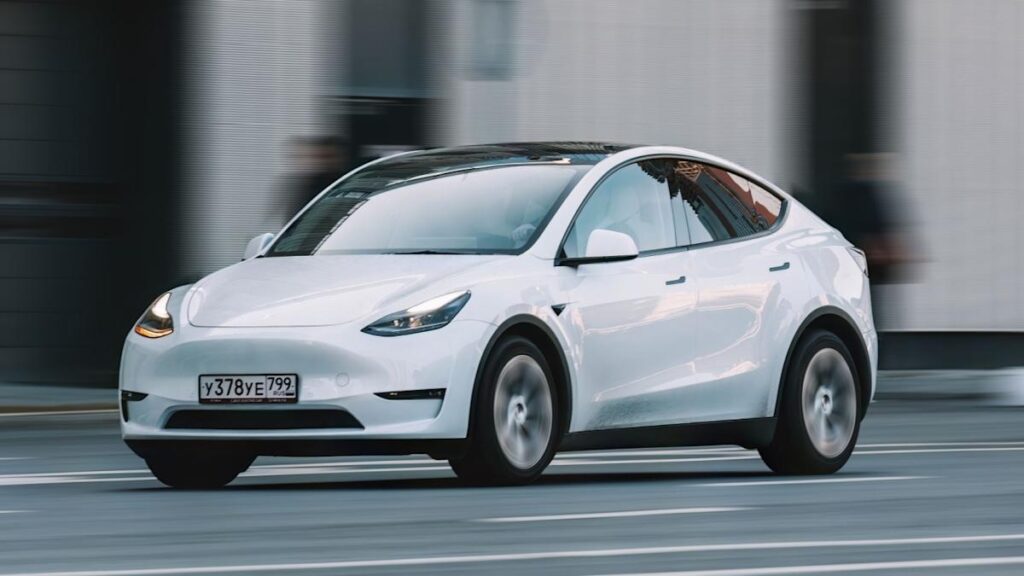

Image Credit: Haggardous50000 at Shutterstock.
Tesla is facing mounting legal headaches in the United Kingdom after being repeatedly fined for failing to cooperate with police over traffic violations committed by its drivers. Over the past two years, the British arm of the electric car giant has accumulated at least 18 convictions and been ordered to pay more than $27,000 (£20,000) in fines and court costs.
The cases highlight a legal obligation in the UK that may be unfamiliar to American drivers. In Britain, when a leased or company-owned car is caught speeding, the police must identify the driver before prosecution can proceed.
If the registered keeper of the vehicle fails to provide the requested information, the company itself can be prosecuted. Tesla Financial Services, which handles the leases of many vehicles in the UK, has repeatedly run afoul of this system.
Image Credit: Cassiohabib at Shutterstock.
One of the incidents that landed Tesla in court involved a vehicle clocked at 80 mph (128 km/h) on the M4 highway near Llantrisant, South Wales, in July 2025. South Wales Police sent a formal request to Tesla Financial Services to identify the driver, but the company failed to respond in a timely and adequate manner.
In a court filing, Tesla director Becky Hodgson admitted the company had faced “technical issues” when attempting to enter a plea online. She argued that internal processes had been followed and that the information had been sent by post.
The court did not accept this explanation and fined Tesla £1,000 (around $1,400), with an additional $165 (£120) in court costs and a $551 (£400) victim surcharge.
While a £1,000 fine may sound modest by US standards, the broader pattern is significant. The Press Association has identified 18 separate convictions since the start of 2024, including prosecutions brought by the Metropolitan Police, Hampshire Constabulary, and Thames Valley Police.
In some cases, Tesla drivers were caught speeding multiple times. Because the company failed to identify the drivers, courts imposed penalties on Tesla rather than on individual drivers, a situation that could have serious reputational consequences for the automaker in Europe.
Photo Courtesy: Tesla.
One notable case involved a driver traveling nearly 100 mph (160 km/h) on the A3 in Petersfield, Hampshire. Because police letters went unanswered, the speeding driver remained unidentified, and Tesla Financial Services received the conviction.
Another case saw a driver caught speeding on three separate occasions. If identified, the driver could have faced disqualification from driving, but Tesla’s lack of cooperation meant the company, rather than the driver, bore the legal consequences.