
Published on
January 29, 2026
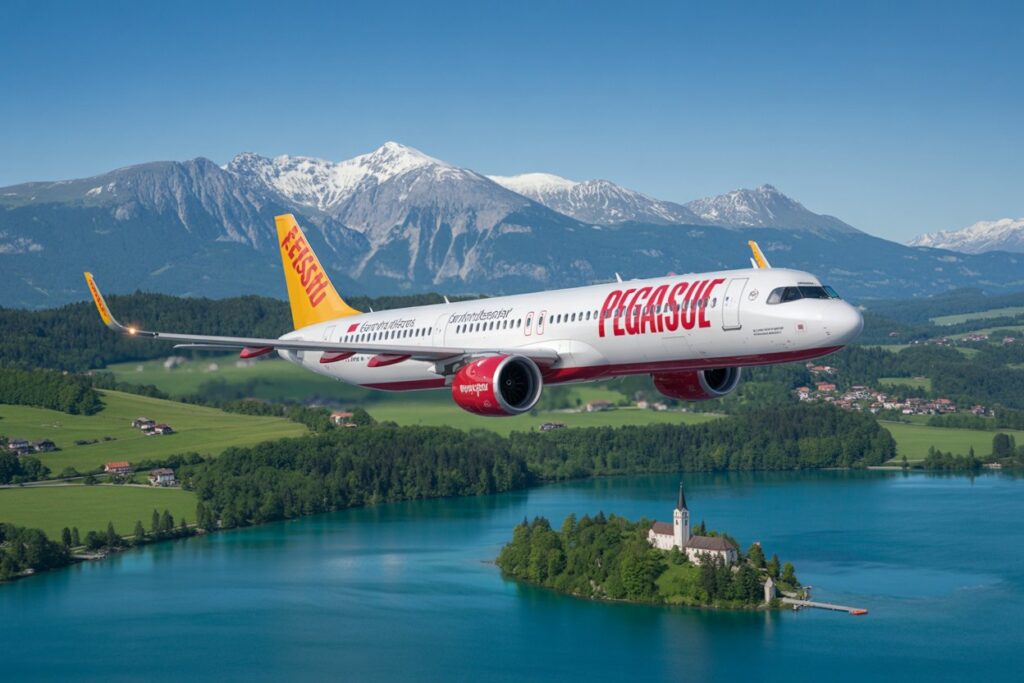
In the world of travel, some connections just make sense. This January, the aviation landscape between Turkey and Central Europe shifted significantly as Pegasus Airlines, Turkey’s leading low-cost carrier, officially took to the skies to connect the vibrant metropolis of Istanbul with the “Green Heart of Europe”—Slovenia.
Launched on January 26, 2026, this new direct service from Istanbul Sabiha Gökçen (SAW) to Ljubljana Jože Pučnik Airport (LJU) marks a milestone for the airline. Slovenia has officially become the 55th country in Pegasus’s ever-growing international network, offering travelers a fresh, affordable gateway to one of the continent’s most enchanting hidden gems.
A Celebration of Connection
The inaugural flight was not just a routine takeoff; it was a diplomatic and commercial celebration. At the ribbon-cutting ceremony held at Sabiha Gökçen, Güliz Öztürk, the CEO of Pegasus Airlines, was joined by the Slovenian Ambassador to Turkey, Gorazd Renčelj.
The mood was one of optimism. For Pegasus, the addition of Ljubljana represents a strategic move to strengthen its presence in the Balkans and Central Europe. For Slovenia, the arrival of a major low-cost carrier from one of the world’s biggest aviation hubs promises a surge in tourism and a more robust link for the business community.
The Flight Schedule: Tailored for Every Traveler
Pegasus is launching this route with a consistent schedule that appeals to both the “weekend warrior” and the corporate professional. Operating three times a week, the flights are timed to maximize your stay in either city.
- Mondays: Perfect for starting a business week or a long European vacation.
- Thursdays: Ideal for those looking to beat the Friday rush.
- Saturdays: Tailored for family getaways and quick city breaks.
The flight time is approximately 2 hours and 15 minutes, making it a remarkably quick jump across the Mediterranean and Balkan peninsula. By utilizing Sabiha Gökçen International Airport, passengers can enjoy the efficiency of Istanbul’s “city-side” airport, which often offers quicker transit times and easier access to the city’s Asian-side business districts.
Advertisement
Advertisement
Why Ljubljana? Why Now?
For many years, Slovenia remained a “well-kept secret” among European travelers. However, in 2026, the secret is well and truly out. Ljubljana, the capital, is a city that feels like a fairy tale brought to life.
With its car-free city center, the Ljubljanica River lined with emerald-colored willows, and the iconic Ljubljana Castle watching over the cobblestone streets, it offers a pace of life that is a refreshing contrast to the high-energy buzz of Istanbul.
But the appeal goes beyond the city limits. Within an hour of landing at Jože Pučnik Airport, travelers can find themselves:
- At Lake Bled: Walking around the iconic island church and tasting the famous “Kremna rezina” cream cake.
- In the Julian Alps: Hiking or skiing in some of the most pristine mountain air in the world.
- Underground at Postojna Cave: Exploring one of the world’s most magnificent karst cave systems.
The “Pegasus Effect”: Making Travel Accessible
The entry of Pegasus into this market is a win for the budget-conscious traveler. Known for its “BolBol” loyalty program and highly competitive pricing, Pegasus is expected to drive down the cost of travel between these two nations.
During the launch, CEO Güliz Öztürk emphasized the airline’s commitment to “democratizing travel.” By offering direct flights to Ljubljana, Pegasus isn’t just serving the Turkish market; they are providing a vital link for travelers from the Middle East, the Caucasus, and North Africa to reach Slovenia via a single, easy transfer in Istanbul.
A Greener Way to Fly
As Slovenia prides itself on being a leader in sustainable tourism, it is fitting that Pegasus is serving this route with its modern fleet. The airline has been aggressively transitioning to Airbus A320neo and A321neo aircraft. These planes are significantly quieter and up to 20% more fuel-efficient than their predecessors, ensuring that the environmental footprint of your journey is kept as small as possible.
What This Means for Business and Trade
Beyond the backpacks and cameras, this route is a bridge for trade. Turkey and Slovenia share strong economic ties, particularly in the logistics, automotive, and pharmaceutical industries. Direct flights mean that a business owner in Istanbul can fly to Ljubljana for a morning meeting and be back home the following evening, fostering a level of agility that was previously difficult with connecting flights.
Final Thoughts for the Traveler
Whether you are an Istanbulite looking for the crisp air of the Alps or a Slovenian traveler eager to explore the Grand Bazaar and the Hagia Sophia, this new route is your invitation.
With the launch of the Istanbul-Ljubljana service, Pegasus Airlines has once again proven that the world is getting smaller. The “Green Heart of Europe” is now just a two-hour flight away from the crossroads of the world.
